Shorts

Akbar
599 · 12 ShortsFrom consolidation and Rajput alliances to administrative reforms, ideological shifts, and the Deccan campaigns of the third Mughal emperor.
EP 1 - The Akbar Chronicles: Episode 1
Episode 1 explores Akbar's early life in exile, Humayun's sudden death, and the establishment of the regency under Bairam Khan, culminating in the Second Battle of Panipat in 1556. This episode focuses on the military stabilization of the infant empire against Hemu's forces. It ends with the secured occupation of Delhi and Agra, leaving the internal palace intrigues and Bairam Khan's downfall to Episode 2.

EP 2 - The Dawn of Absolute Sovereignty
Episode 2 details the transition of power from the regency of Bairam Khan to Akbar's independent rule, including the influence of the 'Petticoat Government' led by Maham Anga and the execution of Adham Khan in 1562. It examines the initial conquests of Malwa and Gondwana to show Akbar's early military assertiveness. This episode ends with the complete emancipation of Akbar from court factions; the systematic integration of Rajput states is left to Episode 3.

EP 3 - The Akbar Chronicles: Deciphering the Rajput Policy
Episode 3 analyzes Akbar's strategic Rajput policy, focusing on the matrimonial alliance with Amer, the brutal Siege of Chittorgarh (1567-68), and the surrender of Ranthambore (1569). It evaluates how Akbar blended military coercion with diplomatic integration to co-opt Rajput elites into the imperial structure. This episode ends with the submission of the major Rajput states by 1570; the structural administrative reforms of the empire are left to Episode 4.

EP 4 - The Administrative Architecture of Akbar's Empire
Episode 4 dissects the structural framework of the empire, focusing on the evolution of the land revenue system (Zabt and Dahsala) under Raja Todar Mal and the introduction of the dual Mansabdari system (Zat and Sawar ranks). It explains the fiscal centralization and the creation of a loyal bureaucracy. This episode covers administrative reforms up to 1575, leaving the physical conquests of Gujarat and Bengal to Episode 5.

EP 5 - The Conquest of Gujarat and Bengal
Episode 5 chronicles the territorial expansion into the wealthy maritime province of Gujarat (1572-73) and the eastern delta of Bengal (1574-76), including the crucial Battle of Haldighati against Maharana Pratap. It highlights how these conquests integrated India's global trade routes into the Mughal treasury. This episode ends with the pacification of Bengal in 1576; the architectural and ideological manifestations of this wealth in Fatehpur Sikri are left to Episode 6.

EP 6 - Akbar's Ideological Shift: Fatehpur Sikri and the Mahzar Nama
Episode 6 investigates the construction of Fatehpur Sikri as a ceremonial capital and the establishment of the Ibadat Khana (House of Worship) in 1575 for theological debates. It charts Akbar's growing disillusionment with orthodox Sunni ulema, leading to the draft of the Mahzar Nama (Infallibility Decree) in 1579. This episode ends with the promulgation of the Mahzar Nama; the evolution of Akbar's broader spiritual philosophy is left to Episode 7.

EP 7 - The Akbar Legacy - Episode 7
Episode 7 examines the philosophical tenets of Sulh-i-Kul (universal peace) and the formulation of the Din-i-Ilahi (Tauhid-i-Ilahi) as a syncretic court order. It analyzes the socio-political utility of this ideology in binding a pluralistic elite to the person of the emperor. This episode focuses purely on intellectual and religious synthesis up to 1582, leaving the severe political backlash and regional rebellions of the same period to Episode 8.

EP 8 - Akbar's Great Crisis and Northwest Consolidation (1580-1586)
Episode 8 reconstructs the massive crisis of 1580-81, characterized by the orthodox-led rebellions in Bengal and Bihar and the invasion threat from Akbar's half-brother, Mirza Hakim of Kabul. It details Akbar's rapid military response, the march to Kabul, and the subsequent annexation of Kashmir in 1586 to secure the northwest frontier. This episode ends with the stabilization of the northern frontiers; the expansion into the Deccan is left to Episode 9.

EP 9 - Akbar's Deccan Campaigns
Episode 9 traces Akbar's aggressive thrust into the Deccan, exploring the diplomatic missions to the southern sultanates, the heroic defense of Ahmednagar by Chand Bibi, and the capture of the impregnable Asirgarh Fort in 1601. It outlines the strategic incorporation of Khandesh and Berar into the Mughal map. This episode ends with the fall of Asirgarh in 1601; the internal cultural and intellectual achievements of this golden era are left to Episode 10.
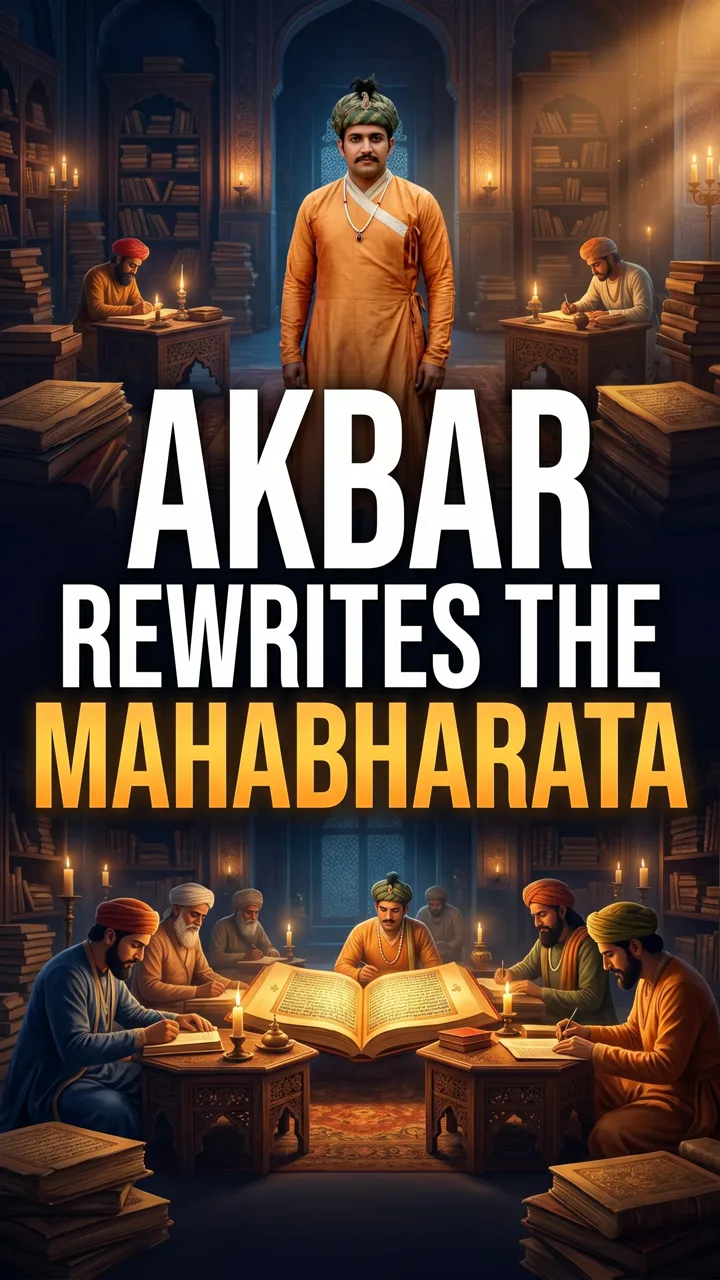
EP 10 - Akbar's Cultural Renaissance - Episode 10
Episode 10 explores the cultural renaissance at Akbar's court, focusing on the patronage of the Navaratnas (Nine Jewels), the monumental translation projects of Sanskrit texts like the Mahabharata (Razmnama) into Persian, and the synthesis of Indo-Persian miniature painting. It evaluates the role of literature and art in legitimizing Mughal authority. This episode covers cultural output up to 1600, leaving the systemic provincial administration and local governance models to Episode 11.

EP 11 - Mughal Empire Provincial Administration and Economy
Episode 11 deep-dives into the daily functioning of provincial administration, examining the division of the empire into Subahs, the roles of the Subahdar and Diwan, and the relationship between the imperial center and local Zamindars. It also analyzes agrarian trade, currency stabilization, and urban development. This episode covers late-era socio-economic structures, leaving Akbar's final years, family tragedies, and the succession crisis to Episode 12.

EP 12 - Mughal Empire Series - Episode 12: The Twilight of Akbar
Episode 12 chronicles the final years of Akbar's reign, marked by the rebellion of Prince Salim (Jahangir), the tragic assassination of Abul Fazl, and Akbar's eventual death in 1605. It assesses the immediate transition of power and evaluates Akbar's historical legacy, particularly his impact on the centralization of the Indian state. This episode starts with Salim's defiance in 1601 and concludes with Akbar's burial at Sikandra.