Diplomatic Preconditions and Peace Negotiations in Russia Ukraine War
Source:The Hindu ↗
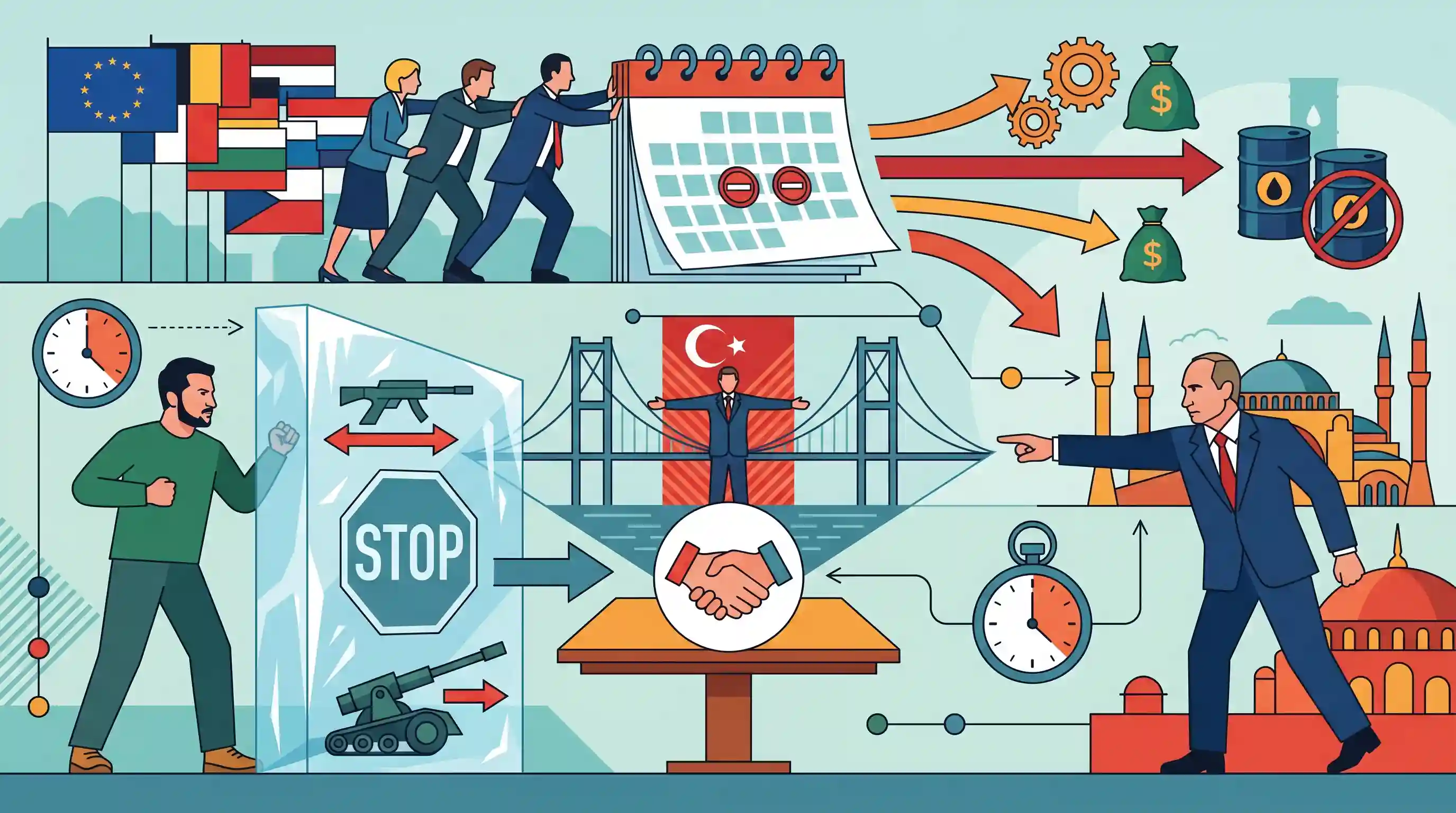
Why It Matters
The evolving diplomatic maneuvers in the Russia-Ukraine conflict highlight the complexities of conflict resolution and peacebuilding. Understanding the preconditions set by both sides, the geopolitical pressure exerted by European nations, and the mediating role of regional players like Turkey is crucial for GS Paper 2 (International Relations). Additionally, the geographical location of Ukraine, Russia, and Turkey remains highly relevant for Prelims mapping.
Summary
Ukrainian President Volodymyr Zelenskyy has stated that peace negotiations with Russia can only commence if a full, temporary ceasefire is implemented first. In contrast, Russian President Vladimir Putin proposed initiating direct talks in Istanbul without preconditions, hinting that a ceasefire could be negotiated alongside the talks. Meanwhile, major European leaders have threatened to escalate pressure on Russia unless it accepts a 30-day unconditional truce. Turkey continues to offer its services as a regional mediator to host the prospective talks.
Key Points
- Ukrainian President Zelenskyy insists on a full, temporary ceasefire before entering into any direct peace talks with Russia.
- Russian President Putin proposed resuming unconditional direct negotiations in Istanbul, suggesting a ceasefire might be arranged concurrently.
- Leaders of major European nations have warned of increased pressure on Moscow if it rejects an unconditional 30-day ceasefire.
- Turkey has reiterated its readiness to act as a mediator and host peace negotiations between the two nations.
Important Terms
Kremlin

A fortified complex in Moscow serving as the official residence of the Russian President; metonymically, it refers to the executive authority of the Russian government.
UPSC context
GS-2 (International Relations); essential for understanding state actors and centers of geopolitical decision-making in global conflicts.
Ceasefire
A formal, negotiated agreement to suspend fighting, typically intended to be binding and covering an entire conflict zone to facilitate stable diplomatic dialogue.
UPSC context
GS-2 (International Relations/Conflict Resolution); tests clarity on the stages of peace-building and the legal weight of international agreements.
Mediation
A method of peaceful dispute resolution where a neutral third party (e.g., Turkey) assists warring sides in reaching a mutually acceptable settlement.
UPSC context
GS-2 (Important International Institutions); relevant to UN Charter Chapter VI and the role of regional powers in stabilizing global security.
Truce
A temporary, often non-binding suspension of hostilities, usually arranged to facilitate specific non-combat tasks like humanitarian aid or prisoner exchanges.
UPSC context
GS-2 (Bilateral/Multilateral Agreements); distinguishes tactical military pauses from strategic diplomatic settlements in international law.
Preconditions
Specific requirements or demands that a party insists must be met before formal diplomatic negotiations can begin.
UPSC context
GS-2 (Effect of policies and politics of developed and developing countries); critical for analyzing barriers to entry in peace processes.
Istanbul Process
The framework for direct negotiations between Russia and Ukraine hosted in Turkey, leveraging Ankara's unique position as a NATO member with ties to both parties.
UPSC context
GS-2 (Bilateral and Regional Groupings); examines current diplomatic venues and the strategic autonomy of middle powers in mediation.
Prelims Trap
"The Montreux Convention gives Turkey the authority to block all commercial and naval ships from entering the Black Sea."
The 1936 Montreux Convention primarily regulates and restricts naval warships during wartime. It guarantees the free passage of civilian/commercial vessels, not blanket-banning them.
Static Concepts Connected
What are the strategic straits connecting the Black Sea to the Mediterranean?
- Bosporus Strait: Connects the Black Sea to the Sea of Marmara.
- Dardanelles Strait: Connects the Sea of Marmara to the Aegean and Mediterranean Seas.
- Montreux Convention: A 1936 treaty that gives Turkey control over these straits, regulating the transit of naval warships.
What was the Black Sea Grain Initiative (2022)?
- Objective: To safely resume Ukrainian agricultural exports to global markets amidst the ongoing war.
- Mediators: It was co-brokered by the United Nations (UN) and Turkey.
- Mechanism: Established a safe maritime humanitarian corridor in the Black Sea for commercial vessels.
Cross-Topic Patterns
Conflict mapping & Black Sea geography
UPSC frequently tests bordering bodies of water. The Black Sea, Sea of Marmara, and Mediterranean linkages via Turkey remain high-probability map questions due to the prolonged conflict.
Rise of Middle Power Diplomacy
Turkey’s ongoing mediation efforts reflect the growing clout of middle powers (similar to India's multi-alignment) in resolving conflicts where UN P5 members are directly involved and deadlocked.

Black Sea straits (Bosporus/Dardanelles) + Montreux Convention clauses have high probability as a Prelims 2026 mapping pair.
Linked PYQs · 3
Linked PYQs · 3
- 2023PrelimsGS1
Consider the following countries: 1. Bulgaria 2. Czech Republic 3. Hungary 4. Latvia 5. Lithuania 6. Romania How many of the above-mentioned countries share a land border with Ukraine?
- 2014PrelimsGS1
Turkey is located between
- 2025MainsGS2
"The reform process in the United Nations remains unresolved, because of the delicate imbalance of East and West and entanglement of the USA vs. Russo-Chinese alliance.” Examine and critically evaluate the East-West policy confrontations in this regard.
