Uttar Pradesh Launches Civil Services School Outreach Program
Source:the-print ↗
Why It Matters
This is a prominent state-specific scheme launched by the UP government directly impacting youth engagement and education. It showcases an innovative approach to governance by utilizing civil servants for community outreach and career counseling, making it highly relevant for UPPSC Prelims questions regarding recent state initiatives and current affairs.
Summary
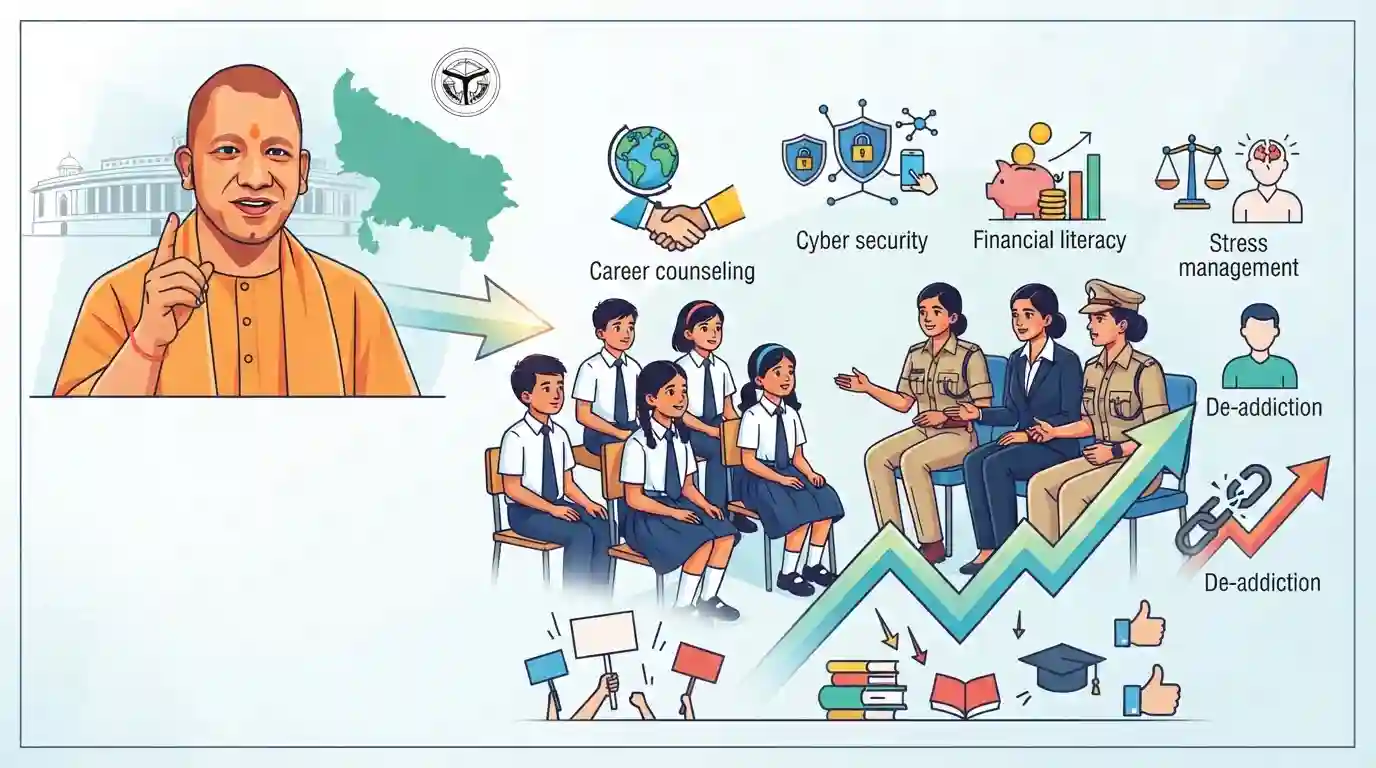
The Uttar Pradesh government, led by Chief Minister Yogi Adityanath, has introduced a 'Gen Z outreach plan' to positively engage the state's youth. Under this initiative, young IAS, IPS, and IFS officers are required to visit at least one intermediate school each month to interact with students. The officers will provide career counselling and discuss crucial topics such as cyber security, financial literacy, stress management, and de-addiction. This administrative outreach aims to motivate students, foster positive thinking, and guide them toward constructive paths amidst rising concerns over youth frustration and protests.
Key Points
- The Uttar Pradesh government has launched a 'Gen Z outreach plan' where young IAS, IPS, and IFS officers are mandated to visit at least one intermediate-level school in their district every month.
- During these visits, the officers will interact with students to offer guidance on career options, higher education, and competitive exams.
- The outreach will also focus on building life skills, emphasizing cyber security awareness, financial literacy, stress management, de-addiction, and building self-confidence.
- This policy is designed to channel the energy of the youth into constructive pursuits and mitigate feelings of frustration, contextualized by recent protests by youth.
Important Terms
Gen Z Outreach Plan

A governance initiative by the Uttar Pradesh administration requiring young IAS, IPS, and IFS officers to visit schools monthly to provide career counseling and guidance on cybersecurity, financial literacy, and stress management.
UPSC context
Highly relevant for GS Paper 2 (Governance), demonstrating proactive bureaucratic engagement for youth empowerment and de-addiction.
Indian Administrative Service (IAS)
The premier All-India civil service. The UP government's new outreach plan expands their traditional administrative duties, explicitly mandating young IAS officers to act as grassroots mentors and career guides for students.
UPSC context
Crucial for GS Paper 2 (Role of Civil Services in a Democracy) and GS Paper 4 (Public Administration values).
Indian Police Service (IPS)
An All-India Service leading the nation's law enforcement. Through the UP outreach plan, young IPS officers are assigned a non-traditional community role, advising students on cybersecurity, stress, and de-addiction.
UPSC context
Connects to GS Paper 2 (Civil Services) and GS Paper 3 (Internal Security & Community Policing models).
Indian Forest Service (IFS)
The environmental All-India civil service. The UP outreach plan broadens the traditional purview of young IFS officers, enlisting them to actively interact with intermediate students for career and life counseling.
UPSC context
Tests knowledge of the evolving, multifaceted roles of specialized civil services in grassroots governance (GS Paper 2).
Prelims Trap
"The Gen Z outreach plan mandating civil servants to visit schools is a centrally sponsored scheme under the Ministry of Youth Affairs."
It is a state-specific governance initiative by the Uttar Pradesh government utilizing district-level officers, not a centrally mandated program.
Static Concepts Connected
What are the core elements of 'Citizen-Centric Administration' in modern governance?
- Proactive Engagement: Shifting from reactive regulation to direct, empathetic community interaction and capability building.
- Trust Deficit Reduction: Bridging the gap between the state machinery and the public through transparency, accessibility, and active dialogue.
- Behavioral Change: Using persuasion, mentorship, and awareness (e.g., financial literacy, cyber security) rather than relying solely on enforcement.
How does Emotional Intelligence (EI) practically apply to civil administration?
- Empathy & Mentorship: Understanding the frustrations of citizens (e.g., youth anxiety) and guiding them constructively rather than dismissing their concerns.
- Social Awareness: Recognizing emerging societal trends—like digital addiction or financial stress—and tailoring administrative outreach to address these specific vulnerabilities.
- Conflict Mitigation: Channeling demographic energy to prevent unrest and alienation through proactive, compassionate dialogue.
Cross-Topic Patterns
Emotional Intelligence in Governance
Mentoring students on cyber hygiene and de-addiction illustrates the shift from traditional regulatory administration to empathetic, developmental leadership—a frequent theme in GS4 case studies.
Bureaucracy & Demographic Dividend
By addressing stress and career confusion, state bureaucracies aim to channel youth energy constructively, actively mitigating the risk of a 'demographic disaster' marked by youth protests and alienation.

Expect a GS2 or GS4 Mains question on how shifting civil servants from regulatory roles to proactive youth mentors aids demographic dividend.
Linked PYQs · 2
Linked PYQs · 2
- 2023UPPSC_PRELIMSGS1
Which of the following Scheme/Programme is not the Central Government Programme and it is Uttar Pradesh Government's Programme?
- 2023UPPSC_PRELIMSGS1
Which of the following scheme/s is/are related to Uttar Pradesh? (1) Anuthee Uphar Scheme (2) Matra Shakti Udyamita Scheme (3) Kaushalya Matritva Scheme (4) Stree Nidhi Scheme Select the 'correct' answer using the code given below -
