व्यापार संरक्षणवाद और महाशक्तियों के बीच भू-राजनीतिक प्रतिद्वंद्विता
स्रोत:इंडियन एक्सप्रेस ↗
क्यों मायने रखता है
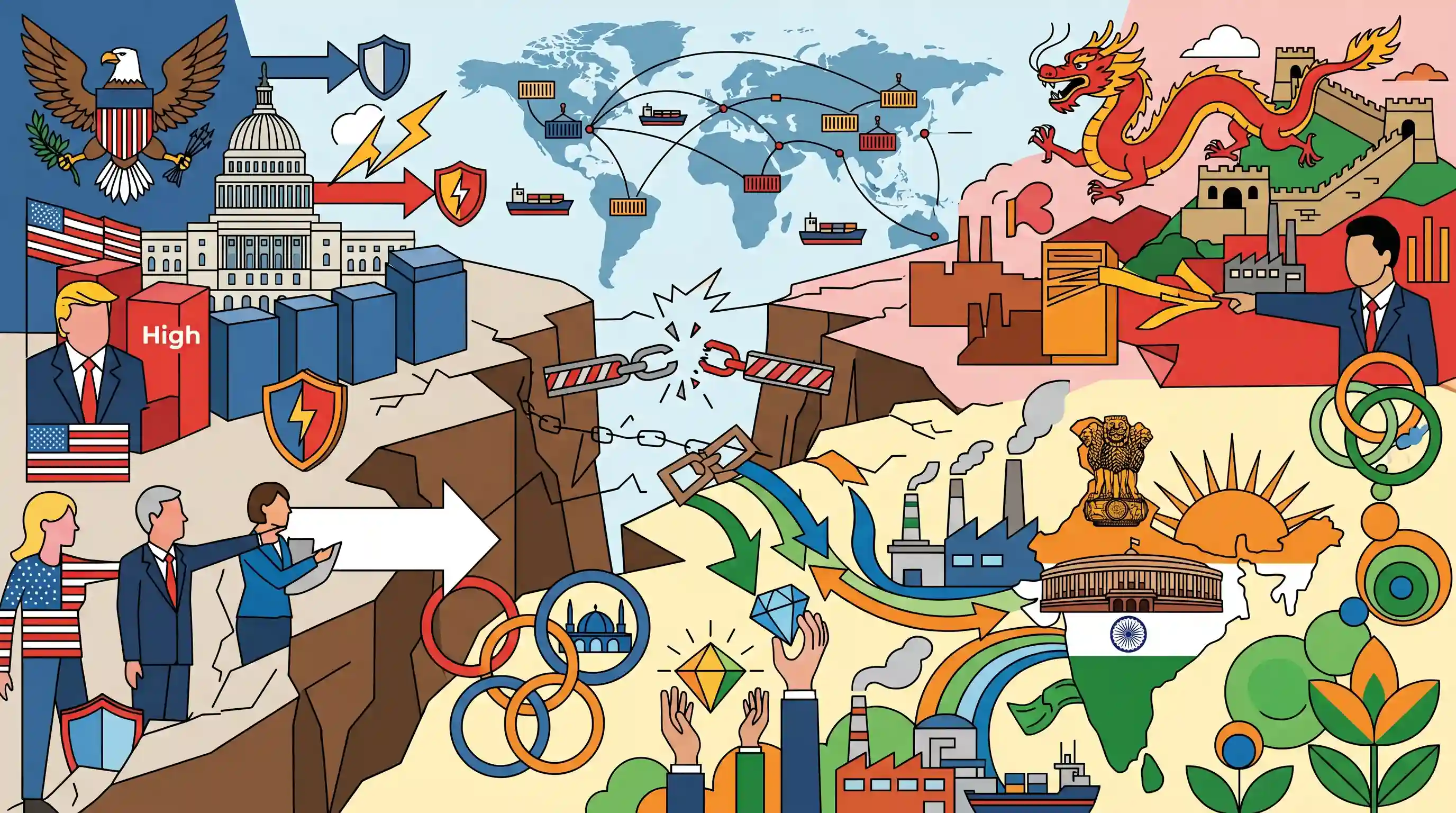
The US-China rivalry is the defining geopolitical and geo-economic contest of the 21st century. Their trade policies, protectionist measures, and diplomatic maneuvering have profound implications for global supply chains, economic stability, and India's strategic choices in the Indo-Pacific region.
सारांश
यह लेख डोनाल्ड ट्रम्प और शी जिनपिंग के नेतृत्व में संयुक्त राज्य अमेरिका और चीन के बीच जटिल और विकसित हो रहे भू-राजनीतिक और आर्थिक संबंधों (dynamics) का परीक्षण करता है। यह संरक्षणवादी व्यापार नीतियों के पुनरुत्थान, बढ़ते टैरिफ युद्धों और दोनों महाशक्तियों के बीच व्यापक संरचनात्मक प्रतिद्वंद्विता पर केंद्रित है। यह अंश अमेरिकी दबाव के प्रति चीन की रणनीतिक प्रतिक्रियाओं का विश्लेषण करता है, जिसमें आर्थिक लचीलेपन और आपूर्ति श्रृंखला प्रभुत्व (supply chain dominance) के लिए उसके प्रयास शामिल हैं। इसके अतिरिक्त, यह इस महाशक्ति प्रतिस्पर्धा के वैश्विक निहितार्थों को रेखांकित करता है, विशेष रूप से वैश्विक आपूर्ति श्रृंखलाओं के पुनर्गठन को क्योंकि पश्चिम 'de-risking' रणनीतियों को अपना रहा है, और भारत जैसी मध्य शक्तियों के लिए इसके परिणामस्वरूप उत्पन्न होने वाले रणनीतिक और आर्थिक अवसरों पर चर्चा करता है।
मुख्य बिंदु
- The renewed trade tensions between the US and China, spearheaded by Donald Trump's protectionist economic policies and tariff imposition on Chinese goods.
- कैसे दोनों महाशक्तियों के बीच आर्थिक 'decoupling' और 'de-risking' व्यापार, तकनीक और सुरक्षा तक फैली एक गहरी संरचनात्मक भू-राजनीतिक प्रतिद्वंद्विता को दर्शाते हैं।
- शी जिनपिंग की अमेरिकी दबाव का मुकाबला करने की रणनीतियाँ, जिनमें घरेलू आर्थिक आत्मनिर्भरता बढ़ाना, निर्यात बाजारों में विविधता लाना और महत्वपूर्ण सप्लाई चेन में चीन के प्रभुत्व को मजबूत करना शामिल है।
- The impact of the US-China trade war on global supply chains, pushing Western nations to seek alternative manufacturing hubs to reduce dependence on China.
- Opportunities and challenges for India in this shifting geopolitical landscape, particularly as a potential beneficiary of supply chain relocation and as a strategic partner to the West in countering China's influence.
महत्वपूर्ण शब्द
जोखिम कम करना

एक रणनीतिक दृष्टिकोण जो व्यापक वाणिज्यिक जुड़ाव बनाए रखते हुए, महत्वपूर्ण क्षेत्रों में कमजोरियों को कम करने के उद्देश्य से किसी एक देश (आमतौर पर चीन) पर आर्थिक निर्भरता को कम करने पर केंद्रित है।
UPSC context
GS पेपर 2 (अंतर्राष्ट्रीय संबंध); विकसित होते वैश्विक व्यापार प्रतिमानों और आपूर्ति श्रृंखला सुरक्षा की समझ का परीक्षण करता है।
डीकपलिंग
The deliberate and comprehensive severing of deep economic interdependencies between nations, involving the dismantling of shared trade, investment, and supply chain networks to ensure strategic independence.
UPSC context
GS Paper 2; critical for analyzing US-China strategic competition and its structural impact on global trade.
आपूर्ति श्रृंखला लचीलापन पहल (SCRI)
A trilateral framework between India, Japan, and Australia aimed at diversifying supply sources and reducing collective reliance on China to ensure economic security in the Indo-Pacific.
UPSC context
GS Paper 2 (क्षेत्रीय समूह); क्षेत्रीय आर्थिक कमजोरियों को दूर करने में भारत की सक्रिय कूटनीति का परीक्षण करता है।
Middle Power
A sovereign state with significant economic and diplomatic influence that acts as a balancer or bridge-builder in international relations, without having superpower status.
UPSC context
GS Paper 2; एक बहुध्रुवीय व्यवस्था में 'प्रमुख शक्ति' और स्थिरकर्ता के रूप में भारत की भूमिका से संबंधित है।
विश्व व्यापार संगठन (WTO)
एक अंतरराष्ट्रीय संगठन जो नियम-आधारित बहुपक्षीय प्रणाली के माध्यम से वैश्विक व्यापार को विनियमित करता है और विवादों का निपटारा करता है, जो वर्तमान में एकतरफा संरक्षणवाद के कारण चुनौतियों का सामना कर रहा है।
UPSC context
GS पेपर 2 (अंतरराष्ट्रीय संस्थान); व्यापार युद्धों के बीच वैश्विक शासन की प्रभावशीलता का परीक्षण करता है।
Protectionism
सरकारों द्वारा आयात को सीमित करने के लिए उपयोग की जाने वाली टैरिफ और कोटा जैसी आर्थिक नीतियां, जो घरेलू उद्योगों और श्रमिकों को विदेशी प्रतिस्पर्धा से सुरक्षा प्रदान करती हैं।
UPSC context
GS पेपर 3 (अर्थव्यवस्था); 'slowbalisation' और भारत के निर्यात-आधारित विकास पर इसके प्रभाव से संबंधित प्रश्नों के लिए प्रासंगिक।
प्रारंभिक ट्रैप
इंडो-पैसिफिक इकोनॉमिक फ्रेमवर्क (IPEF) अपने सदस्यों को पारस्परिक शुल्क रियायतें और बेहतर बाजार पहुंच प्रदान करता है।
IPEF एक गैर-पारंपरिक आर्थिक व्यवस्था है। यह स्पष्ट रूप से शुल्क कटौती और बाजार पहुंच रियायतों को बाहर रखता है, और इसके बजाय मानकों, आपूर्ति श्रृंखलाओं और स्वच्छ ऊर्जा पर ध्यान केंद्रित करता है।
संबंधित अवधारणाएँ
IPEF पारंपरिक मुक्त व्यापार समझौतों (FTAs) से किस प्रकार भिन्न है?
- बाजार पहुंच नहीं: It deliberately excludes tariff exemptions and market access concessions, which are the hallmarks of traditional FTAs.
- चार स्तंभ: यह चार स्तंभों के इर्द-गिर्द संरचित है: व्यापार (Trade), आपूर्ति श्रृंखला (Supply Chains), स्वच्छ अर्थव्यवस्था (Clean Economy) और निष्पक्ष अर्थव्यवस्था (Fair Economy)। भारत ने व्यापार स्तंभ (Trade pillar) से बाहर रहने का विकल्प चुना।
- संकट प्रतिक्रिया: यह कमजोरियों की निगरानी करने, बाधाओं को रोकने और साझेदारों के बीच संकट प्रतिक्रिया में समन्वय करने के लिए एक समर्पित Supply Chain Council स्थापित करता है।
What is China's 'Dual Circulation' economic strategy?
- आंतरिक संचलन: घरेलू उपभोग के विस्तार, स्वदेशी नवाचार और तकनीकी आत्मनिर्भरता पर केंद्रित है ताकि अर्थव्यवस्था को बाहरी झटकों और प्रतिबंधों से सुरक्षित रखा जा सके।
- बाह्य संचलन: वैश्विक आपूर्ति श्रृंखलाओं की चीनी विनिर्माण और निर्यात पर मौलिक निर्भरता सुनिश्चित करने के लिए विदेशी व्यापार और निवेश को निरंतर बनाए रखना।
अंतर-विषय पैटर्न
डी-रिस्किंग + महत्वपूर्ण खनिज सुरक्षा
The push to 'de-risk' from China's supply chains directly drives India's integration into the Mineral Security Partnership (MSP) and domestic PLI schemes to secure critical mineral and electronics manufacturing.
WTO में गतिरोध + आर्थिक मिनिलैटरलिज्म
अमेरिकी संरक्षणवादी शुल्क और WTO के अपीलीय निकाय (Appellate Body) में निरंतर गतिरोध ने व्यापक FTAs के बजाय IPEF जैसे मुद्दा-आधारित आर्थिक 'मिनीलेटरल' (minilaterals) की ओर वैश्विक बदलाव को तेज़ कर दिया है।

Expect a multi-statement Prelims question linking IPEF's supply chain pillar, India's PLI scheme, and the 'de-risking' strategy.
संबद्ध PYQ · 3
संबद्ध PYQ · 3
- 2025MainsGS3
What are the challenges before the Indian economy when the world is moving away from free trade and multilateralism to protectionism and bilateralism? How can these challenges be met?
- 2024MainsGS2
‘The West is fostering India as an alternative to reduce dependence on China's supply chain and as a strategic ally to counter China's political and economic dominance.’ Explain this statement with examples.
- 2021MainsGS2
“The USA is facing an existential threat in the form of a China, that is much more challenging than the erstwhile Soviet Union.” Explain.
