WTO Global Trade Forecast Downgrade and Protectionist Slump
Source:The Hindu ↗
Why It Matters
Provides concrete data on the negative impact of trade wars and protectionist policies (especially US tariffs) on the global economy. It is highly relevant for GS-2 (Effect of policies of developed countries on India's interests) and GS-3 (Economy and International Trade).
Summary
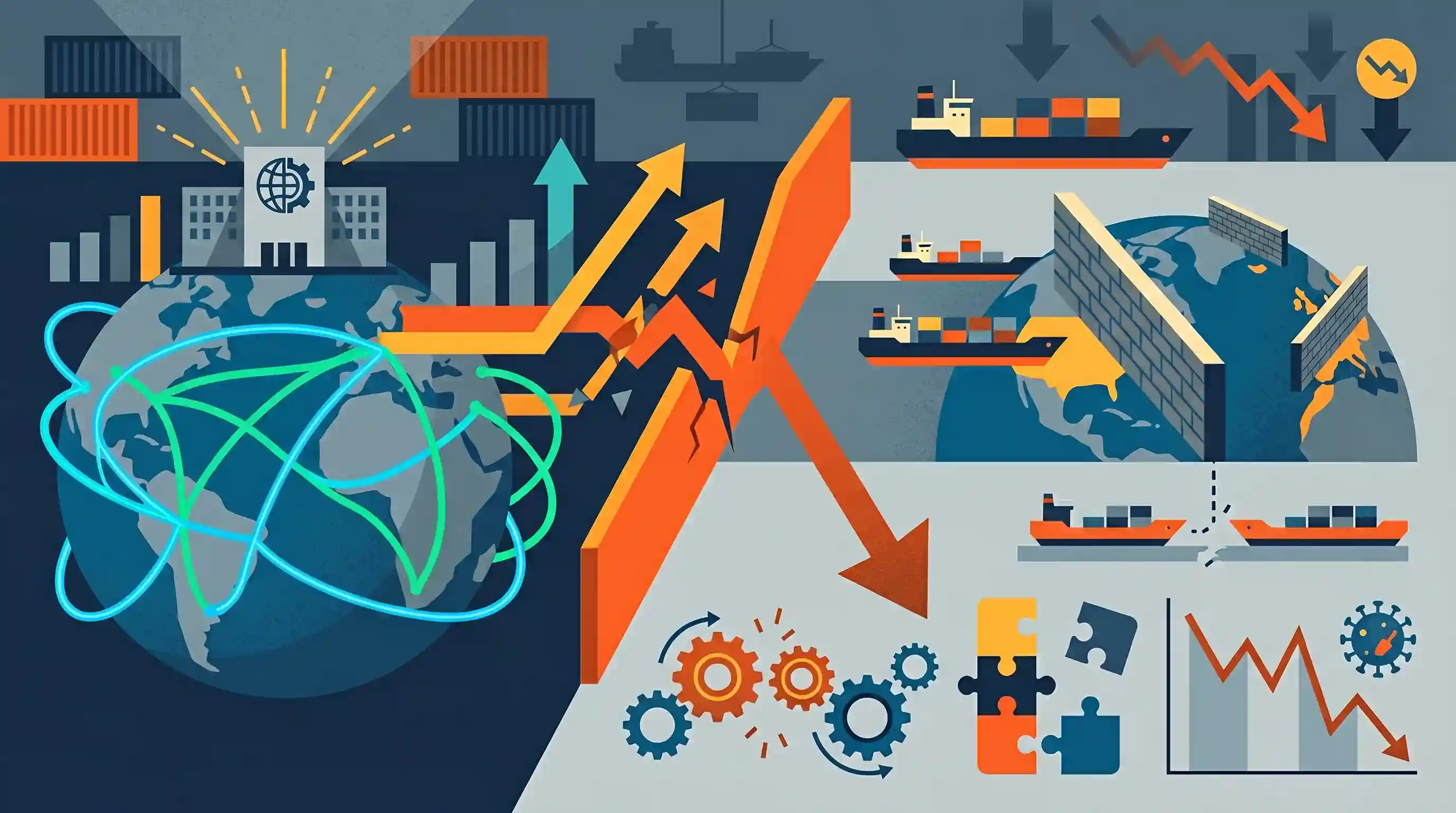
The World Trade Organization (WTO) has severely slashed its 2025 global merchandise trade forecast, projecting a 0.2% decline instead of the previously expected 3% expansion. This massive downgrade is primarily driven by sweeping U.S. tariffs and anticipated global spillover effects, including retaliatory measures. The forecast indicates the most significant trade slump since the COVID-19 pandemic, underscoring the severe macroeconomic impacts of growing protectionism and fragmented global supply chains on the world economy.
Key Points
- The WTO has drastically downgraded its 2025 global merchandise trade forecast from a 3.0% expansion to a 0.2% decline.
- Trade growth for 2026 is also projected to be weak at just 1.4%.
- The steep contraction is attributed to sweeping U.S. tariffs and the ensuing protectionist measures and retaliatory trade policies globally.
- The situation is anticipated to trigger the heaviest trade slump since the height of the COVID-19 pandemic, severely disrupting global supply chains.
Important Terms
World Trade Organization (WTO)

The only global international organization (est. 1995) dealing with the rules of trade between nations. It succeeds GATT and facilitates negotiations and dispute settlement.
UPSC context
GS Paper II (International Institutions) and GS III (Economy); tests knowledge of multilateral trade governance and dispute resolution.
Protectionism
Economic policy of restricting imports through tariffs, quotas, or subsidies to shield domestic industries and workers from foreign competition.
UPSC context
GS Paper III (Economy); core concept for analyzing trade wars and their impact on India's export-led growth.
Tariffs
A tax or duty imposed by a government on imported goods at the border, making foreign products more expensive to encourage domestic consumption.
UPSC context
GS Paper III (Economy); vital for understanding fiscal policy tools and their role in international trade negotiations.
Retaliatory Measures
Punitive trade barriers imposed by a nation to penalize another for taxing its exports, often escalating into a "trade war."
UPSC context
GS Paper III (Economy/International Relations); tests understanding of global economic friction and bilateral trade tensions.
De-globalization
The process of diminishing economic interdependence and integration between nations, characterized by a retreat from free trade and global cooperation.
UPSC context
GS Paper III (Economy/Globalization); structural trend impacting global growth, supply chains, and India's "Atmanirbhar Bharat" strategy.
Global Supply Chains (GSC)
International networks connecting production and distribution across countries. Shifting from efficiency-based "just-in-time" models to resilience-focused "just-in-case" structures.
UPSC context
GS Paper III (Economy/Infrastructure/Industrial Policy); concerns supply chain resilience and India’s "China Plus One" opportunities.
Prelims Trap
The WTO's projected 0.2% contraction for 2025 applies equally to global merchandise and commercial services trade.
Aspirants often blur merchandise and services trade. The WTO's 0.2% contraction forecast specifically applies to global merchandise trade; commercial services trade is tracked separately.
Static Concepts Connected
What are the three primary trade remedy measures permitted under WTO rules?
- Anti-dumping Duties: Levied on imports priced below their normal value in the exporting country, threatening domestic industries.
- Countervailing Duties: Imposed to neutralize the negative effects of specific subsidies granted by the exporting country's government.
- Safeguard Measures: Temporary restrictions (tariffs or quotas) to protect domestic industries from sudden, unforeseen surges in imports.
What is the WTO Goods Trade Barometer?
- Issuer & Frequency: A quarterly composite indicator published by the World Trade Organization.
- Core Purpose: Provides real-time data on the trajectory of global merchandise trade to identify key turning points.
Cross-Topic Patterns
Protectionism & India's PLI scheme
The slump in global trade and rising 'sovereign nationalism' validates India's Atmanirbhar Bharat strategy, using PLI schemes to build domestic resilience against tariff wars and weaponized global supply chains.
WTO Appellate Body Crisis & Dispute Resolution
Rising retaliatory tariffs bypass WTO norms, compounding the ongoing paralysis of the WTO's Appellate Body (blocked by the US) and highlighting the existential crisis of multilateral dispute resolution.

Expect a Prelims question linking WTO's Goods Trade Barometer, recent merchandise trade contraction, and WTO's institutional crisis.
Linked PYQs · 2
Linked PYQs · 2
- 2018MainsGS2
What are the key areas of reform if the WTO has to survive in the present context of "Trade War', especially keeping in mind the interest of India?
- 2025MainsGS2
"With the waning of globalization, post-Cold War world is becoming a site of sovereign nationalism.” Elucidate.
