Japan Approves Restart of World Largest Nuclear Plant
Source:The Hindu ↗
Why It Matters
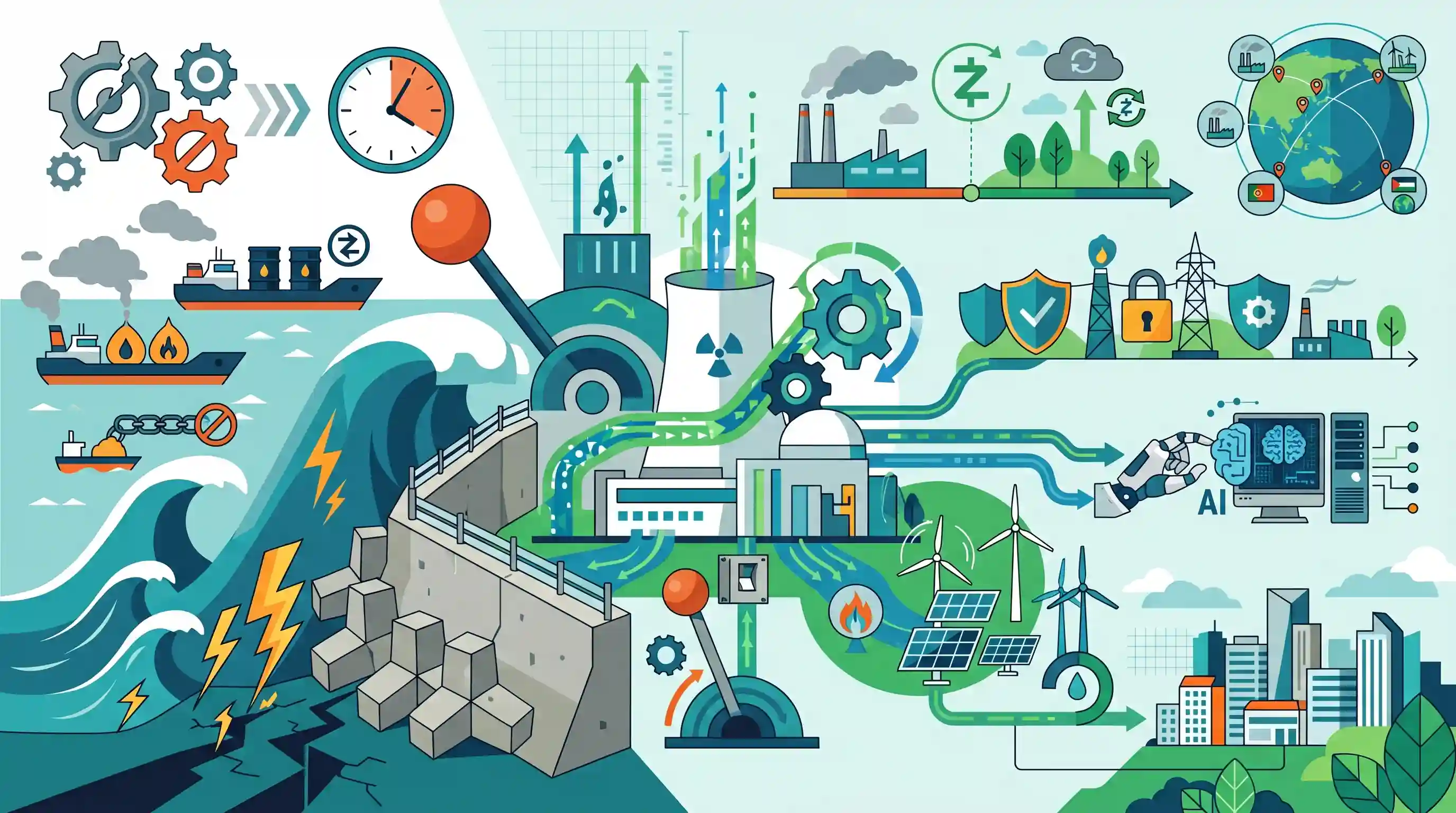
It demonstrates the complex trade-offs nations face between historical disaster trauma and modern imperatives for energy security, clean energy transitions, and addressing surging electricity demands from emerging technologies like AI.
Summary
Japan's Niigata province has approved the restart of the Kashiwazaki-Kariwa nuclear power plant, the largest in the world, which has been offline since the 2011 Fukushima disaster. The resumption highlights Japan's strategic shift to revive nuclear energy to cut reliance on imported fossil fuels, achieve carbon neutrality by 2050, and power energy-intensive technologies like artificial intelligence. Operated by Tepco, the plant has undergone extensive safety upgrades, including a 15-metre tsunami wall, to bolster disaster resilience. This development underscores a broader global trend of reassessing nuclear baseload power as an essential component of the clean energy transition.
Key Points
- Local authorities in Japan's Niigata province approved the restart of the Kashiwazaki-Kariwa nuclear power plant, the world's largest, marking its first revival since the 2011 Fukushima disaster.
- The restart aims to reduce Japan's heavy reliance on imported fossil fuels, meet 2050 carbon neutrality goals, and satisfy surging power demands from artificial intelligence.
- Operator Tepco has installed significant disaster mitigation infrastructure, including a 15-metre tsunami wall and newly elevated backup power systems.
- Japan targets a 20% share for nuclear power in its energy mix by 2040, alongside establishing renewable energy as its primary power source.
- A new law has been passed allowing Japanese nuclear reactors to operate beyond 60 years to ensure stable, long-term energy security.
Important Terms
Kashiwazaki-Kariwa Nuclear Power Plant

The world's largest nuclear facility by capacity (8.2 GW), located in Japan; its 2026 restart marks a strategic shift back to nuclear energy following the 2011 Fukushima disaster shutdown.
UPSC context
GS Paper 3 (Energy/Infrastructure). Relevant for studying global energy transitions and the role of nuclear power in large-scale decarbonization.
TEPCO (Tokyo Electric Power Company)
Japan's largest electric utility and operator of the Kashiwazaki-Kariwa and Fukushima plants; responsible for implementing post-Fukushima safety reforms and managing the financial recovery from the 2011 disaster.
UPSC context
GS Paper 3 (Disaster Management/Energy). Important for understanding corporate accountability and regulatory safety standards in high-risk infrastructure sectors.
Baseload Power
The minimum amount of electric power a utility must provide to meet demand 24/7; nuclear power serves as a stable, non-intermittent source to support grid reliability alongside variable renewables.
UPSC context
GS Paper 3 (Energy). Tests the concept of grid stability and balancing intermittent renewable sources with reliable thermal or nuclear power.
Energy Security
The strategic goal of ensuring uninterrupted energy availability at affordable prices; Japan's nuclear revival aims to reduce dependence on imported LNG and exposure to global price shocks.
UPSC context
GS Paper 3 (Economy/Energy) and GS Paper 2 (International Relations). Relates to strategic autonomy and the geopolitics of energy imports.
Carbon Neutrality (Net Zero)
The state of achieving net-zero greenhouse gas emissions; Japan's 2050 goal relies on a mix of nuclear (30-40% with thermal/CCUS) and renewables to meet international climate commitments.
UPSC context
GS Paper 3 (Environment/Climate Change). Essential for discussing the Paris Agreement and national strategies for mitigating global warming.
Disaster Resilience
The ability of infrastructure to withstand, adapt to, and recover from disasters; demonstrated by the installation of 15-metre tsunami walls and flood barriers at nuclear facilities.
UPSC context
GS Paper 3 (Disaster Management). Focuses on structural mitigation and preparedness for critical infrastructure in geologically active regions.
Prelims Trap
Japan has committed to a complete phase-out of nuclear power to achieve its 2050 carbon neutrality targets.
Japan is actively reversing its post-Fukushima phase-out. It recently passed laws extending reactor lifespans beyond 60 years and targets a 20% nuclear energy share by 2040.
Static Concepts Connected
What is 'baseload' power and why is it crucial for electricity grids?
- Constant demand: The minimum, continuous level of electricity required by a grid over a 24-hour period to maintain operational stability.
- Traditional sources: Typically supplied by coal, nuclear, or hydro power plants that can run continuously and predictably without interruption.
- Renewable intermittency: Solar and wind are intermittent; they cannot provide reliable baseload power to heavy industries or data centers without large-scale battery storage.
How does 'Defense in Depth' enhance nuclear disaster resilience?
- Multiple barriers: Using consecutive, independent layers of protection (like containment domes and 15-meter tsunami walls) to contain hazards and prevent radioactive release.
- Passive safety: Modern cooling systems often rely on natural forces like gravity or convection, remaining operational even during total electrical blackouts.
- Redundant backup: Elevating backup diesel generators and having diversified alternative power sources to ensure reactor core cooling if the primary grid fails.
Cross-Topic Patterns
AI's hunger for baseload power
The massive electricity demands of AI data centers are forcing tech-heavy nations to pivot back to nuclear energy to balance grid stability with stringent decarbonization goals.
Map pairs: Global nuclear plants
Kashiwazaki-Kariwa (Japan) joins facilities like Zaporizhzhia (Ukraine) and Barakah (UAE) as prime candidates for UPSC Prelims 'Places in News' match-the-following geographical pairs.
Post-Fukushima structural resilience
The integration of 15-meter tsunami walls and elevated backup systems reflects a global shift from mere disaster response to 'built-in' climate and hazard resilience for strategic infrastructure.

Expect a Prelims 'places in news' pair for Kashiwazaki-Kariwa, or a Mains question linking AI's energy footprint with nuclear baseload.
Linked PYQs · 5
Linked PYQs · 5
- 2017MainsGS3
Give an account of the growth and development of nuclear science and technology in India. What is the advantage of fast breeder reactor programme in India?
- 2022MainsGS3
Do you think India will meet 50 percent of its energy needs from renewable energy by 2030 ? Justify your answer. How will the shift of subsidies from fossil fuels to renewables help achieve the above objective ? Explain.
- 2017MainsGS3
On December 2004, tsunami brought havoc on fourteen countries including India. Discuss the factors responsible for occurrence of tsunami and its effects on life and economy. In the light of guidelines of NDMA (2010) describe the mechanisms for preparedness to reduce the risk during such events.
- 2024MainsGS3
What is disaster resilience? How is it determined? Describe various elements of a resilience framework. Also mention the global targets of Sendai Framework for Disaster Risk Reduction (2015–2030).
- 2020PrelimsGS1
In India, why are some nuclear reactors kept under "IAEA Safeguards" while others are not?
