Footwear Manufacturing Hub Development Policies in Uttar Pradesh
Source:Indian Express ↗
Why It Matters
The footwear industry is highly labor-intensive and a major source of employment. Developing regional manufacturing hubs like Agra and Kanpur demonstrates how targeted state-level policies and infrastructure investments can boost MSMEs, increase manufacturing's share in GDP, and drive job creation.
Summary
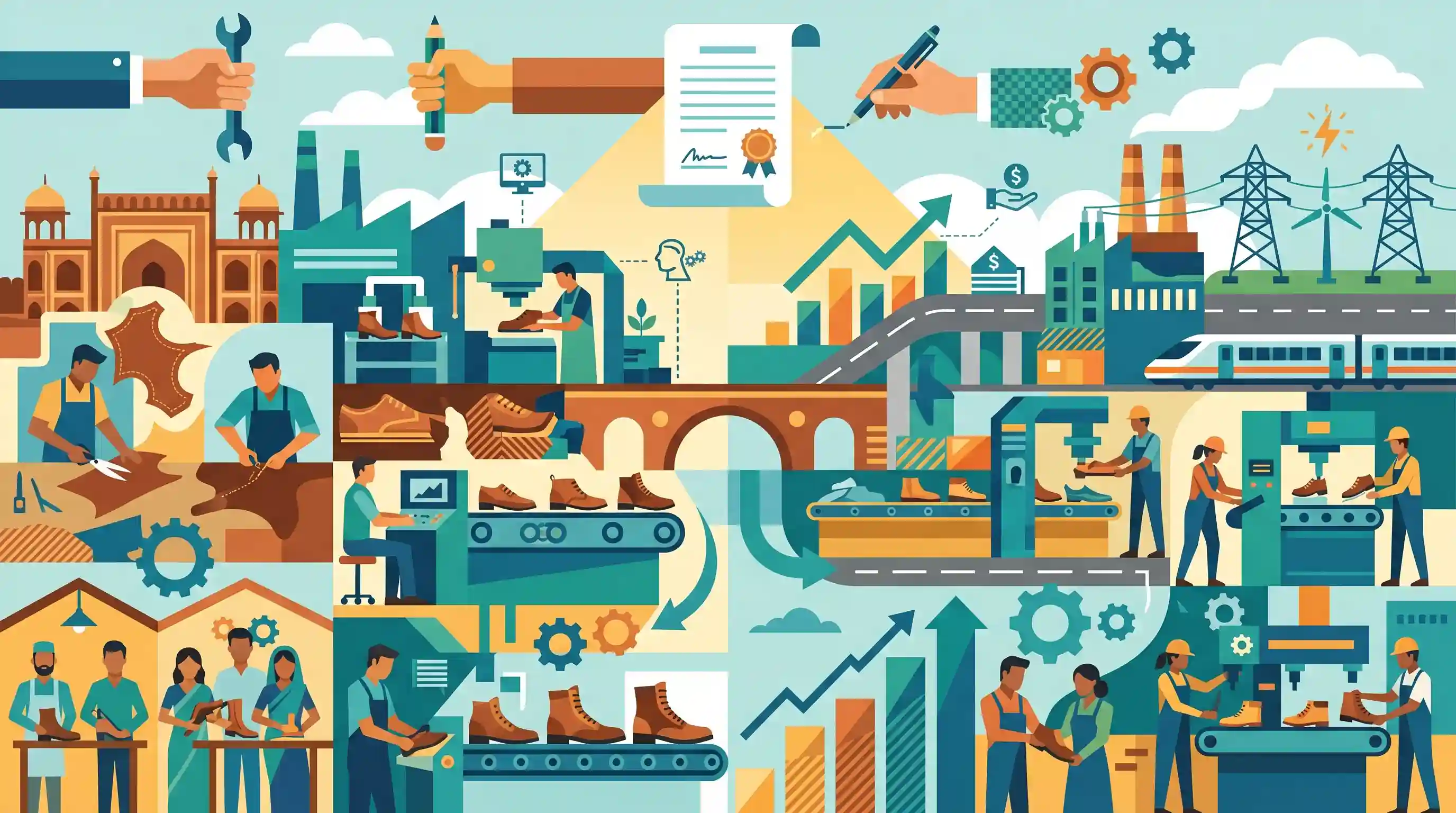
The Uttar Pradesh government is undertaking policy revisions and an infrastructure push to develop Agra and Kanpur into the "twin footwear hubs of the country." This initiative aims to revitalize the traditional leather and footwear industries in these cities by providing better infrastructure, attracting investments, and generating employment. It aligns with strategies to boost the manufacturing sector, support MSMEs, and promote labor-intensive industries for economic growth and regional development.
Key Points
- The Uttar Pradesh government is pushing to develop Agra and Kanpur into the 'twin footwear hubs' of India through targeted policy revisions and infrastructure development.
- The initiative aims to revitalize traditional leather and footwear manufacturing, which is heavily concentrated in these two cities.
- By focusing on the MSME-dominated footwear sector, the state intends to boost a highly labor-intensive industry to generate large-scale employment.
- The push aligns with broader goals of increasing the manufacturing sector's share in GDP and promoting regional resource-based manufacturing.
Important Terms
MSMEs (Micro, Small and Medium Enterprises)

Small-scale businesses defined by the MSMED Act 2006 (revised 2020) based on investment and turnover limits. They are critical for employment and regional development.
UPSC context
GS Paper III (Economy). Evaluates the "backbone of the economy" regarding GDP contribution, export share, and inclusive growth.
UP Footwear, Leather and Non-Leather Area Development Policy 2025
A state strategy offering capital subsidies (up to ₹80 crore), stamp duty exemptions, and infrastructure like leather parks to transform UP into a global hub.
UPSC context
GS Paper II/III. Relevant for state-led industrial policies and the goal of achieving a $1 trillion state economy.
Labour-Intensive Industries
Sectors where the ratio of labour to capital is high. In India, leather and footwear are primary examples used to absorb the rural/semi-skilled workforce.
UPSC context
GS Paper III (Employment). Critical for discussing jobless growth, demographic dividends, and sector-specific employment strategies.
Cluster-based Development
A model concentrating interconnected industries and suppliers in one region to share infrastructure, reduce costs, and enhance global competitiveness through specialized support.
UPSC context
GS Paper III (Infrastructure). Tests knowledge of industrial corridors and the "One District One Product" (ODOP) framework.
Export Promotion
Incentives like tax rebates (RoDTEP) and transportation subsidies used to make Indian products competitive abroad, especially for high-forex sectors like leather.
UPSC context
GS Paper III (Economy). Relevant for Current Account Deficit (CAD) management and "Make in India for the World."
Manufacturing Sector
The economic activity of processing raw materials into finished goods. The leather sector is a key segment, contributing significantly to industrial output.
UPSC context
GS Paper III. Focuses on the secondary sector's role in economic structural transformation.
Prelims Trap
"India is the world's second-largest exporter of footwear and leather products."
India is the second-largest *producer* globally (13% share), but its *export* share is only about 2.2%. Aspirants often confuse production rank with export rank.
Static Concepts Connected
What factors historically determined the location of Kanpur's leather industry?
- Raw Materials: Proximity to the vast livestock population of the fertile Gangetic plain, ensuring steady hide supply.
- Water Supply: Abundant water from the River Ganga, which is essential for the highly water-intensive tanning process.
- Historical Legacy: Early establishment of British harness and saddlery factories created a legacy pool of skilled artisanal labor.
Why are labor-intensive sectors like footwear critical for India's economy?
- Job Creation: Easily absorbs surplus agricultural labor, requiring minimal formal education to transition into semi-skilled factory roles.
- Women's Employment: The sector structurally employs a significantly higher proportion of female workers compared to heavy manufacturing.
- Decentralized Growth: Dominated by unorganized MSMEs, it prevents corporate monopolization and promotes equitable, decentralized regional development.
Cross-Topic Patterns
ODOP to Districts as Export Hubs
UP's successful 'One District One Product' model directly inspired the DGFT's 'Districts as Export Hubs' initiative, aiming to integrate local MSME clusters into global value chains.
River Pollution & Industrial Clusters
Kanpur's tanneries constantly clash with Namami Gange objectives. The severe environmental cost of leather processing frequently prompts NGT interventions and forces cluster relocations or mandatory zero-liquid-discharge infra.

India's paradox of high production (2nd globally) but low export share (2%) in footwear is a highly probable 2026 Prelims trap statement.
Linked PYQs · 4
Linked PYQs · 4
- 2023MainsGS3
Faster economic growth requires increased share of the manufacturing sector in GDP, particularly of MSMEs. Comment on the present policies of the Government in this regard.
- 2017MainsGS3
Account for the failure of manufacturing sector in achieving the goal of labour-intensive exports. Suggest measures for more labour-intensive rather than capital-intensive exports.
- 2019MainsGS1
Can the strategy of regional resource-based manufacturing help in promoting employment in India?
- 2021MainsGS3
“Investment in infrastructure is essential for more rapid and inclusive economic growth.” Discuss in the light of India's experience.
