West Bengal Assembly Winter Session and Legislative Procedures
Source:socialnews-xyz ↗
Why It Matters
Important for WBCS aspirants to understand the structure, functioning, and constitutional provisions relating to the State Legislature and the office of the Speaker in West Bengal.
Summary
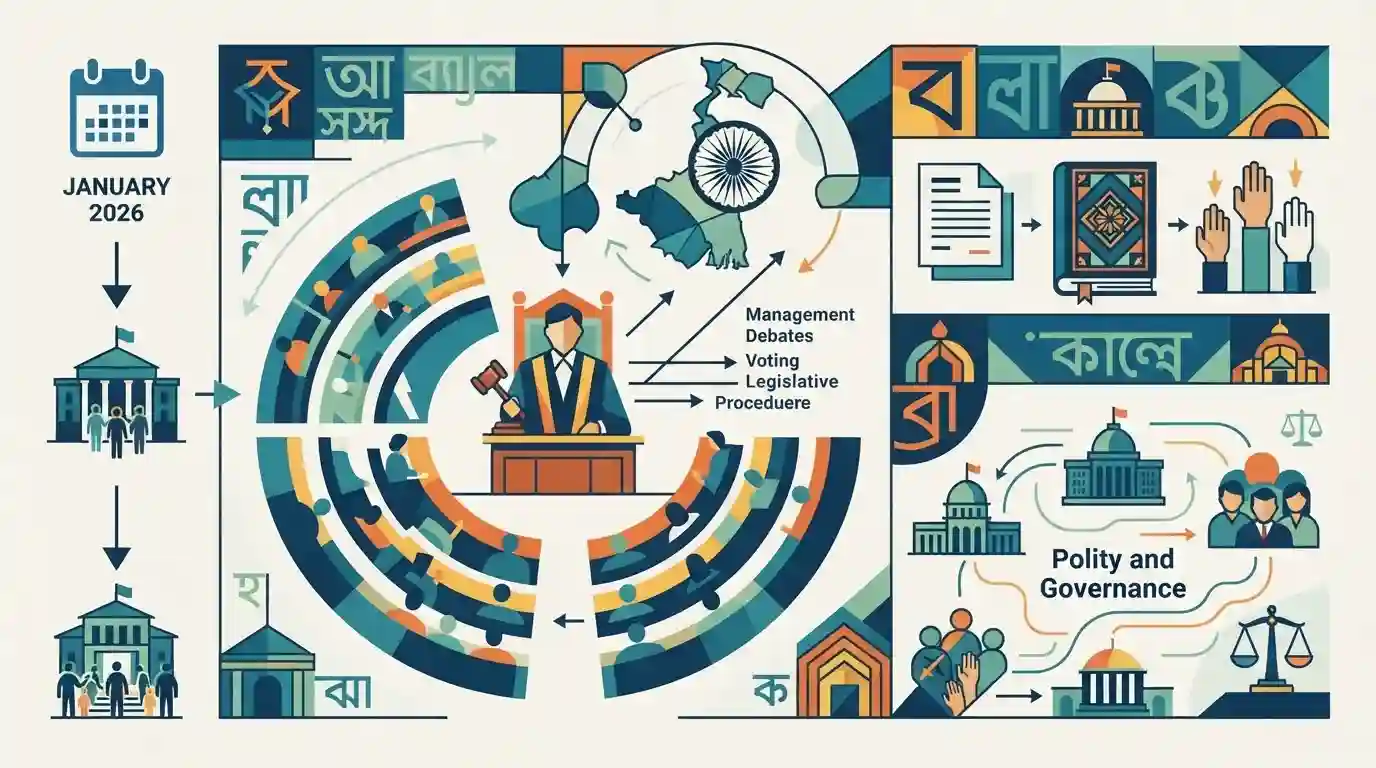
The winter session of the West Bengal Legislative Assembly is scheduled to begin in January 2026, according to an announcement by Assembly Speaker Biman Banerjee. This highlights state legislative procedures, the role of the Speaker in conducting house business, and the constitutional framework governing state legislature sessions under the Indian Constitution.
Key Points
- The winter session of the West Bengal Legislative Assembly was announced to commence in January 2026, as confirmed by Speaker Biman Banerjee.
- State legislative assembly sessions are summoned by the Governor on the advice of the Cabinet, while the Speaker presides over proceedings and regulates the conduct of business inside the House.
- Important legislative business including state financial matters, bills, and policy debates are typically taken up during assembly sessions.
Important Terms
West Bengal Legislative Assembly

The unicameral state legislative body of West Bengal, comprising democratically elected representatives (MLAs) who enact state laws and oversee the executive administration.
UPSC context
WBCS Polity & Governance (Paper V): Tests knowledge of state legislature composition, powers, and legislative procedures in West Bengal.
Speaker of the Legislative Assembly
The constitutional head of the State Legislative Assembly who regulates debate, maintains order, and represents the collective voice and independence of the House.
UPSC context
WBCS Polity (Paper V): Important for questions on constitutional authorities, impartial office of the Speaker, and legislative rules.
Article 174
Constitutional provision empowering the Governor to summon, prorogue, or dissolve the State Legislature, ensuring a maximum gap of six months between consecutive sessions.
UPSC context
WBCS Indian Polity (Paper V): Frequently tested for structural provisions regarding state legislative sessions and executive-legislature relations.
Static Concepts Connected
What are the constitutional provisions regarding the summoning and prorogation of a State Legislature under Article 174?
- Governor Summoning: The Governor summons each House of the Legislature to meet at such time and place as they think fit.
- Six-Month Rule: The maximum gap between two consecutive sessions of the State Legislature cannot exceed six months.
- Prorogation and Dissolution: The Governor may from time to time prorogue the Houses or dissolve the Legislative Assembly on ministerial advice.
Cross-Topic Patterns
State Legislature vs Parliament (Art 174 vs Art 85)
Article 174 governs both state legislature sessions and central parliament sessions (Article 85), forming a core comparative framework in Indian Polity questions for WBCS.

Expect a polity statement question on Article 174: Governor's power to summon vs Speaker's power to regulate house business.
Linked PYQs · 2
Linked PYQs · 2
- 2020WBCS_PRELIMSGS1
'Chancellor' of the State-run Universities in West Bengal is
- 2013WBCS_PRELIMSGS1
Indian constitution allows state legislatures to pass
