वन्यजीव बोर्ड ने बाघ आवासों में परियोजनाओं को मंजूरी दी
स्रोत:इंडियन एक्सप्रेस ↗
क्यों मायने रखता है
The clearance of infrastructure and mining projects inside protected tiger habitats frequently appears in UPSC questions regarding the conflict between conservation efforts and development. The statutory role of the NBWL and the legal protections afforded to tiger reserves under the Wildlife (Protection) Act, 1972 are critical topics for both Prelims and Mains (GS3 Environment).
सारांश
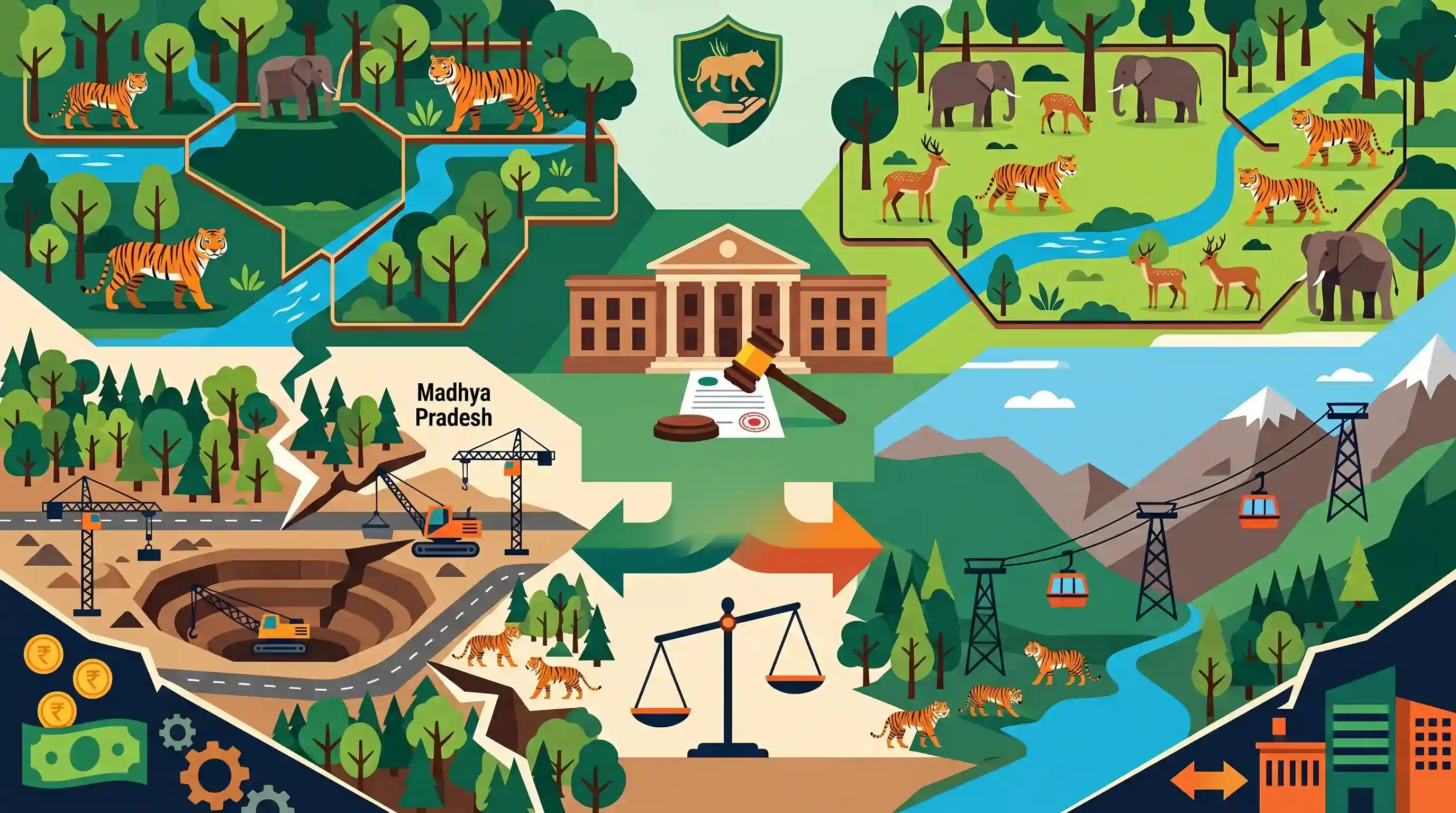
The Standing Committee of the National Board for Wildlife (NBWL) has granted environmental clearances for controversial infrastructure and mining projects in the tiger habitats of Madhya Pradesh. Additionally, it has approved the construction of a ropeway within Uttarakhand's Rajaji Tiger Reserve. These decisions highlight the ongoing policy tension between facilitating economic/infrastructural development and preserving ecologically sensitive zones, raising concerns among environmentalists regarding habitat fragmentation and threats to tiger populations.
मुख्य बिंदु
- राष्ट्रीय वन्यजीव बोर्ड (NBWL) की स्थायी समिति ने मध्य प्रदेश में बाघ आवासों के भीतर बुनियादी ढांचे और खनन परियोजनाओं को मंजूरी दे दी है।
- पैनल ने उत्तराखंड में स्थित राजाजी टाइगर रिजर्व में एक रोपवे परियोजना को भी मंजूरी दी।
- ये मंजूरियां विकासात्मक आवश्यकताओं और संवेदनशील पारिस्थितिकी तंत्र एवं महत्वपूर्ण वन्यजीव गलियारों के संरक्षण के बीच संतुलन बनाने की बहस को फिर से गरमा देती हैं।
- NBWL वन्यजीव (संरक्षण) अधिनियम, 1972 के तहत गठित एक वैधानिक निकाय है और यह संरक्षित क्षेत्रों के भीतर या उनके निकट आने वाली परियोजनाओं की समीक्षा करने में महत्वपूर्ण भूमिका निभाता है।
महत्वपूर्ण शब्द
वन्यजीव (संरक्षण) अधिनियम, 1972

1972 का एक ऐतिहासिक कानून जो वन्य जीवों, वनस्पतियों और आवासों के संरक्षण के लिए कानूनी ढांचा प्रदान करता है। यह प्रजातियों को आवश्यक सुरक्षा के स्तर के आधार पर अनुसूचियों (schedules) में वर्गीकृत करता है और शिकार तथा व्यापार को विनियमित करता है।
UPSC context
GS Paper III: पर्यावरण एवं पारिस्थितिकी; यह कानूनी सुरक्षा उपायों, संरक्षित क्षेत्र श्रेणियों और सांविधिक संरक्षण निकायों की समझ का परीक्षण करता है।
राष्ट्रीय वन्यजीव बोर्ड (NBWL)
A statutory apex body chaired by the Prime Minister that advises the central government on wildlife conservation policy and approves projects within or around National Parks and Sanctuaries.
UPSC context
GS पेपर II और III: सांविधिक निकाय; कार्यपालिका के नेतृत्व वाली संरक्षण शासन प्रणाली और विकासात्मक परियोजनाओं के लिए अनुमोदन प्रक्रिया के ज्ञान का परीक्षण करता है।
NBWL की स्थायी समिति
A smaller, executive arm of the NBWL chaired by the Environment Minister. It handles the practical task of clearing infrastructure and development projects located in ecologically sensitive zones.
UPSC context
GS Paper III: Environment; highlights the conflict between environmental protection and industrial/infrastructure development in sensitive areas.
राष्ट्रीय बाघ संरक्षण प्राधिकरण (NTCA)
A statutory body under the MoEFCC, established in 2005, to strengthen tiger conservation. It provides legal backing to tiger reserves and ensures their management follows standardized Tiger Conservation Plans.
UPSC context
GS पेपर III: संरक्षण; भारत के प्रमुख संरक्षण कार्यक्रम को विनियमित करने वाली प्रशासनिक और कानूनी संरचना को समझने के लिए महत्वपूर्ण।
क्रिटिकल टाइगर हैबिटेट (CTH)
The core, "inviolate" areas of tiger reserves required to be kept free of human disturbance and infrastructure to ensure the long-term survival of tigers, as defined under the WPA.
UPSC context
GS Paper III: Environmental Impact Assessment; tests knowledge of zoning in protected areas and legal restrictions on developmental activities.
प्रोजेक्ट टाइगर
Launched in 1973, this centrally sponsored scheme aims to maintain a viable tiger population in India. It treats the tiger as an "umbrella species" for entire forest ecosystems.
UPSC context
GS पेपर III: जैव विविधता; फ्लैगशिप प्रजाति संरक्षण, बाघ जनगणना (M-STrIPES), और पारिस्थितिकी तंत्र-आधारित प्रबंधन से संबंधित एक नियमित विषय।
प्रारंभिक ट्रैप
राष्ट्रीय वन्यजीव बोर्ड (NBWL) की स्थायी समिति की अध्यक्षता प्रधानमंत्री द्वारा की जाती है।
प्रधानमंत्री शीर्ष NBWL की अध्यक्षता करते हैं, लेकिन स्थायी समिति—जो वास्तव में परियोजनाओं का मूल्यांकन और उन्हें मंजूरी देती है—की अध्यक्षता केंद्रीय पर्यावरण मंत्री द्वारा की जाती है।
संबंधित अवधारणाएँ
What are the core functions and structure of the NBWL?
- सांविधिक आधार: वन्यजीव (संरक्षण) अधिनियम, 1972 के तहत गठित, जिसने पूर्ववर्ती सलाहकार इंडियन बोर्ड फॉर वाइल्डलाइफ का स्थान लिया।
- नेतृत्व: प्रधानमंत्री की अध्यक्षता में, जिसमें केंद्रीय पर्यावरण, वन और जलवायु परिवर्तन मंत्री उपाध्यक्ष होते हैं।
- सीमाओं में परिवर्तन: राष्ट्रीय उद्यानों और वन्यजीव अभयारण्यों की सीमाओं में कोई भी परिवर्तन NBWL की स्पष्ट अनुमति के बिना नहीं किया जा सकता है।
राजाजी टाइगर रिजर्व की भौगोलिक और पारिस्थितिक विशेषताएं क्या हैं?
- उत्पत्ति: Formed in 1983 by amalgamating three wildlife sanctuaries: Rajaji, Motichur, and Chilla in the Shivalik foothills.
- River systems: Uniquely bisected by the Ganga River. The Song River, a major tributary, also flows through the reserve.
- पारिस्थितिक भूमिका: Forms the north-western limit of the Asian elephant's range in India and serves as a critical tiger corridor.
अंतर-विषय पैटर्न
पर्वतमाला योजना बनाम संरक्षित क्षेत्र
The push for ropeway infrastructure in hill states often bypasses rigorous EIA under 'public utility' exemptions, creating friction between the Parvatmala scheme and the Wildlife Protection Act.
एकल खिड़की पर्यावरणीय मंजूरी
परिवेश (PARIVESH) पोर्टल द्वारा पर्यावरणीय, वन और वन्यजीव मंजूरियों को त्वरित गति (fast-track) देने का प्रयास, 'ईज़ ऑफ डूइंग बिजनेस' शासन को सीधे तौर पर आवास विखंडन (habitat fragmentation) से जुड़ी पारिस्थितिक चिंताओं से जोड़ता है।

2026 की प्रीलिम्स परीक्षा में राजाजी TR (गंगा/सोंग) की नदी पारिस्थितिकी को NBWL की वैधानिक सीमा-परिवर्तन शक्तियों के साथ जोड़ते हुए एक प्रश्न की अपेक्षा करें।
संबद्ध PYQ · 4
संबद्ध PYQ · 4
- 2022PrelimsGS1
With reference to Indian laws about wildlife protection, consider the following statements : 1. Wild animals are the sole property of the government. 2. When a wild animal is declared protected, such animal is entitled for equal protection whether it is found in protected areas or outside. 3. Apprehension of a protected wild animal becoming a danger to human life is sufficient ground for its capture or killing. Which of the statements given above is/are correct?
- 2017PrelimsGS1
In India, if a species of tortoise is declared protected under Schedule I of the Wildlife (Protection) Act, 1972, what does it imply?
- 2017PrelimsGS1
According to the Wildlife (Protection) Act, 1972, which of the following animals cannot be hunted by any person except under some provisions provided by law? 1. Gharial 2. Indian wild ass 3. Wild buffalo Select the correct answer using the code given below:
- 2020PrelimsGS1
Among the following Tiger Reserves, which one has the largest area under "Critical Tiger Habitat"?
