Organ Transplantation Sector Reveals Stark Gender Disparities
Source:The Hindu ↗
Why It Matters
It uncovers a critical intersection of public health and gender inequality in India, exposing how systemic patriarchal norms skew life-saving healthcare access, which is crucial for GS2 (Social Justice, Health, Women's Issues).
Summary
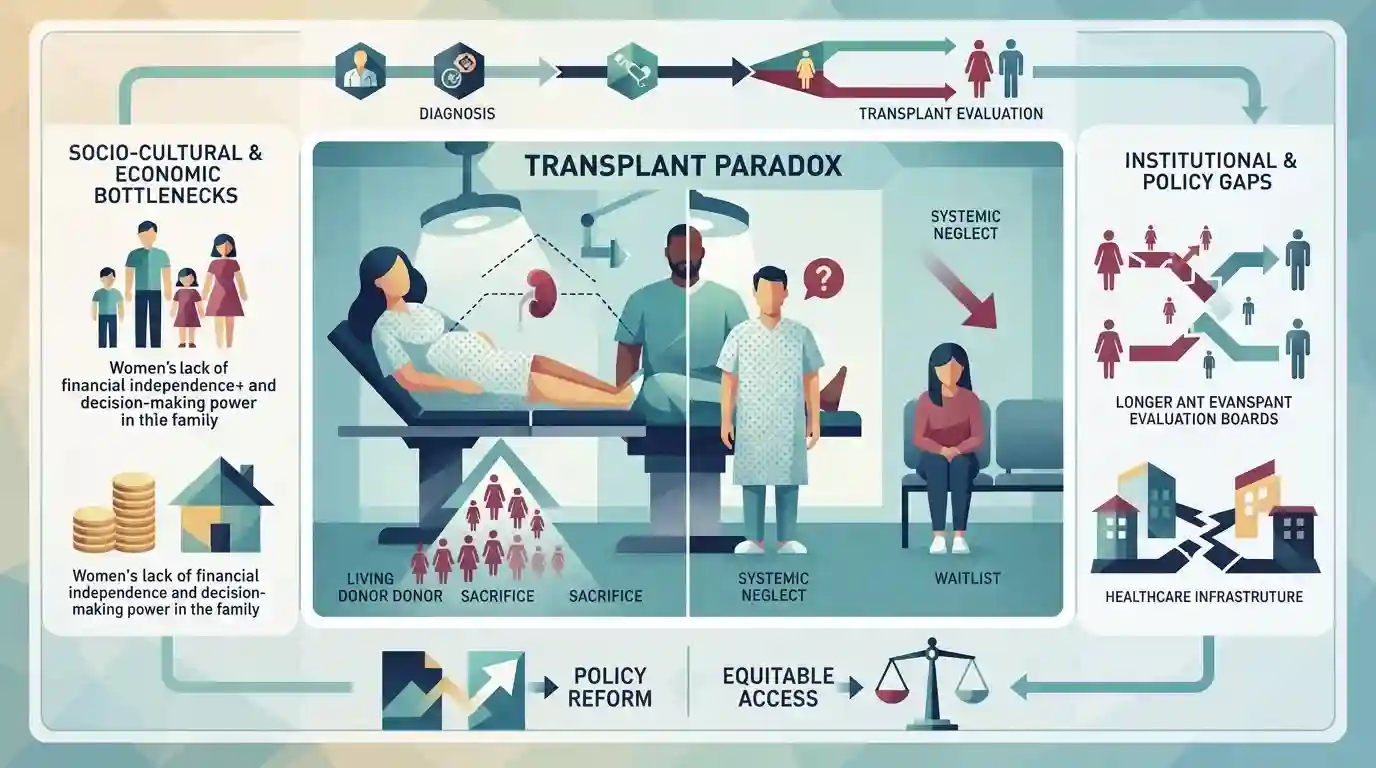
The article highlights the profound gender disparities present in organ transplantation in India, shedding light on the paradox where women predominantly act as donors (especially living donors for male family members) while facing systemic neglect as recipients. It examines the socio-cultural, economic, and institutional bottlenecks that restrict women from accessing healthcare and organ transplantation, calling for targeted policy and structural reforms.
Key Points
- A stark gender disparity exists in organ transplantation in India, where women constitute the majority of living organ donors but a minority of recipients.
- Socio-cultural factors, economic dependency, familial dynamics, and lack of agency severely restrict women's access to receiving life-saving organs.
- The burden of being 'altruistic' donors is disproportionately shouldered by women due to patriarchal family structures.
- Policy interventions need to address gender-sensitive health infrastructure, legal frameworks, and awareness campaigns to bridge the gap in organ transplantation.
Linked PYQs · 1
Linked PYQs · 1
- 2024MainsGS2
Public charitable trusts have the potential to make India's development more inclusive as they relate to certain vital public issues. Comment.
