India Macroeconomic Indicators and US Trade Rhetoric Scrutiny
Source:Indian Express ↗
Why It Matters
Provides a critical case study for distinguishing between political rhetoric in international trade negotiations and actual macroeconomic realities. Essential for evaluating India's economic standing, the impact of protectionism, and India-US trade dynamics.
Summary
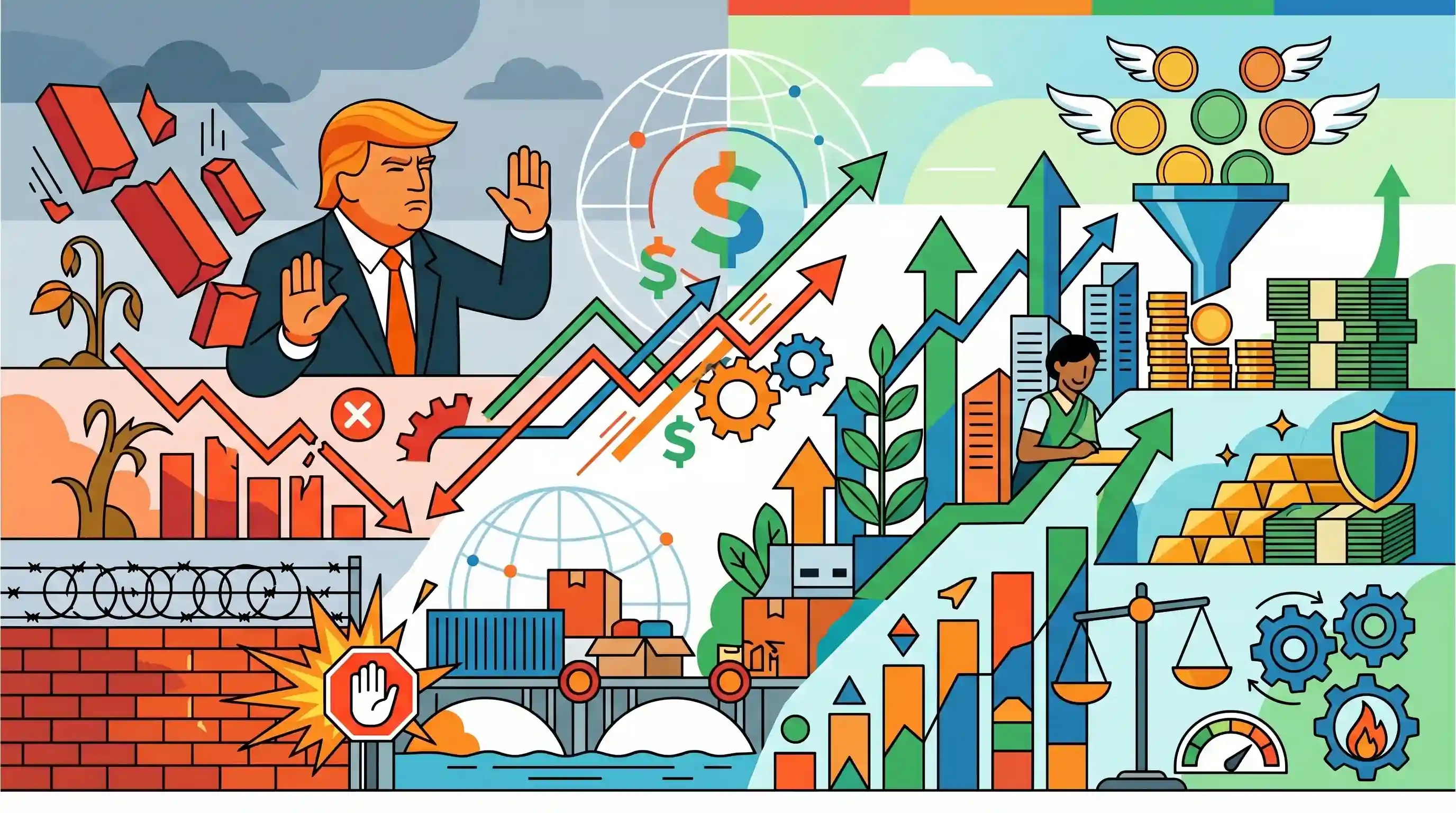
The article scrutinizes US President Donald Trump's assertion that India has a 'dead economy', rebutting it with hard macroeconomic data. Far from being stagnant, India remains one of the world's fastest-growing major economies, characterized by steady GDP growth, robust foreign direct investment (FDI), manageable inflation rates, and high foreign exchange reserves. Trump's jibe is understood in the broader context of India-US bilateral trade disputes, emphasizing ongoing friction over tariffs, protectionist rhetoric, and negotiation tactics, rather than an accurate reflection of India's foundational economic vitality.
Key Points
- US President Donald Trump's claim that India is a 'dead economy' contradicts India's status as the fastest-growing major global economy.
- Macroeconomic indicators such as consistent GDP growth, contained inflation, and substantial forex reserves demonstrate robust economic health.
- Sustained Foreign Direct Investment (FDI) inflows highlight strong and continuous global investor confidence in the Indian market.
- The political rhetoric is largely driven by US-India bilateral trade disputes, protectionist measures, and negotiation tactics over tariffs rather than factual economic assessments.
Important Terms
Make in India

A flagship 2014 initiative aiming to transform India into a global manufacturing hub by facilitating investment, innovation, and world-class infrastructure.
UPSC context
GS Paper III (Industrial Policy); tests understanding of manufacturing-led growth and the 'Vocal for Local' strategy.
Reserve Bank of India (RBI)
India’s central bank responsible for monetary policy, managing foreign exchange, and maintaining the financial stability necessary for economic growth.
UPSC context
GS Paper III (Economy); tests knowledge of inflation targeting, repo rates, and macroeconomic management.
Macroeconomic Stability
A condition where key economic indicators like inflation, fiscal deficit, and currency value remain stable, supporting sustainable growth and investor trust.
UPSC context
GS Paper III (Economic Development); tests analysis of India's growth resilience compared to global peers.
Foreign Direct Investment (FDI)
Capital investment from foreign entities into Indian businesses, crucial for technology transfer and infrastructure development.
UPSC context
GS Paper III (Investment Models); tests knowledge of capital inflows and their impact on the balance of payments.
Protectionism
Economic policies like high tariffs intended to shield domestic industries from foreign competition, often a point of friction in international trade.
UPSC context
GS Paper III (International Trade); tests critical thinking on trade barriers and global supply chain integration.
Production-Linked Incentive (PLI) Scheme
A government scheme offering financial rewards to companies for increased domestic production in key sectors like electronics and pharmaceuticals.
UPSC context
GS Paper III (Economy/Manufacturing); tests knowledge of modern industrial subsidies and export-oriented growth strategies.
Trade Deficit
The difference between the value of a country's imports and exports; a 'surplus' for India with the US is a major diplomatic talking point.
UPSC context
GS Paper III (Balance of Payments); tests understanding of trade balances and their geopolitical implications in bilateral ties.
Bilateral Trade Agreement (BTA)
A formal treaty between two nations to reduce trade barriers; currently a major negotiation focus between India and the US.
UPSC context
GS Paper II (International Relations); tests understanding of diplomatic-economic negotiations and market access challenges.
Prelims Trap
"FDI inflows directly increase the sovereign external debt burden of India."
FDI is a non-debt creating capital inflow involving equity and ownership. External Commercial Borrowings (ECBs) and some FPIs contribute to external debt, not FDI.
Static Concepts Connected
What are the four components of India's Foreign Exchange Reserves?
- Foreign Currency Assets: The largest component, held in major global currencies like the US Dollar, Euro, Pound, and Yen.
- Gold Reserves: Physical gold held by the RBI as a secure store of value and inflation hedge against currency volatility.
- Special Drawing Rights: An international reserve asset created by the IMF, allocated to member countries based on their IMF quotas.
- Reserve Tranche Position: The portion of a member country's required quota with the IMF that can be accessed without restrictive conditions.
Why is FDI preferred over FPI for macroeconomic stability?
- Non-Debt Creating: FDI provides long-term equity capital without increasing the host country's external debt obligations.
- Structural Stability: Unlike FPI (which acts as volatile 'hot money'), FDI involves physical assets and is less prone to sudden capital flight during shocks.
- Technology Transfer: FDI often brings managerial expertise, advanced technology, and job creation, directly boosting the host economy's growth potential.
Cross-Topic Patterns
Bilateral Tariffs vs WTO Paralysis
Increasing US reliance on unilateral tariff threats instead of multilateral arbitration highlights the paralysis of the WTO's Appellate Body and a shift towards protectionist statecraft.
Forex Buffers + Managed Float Regime
High foreign exchange reserves directly empower the RBI's 'managed float' exchange rate regime, allowing targeted interventions to curb Rupee volatility and manage imported inflation.

Expect a 2026 prelims question linking the components of forex reserves with debt vs. non-debt creating capital inflows like FDI.
Linked PYQs · 5
Linked PYQs · 5
- 2019MainsGS3
Do you agree with the view that steady GDP growth and low inflation have left the Indian economy in good shape? Give reasons in support of your arguments.
- 2025MainsGS3
What are the challenges before the Indian economy when the world is moving away from free trade and multilateralism to protectionism and bilateralism? How can these challenges be met?
- 2018MainsGS3
How would the recent phenomena of protectionism and currency manipulations in world trade affect macroeconomic stability of India?
- 2020PrelimsGS1
With reference to Foreign Direct Investment in India, which one of the following is considered its major characteristic?
- 2012MainsGS2
Discuss the likely negative impact of the protectionist measures proposed by the US on India's software industry.
