Keynesian Versus Orthodox Economic Policies in Macroeconomics
Source:The Hindu ↗
কেন এটি গুরুত্বপূর্ণ
Understanding macroeconomic theories like Keynesianism versus orthodox economics is essential for UPSC aspirants to critically evaluate fiscal policies, government budget strategies, inflation management, and economic growth models.
সারসংক্ষেপ
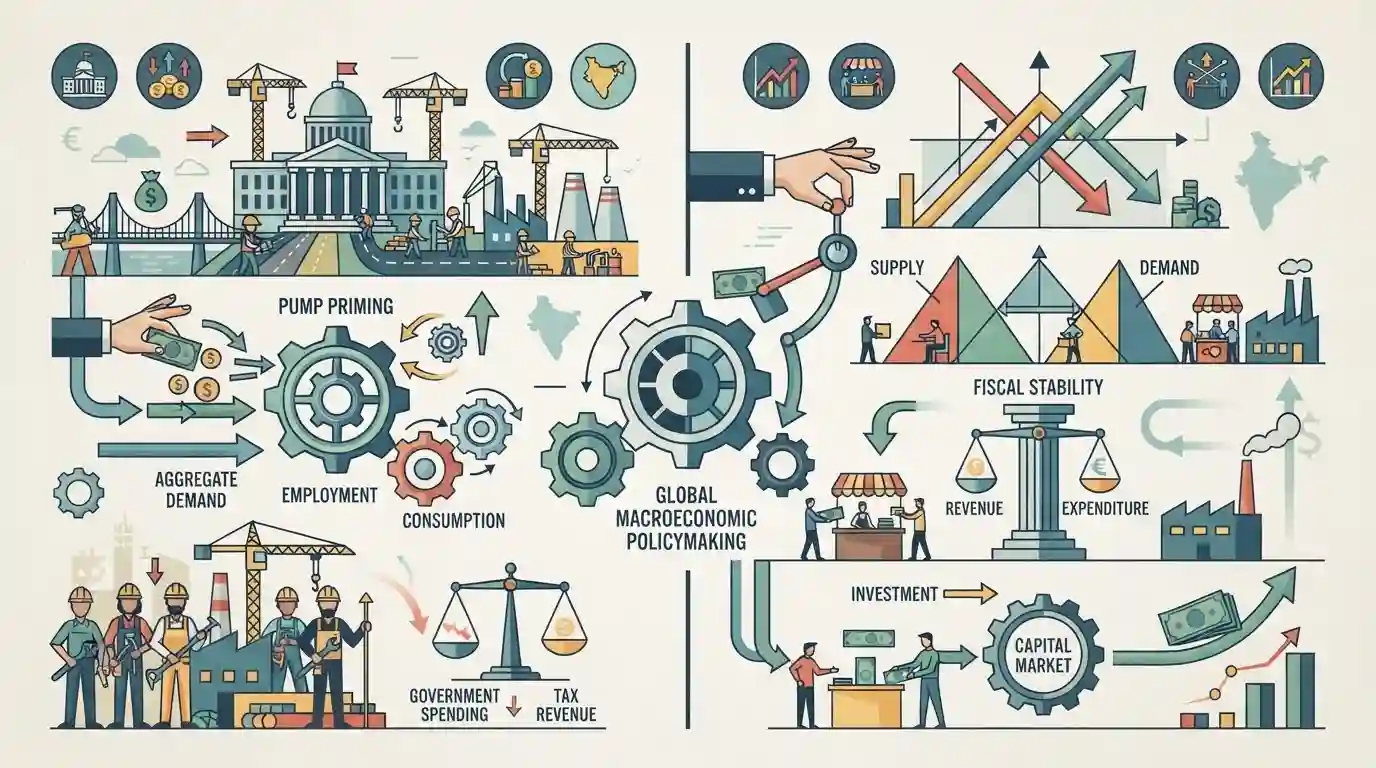
The article explores the enduring debate between Keynesian and orthodox economic theories, examining how differing views on government spending, market self-regulation, fiscal deficits, and state intervention shape modern macroeconomic policymaking globally.
মূল বিষয়
- The debate between Keynesian economics and orthodox (classical/neoclassical) economics centres on the degree of government intervention required in an economy.
- Keynesian economics advocates for active state intervention, fiscal stimulus, and government spending during economic downturns to boost aggregate demand and employment.
- Orthodox economics emphasizes free markets, fiscal restraint, balanced budgets, deregulation, and the view that markets self-correct over time without causing inflationary pressures.
- Modern policy debates often oscillate between these two philosophies, especially in response to crises like inflation shocks, public debt burdens, and post-pandemic economic recovery strategies.
গুরুত্বপূর্ণ শব্দ
Keynesian Economics

An economic theory developed by John Maynard Keynes advocating for active government intervention and increased public spending to stimulate aggregate demand, especially during economic downturns and recessions.
UPSC context
UPSC GS Paper III (Indian Economy): Essential for understanding fiscal policy, demand-side management, government budgeting, and economic stabilization measures.
Orthodox Economics
Economic approach prioritizing free markets, price stability, and minimal state intervention, assuming that markets naturally self-regulate toward full employment and long-term equilibrium.
UPSC context
UPSC GS Paper III (Indian Economy): Tests understanding of neoclassical principles, monetary policy, market deregulation, and supply-side economics.
Fiscal Deficit
A situation where a government's total expenditures exceed its total revenue, often utilized in Keynesian policies to fund public investments and stimulate demand.
UPSC context
UPSC GS Paper III (Government Budgeting): Core concept for examining fiscal discipline, resource mobilization, and macroeconomic stability in India.
প্রিলিমস ফাঁদ
orthodox economics emphasizes free markets ... and the view that markets self-correct over time without any state role
Aspirants often assume orthodox economics rejects all state involvement, whereas classical/neoclassical models still assign the state core functions like property rights, law and order, and public goods—just not discretionary demand management.
সংযুক্ত স্থির ধারণা
What are the core differences between Keynesian and Classical macroeconomic theories?
- Self-Regulation: Market view: Classical economists believe markets are self-regulating and clear quickly; Keynesian theory argues markets can experience prolonged involuntary unemployment due to sticky wages and prices.
- Aggregate Demand: Demand focus: Keynesians emphasize aggregate demand as the primary driver of economic short-run fluctuations, whereas classical economics focuses on aggregate supply and productive capacity.
- State Role: Policy prescription: Keynesians advocate active countercyclical fiscal and monetary policies; classical economists favor laissez-faire, deregulation, and balanced budgets.
আন্তঃবিষয় প্যাটার্ন
Keynesian Stimulus vs. FRBM Fiscal Discipline
Fiscal stimulus during recessions tests statutory deficit targets under laws like India's FRBM Act, pitting Keynesian demand-management against orthodox fiscal consolidation.
Monetary Policy Trade-offs: Growth vs. Inflation
Central banks balancing growth support with inflation targeting must reconcile Keynesian output-gap management with orthodox monetary tightening.

FRBM Act targets + Keynesian countercyclical fiscal policy trade-offs likely to feature in a Mains GS3 budget/fiscal policy question.
সংযুক্ত PYQ · 2
সংযুক্ত PYQ · 2
- 2019MainsGS3
The public expenditure management is a challenge to the Government of India in the context of budget making during the post-liberalization period. Clarify it.
- 2022MainsGS3
Is inclusive growth possible under market economy ? State the significance of financial inclusion in achieving economic growth in India.
