Keynesian versus Orthodox Economic Theories in Policy Making
Source:The Hindu ↗
ఇది ఎందుకు ముఖ్యం
Understanding macroeconomic theories like Keynesian and orthodox economics is essential for aspirants to analyze government fiscal policies, budget deficits, inflation management, and structural economic reforms in India.
సారాంశం
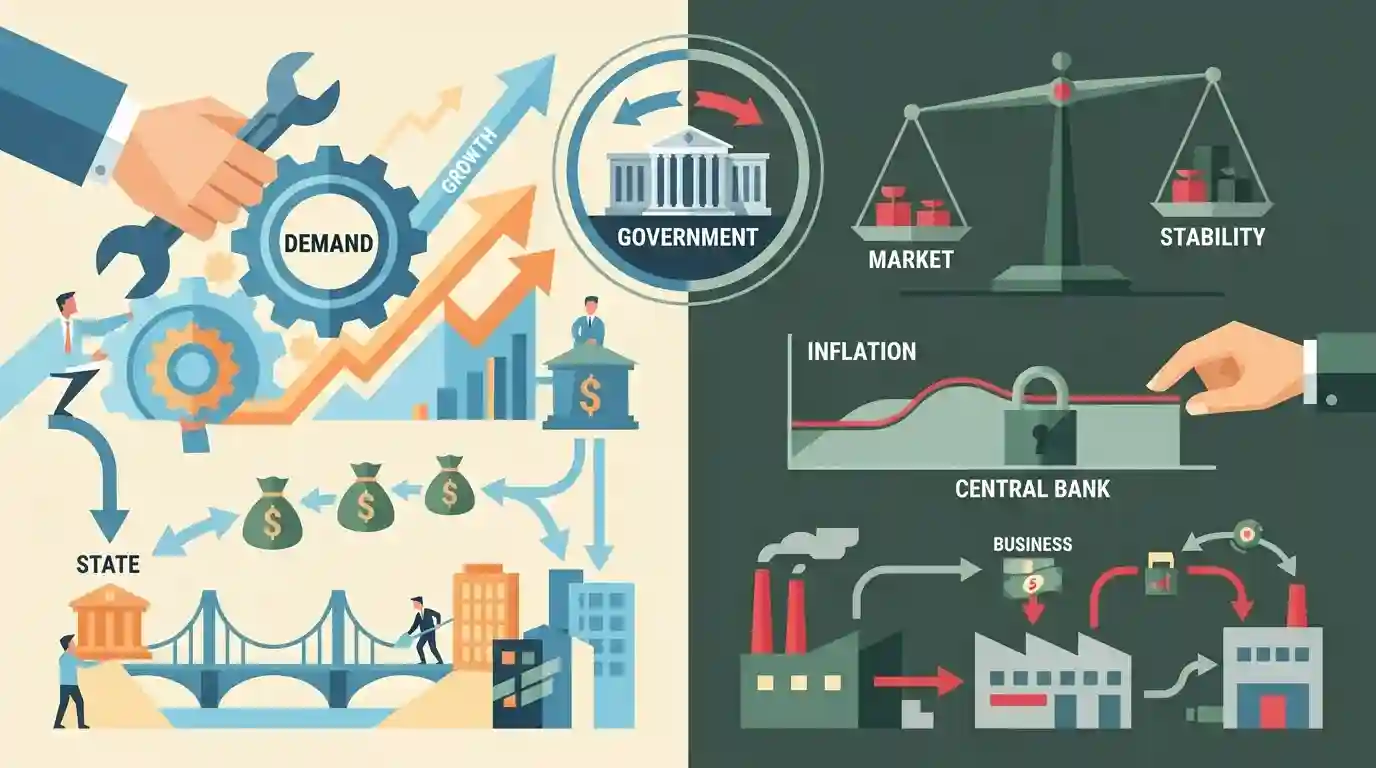
This article discusses the foundational economic debate between Keynesian economics, which advocates for state intervention and fiscal stimulus to drive demand, and orthodox economics, which emphasizes market self-correction, fiscal prudence, and monetary stability. It highlights how these contrasting theories shape modern government responses to economic crises, inflation, and growth.
ముఖ్య అంశాలు
- The article explores the enduring debate between Keynesian economics (advocating government intervention and fiscal stimulus during downturns) and orthodox/classical economics (emphasizing free markets, fiscal austerity, and supply-side balance).
- Keynesian economics highlights that in the long run we are all dead, advocating active state intervention to manage demand and combat unemployment, especially during economic crises.
- Orthodox economics warns against excessive government borrowing, inflation, and market distortion, favoring structural reforms and monetary discipline.
- The debate remains crucial for contemporary policymaking, particularly regarding how governments should balance growth, inflation, public debt, and welfare spending.
ప్రిలిమ్స్ ఉచ్చు
Keynesian economics relies primarily on structural reforms and market self-correction rather than government expenditure to manage aggregate demand.
Aspirants often confuse fiscal stimulus (Keynesian demand-side tool) with structural reforms (supply-side orthodox tool), treating them as interchangeable policy instruments.
అనుసంధానమైన స్థిర భావనలు
What are the core differences between Keynesian and Classical (Orthodox) economic doctrines?
- Demand Focus: Keynesian theory prioritizes aggregate demand management through active government intervention, public spending, and fiscal stimulus during downturns.
- Self-Correction: Classical/orthodox economics assumes markets are self-correcting in the long run, emphasizing supply-side factors, price stability, and minimal state interference.
- Fiscal Stance: Keynesians view high public debt during crises as acceptable to avert depressions, whereas orthodox economists warn against inflation and debt sustainability risks.
అంతర-అంశ నమూనాలు
Keynesian Welfare vs. Fiscal Prudence
MGNREGA and capital expenditure push reflect Keynesian demand management, constrained by FRBM fiscal deficit targets rooted in orthodox economic discipline.

Keynesian stimulus vs orthodox fiscal consolidation will feature in Mains GS3 as a policy trade-off in post-pandemic inflation management.
అనుసంధాన PYQలు · 2
అనుసంధాన PYQలు · 2
- 2023MainsGS3
Faster economic growth requires increased share of the manufacturing sector in GDP, particularly of MSMEs. Comment on the present policies of the Government in this regard.
- 2022MainsGS3
Is inclusive growth possible under market economy ? State the significance of financial inclusion in achieving economic growth in India.
