Meta Shift to AI Content Moderation and Misinformation
Source:The Hindu ↗
Why It Matters
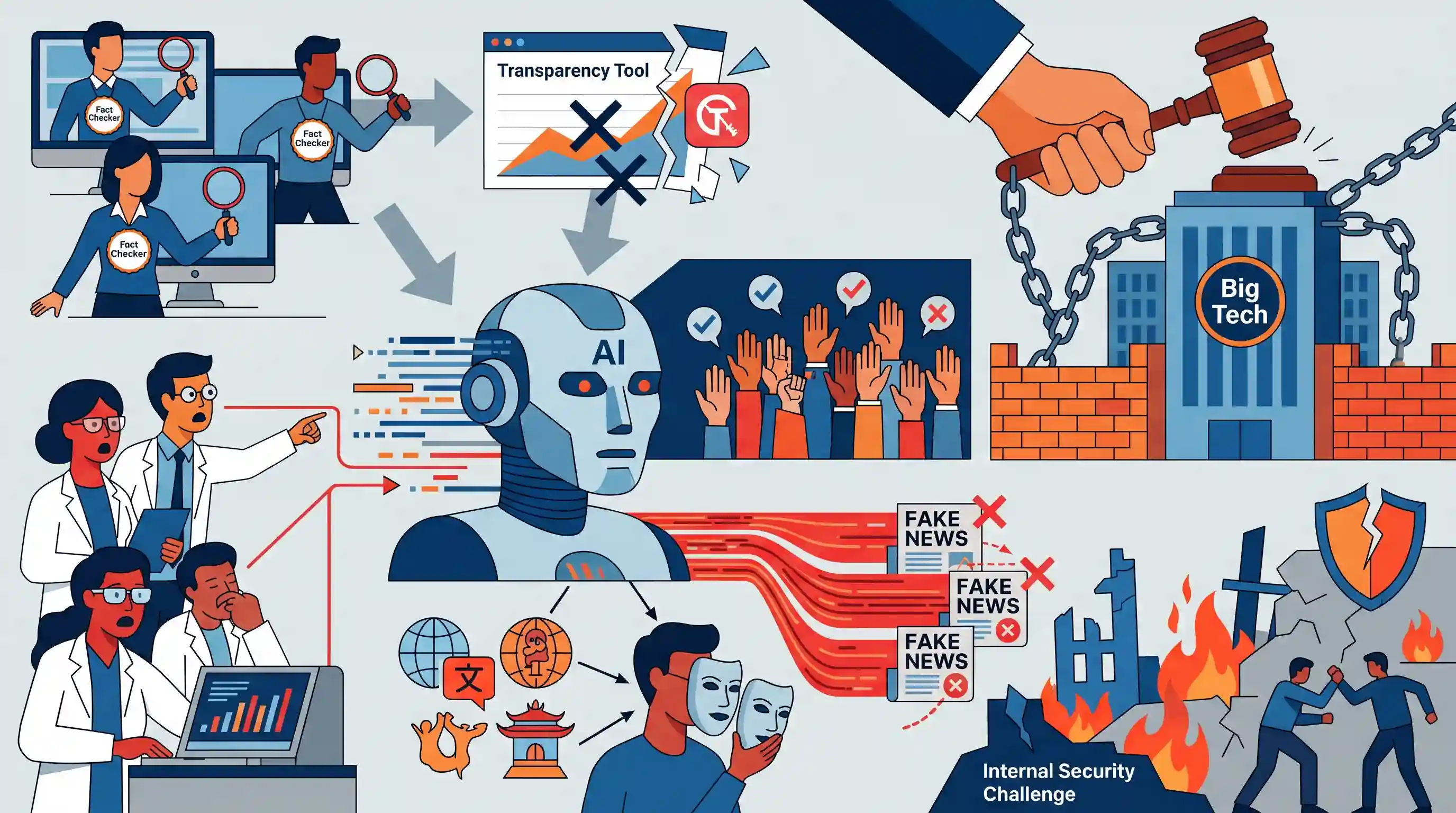
The unchecked spread of misinformation on social media platforms is a critical internal security and governance issue. Meta's pivot to AI moderation highlights the evolving challenges in digital regulation, algorithmic bias, and the necessity of holding social media intermediaries accountable under laws like the IT Rules, 2021.
Summary
Meta is scaling back its third-party fact-checking partnerships and retiring transparency tools like CrowdTangle, pivoting instead towards an automated, AI-driven model and community-based moderation for fact-checking. This strategic shift has sparked widespread concern among researchers and journalists, who argue that AI lacks the cultural nuance and regional language capabilities necessary to combat localized disinformation and deepfakes. The reduction of human oversight on platforms like Facebook and WhatsApp poses a significant risk of unchecked fake news, presenting a serious challenge to internal security and democratic processes. It underscores the urgency for stringent digital regulations and accountability for Big Tech intermediaries.
Key Points
- Meta is shifting its content moderation strategy from relying on professional third-party fact-checkers to utilizing Artificial Intelligence (AI) and crowdsourced community feedback.
- The company has also retired crucial transparency tools like CrowdTangle, which researchers and journalists heavily relied on to track the spread of viral misinformation.
- Critics and fact-checkers warn that current AI models lack the necessary cultural context, regional language proficiency, and nuanced understanding required to effectively identify complex local propaganda and deepfakes.
- The dilution of human-led fact-checking raises significant concerns about the unchecked proliferation of fake news, which can exacerbate internal security challenges, manipulate electoral outcomes, and fuel social polarization.
- This transition highlights the pressing need for stronger regulatory frameworks and algorithmic transparency to hold Big Tech platforms accountable for the content amplified on their networks.
Important Terms
Information Technology (Intermediary Guidelines and Digital Media Ethics Code) Rules, 2021

A comprehensive regulatory framework under the IT Act, 2000, governing social media intermediaries, OTT platforms, and digital news publishers to ensure accountability, due diligence, and a robust grievance redressal mechanism.
UPSC context
GS Paper 2 & 3: Essential for understanding digital governance, intermediary liability, and government's power to regulate online content.
Significant Social Media Intermediary (SSMI)
A social media platform with over 50 lakh registered users in India, subject to stricter compliance under the IT Rules 2021, including appointing a Chief Compliance Officer.
UPSC context
GS Paper 3: Relevant to technology regulation and the specific obligations of Big Tech companies like Meta in India.
Safe Harbour Principle
Legal immunity granted to intermediaries under Section 79 of the IT Act, shielding them from liability for third-party content provided they follow government-prescribed due diligence and removal orders.
UPSC context
GS Paper 2: Tests the balance between platform immunity, free speech, and state responsibility to curb misinformation.
Deepfakes
AI-generated synthetic media that realistically mimics a person's appearance or voice, often used to spread disinformation, commit fraud, or incite social unrest.
UPSC context
GS Paper 3: A critical theme under 'Challenges to internal security through communication networks' and 'Cyber Security'.
CrowdTangle
A public insights tool owned by Meta used by researchers and journalists to track the spread of content and misinformation across Facebook and Instagram; its retirement reduces platform transparency.
UPSC context
GS Paper 3: Highlights the challenges in monitoring misinformation and the shift from human-led transparency to automated platform oversight.
Disinformation
The intentional creation and dissemination of false information with the aim to deceive, influence public opinion, or harm national interests and social harmony.
UPSC context
GS Paper 3: A core challenge to internal security, testing the role of social media in radicalization and democratic destabilization.
Prelims Trap
Under the IT Act, social media platforms possess absolute immunity from prosecution regarding user-generated content.
Immunity (Safe Harbour under Section 79) is conditional, not absolute. It requires platforms to observe due diligence and comply with lawful government takedown orders to maintain protection.
Static Concepts Connected
What is the "Safe Harbour" protection for digital intermediaries?
- Legal Basis: Granted under Section 79 of the Information Technology (IT) Act, 2000.
- Core Immunity: Protects social media intermediaries from legal liability for third-party content hosted on their platforms.
- Conditional Nature: Protection is lost if platforms fail to observe "due diligence" (under IT Rules, 2021) or ignore lawful government takedown notices.
What is the mandate of the Fact Check Unit (FCU) under the amended IT Rules?
- Creation: Established via the Information Technology (Intermediary Guidelines and Digital Media Ethics Code) Amendment Rules, 2023.
- Mandate: Tasked with identifying and flagging fake, false, or misleading online content related to the business of the Central Government.
- Consequence: If intermediaries ignore the FCU's flags, they risk losing their Safe Harbour protection, making them directly liable for the content.
Cross-Topic Patterns
Safe Harbour vs. Free Speech
The shift towards automated AI moderation and state-run Fact Check Units raises constitutional questions regarding the potential chilling effect on Article 19(1)(a) and the proportionality of content censorship.
Deepfakes and Electoral Security
Retreating human moderation on platforms exacerbates the risk of deepfakes and localized disinformation being weaponized by non-state actors during Indian electoral cycles, triggering a severe internal security challenge.

Expect a 2026 GS-3 mains question linking Big Tech's shift away from human moderation to the rising electoral threat of AI deepfakes.
Linked PYQs · 3
Linked PYQs · 3
- 2024MainsGS3
Social media and encrypting messaging services pose a serious security challenge. What measures have been adopted at various levels to address the security implications of social media? Also suggest any other remedies to address the problem.
- 2016MainsGS3
Use of Internet and social media by non-state actors for subversive activities is a major security concern. How have these been misused in the recent past? Suggest effective guidelines to curb the above threat.
- 2023MainsGS3
Introduce the concept of Artificial Intelligence (AI). How does Al help clinical diagnosis? Do you perceive any threat to privacy of the individual in the use of Al in healthcare?
