COP31 Climate Summit Challenges and Multilateral Diplomacy Failures
Source:The Hindu ↗
Why It Matters
Understanding the structural bottlenecks, geopolitical divisions, and negotiation impasses in global climate summits like COP helps aspirants evaluate international environmental governance and India's negotiating stance.
Summary
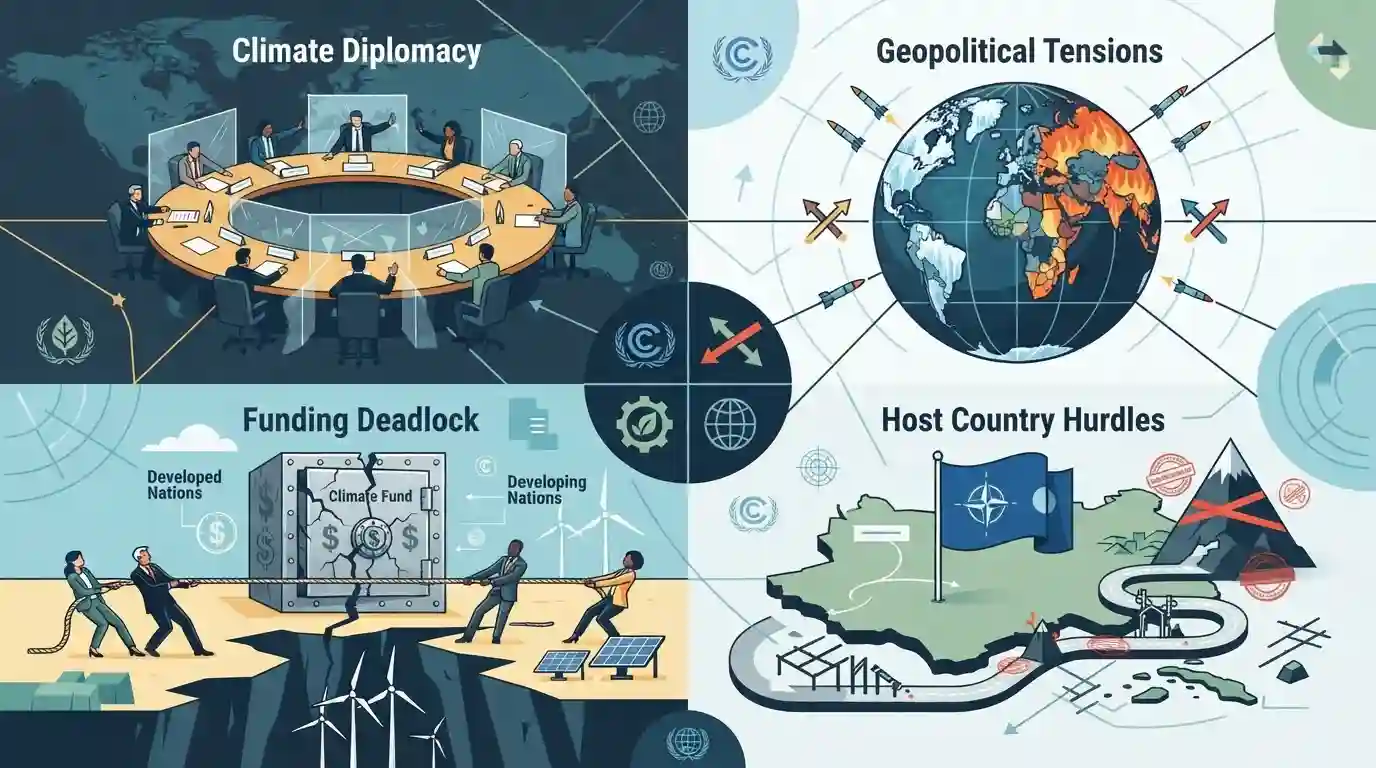
The article explores the reasons behind why COP31 is perceived as facing structural difficulties or perceived failure, focusing on climate diplomacy, geopolitical tensions, funding deadlock, and host country hurdles within the UNFCCC framework.
Key Points
- COP31 faces severe challenges regarding host nation selection, geopolitical tensions, and climate finance disagreements between developed and developing nations.
- Geopolitical frictions and lack of consensus on ambitious emission reduction targets undermine multilateral climate action.
- The role of fossil fuels and equitable burden-sharing remain major friction points in successive COP summits.
Important Terms
Conference of the Parties

The supreme decision-making body of the UNFCCC, responsible for reviewing the implementation of the Convention and any legal instruments that the COP adopts.
UPSC context
GS Paper III (Environment & Ecology); tests understanding of global climate governance mechanisms and multilateral negotiations.
Paris Agreement
A landmark legally binding international treaty on climate change adopted in 2015, aiming to limit global warming to well below 2°C, preferably 1.5°C, compared to pre-industrial levels.
UPSC context
GS Paper III (Environment & Ecology); central to India's climate commitments (NDCs) and international environmental law.
UNFCCC
The United Nations Framework Convention on Climate Change, an international environmental treaty adopted in 1992 to combat dangerous human interference with the climate system.
UPSC context
GS Paper III (Environment & Ecology); forms the foundational legal and institutional basis for global climate change summits.
Static Concepts Connected
What are the core principles governing UNFCCC climate negotiations?
- CBDR-RC Principal: States bear common but differentiated responsibilities and respective capabilities in view of different national circumstances.
- Intergenerational Equity: Parties should protect the climate system for the benefit of present and future generations of humankind, on the basis of equity.
Cross-Topic Patterns
COP Negotiations + WTO Trade Remedies
Climate finance deadlocks directly connect UNFCCC negotiations with WTO subsidy rules and plurilateral trade disputes over green energy protectionism.

COP summit structural deadlocks + UNFCCC financial architecture likely to be tested via assertion-reason or matching pairs in Prelims.
Linked PYQs · 2
Linked PYQs · 2
- 2021MainsGS3
Describe the major outcomes of the 26th session of the Conference of the Parties (COP) to the United Nations Framework Convention on Climate Change (UNFCCC). What are the commitments made by India in this conference?
- 2025MainsGS3
Write a review on India's climate commitments under the Paris Agreement (2015) and mention how these have been further strengthened in COP26 (2021). In this direction, how has the first Nationally Determined Contribution intended by India been updated in 2022?
