Grid India Reliance on Gas Power and Energy Security
Source:Indian Express ↗
Why It Matters
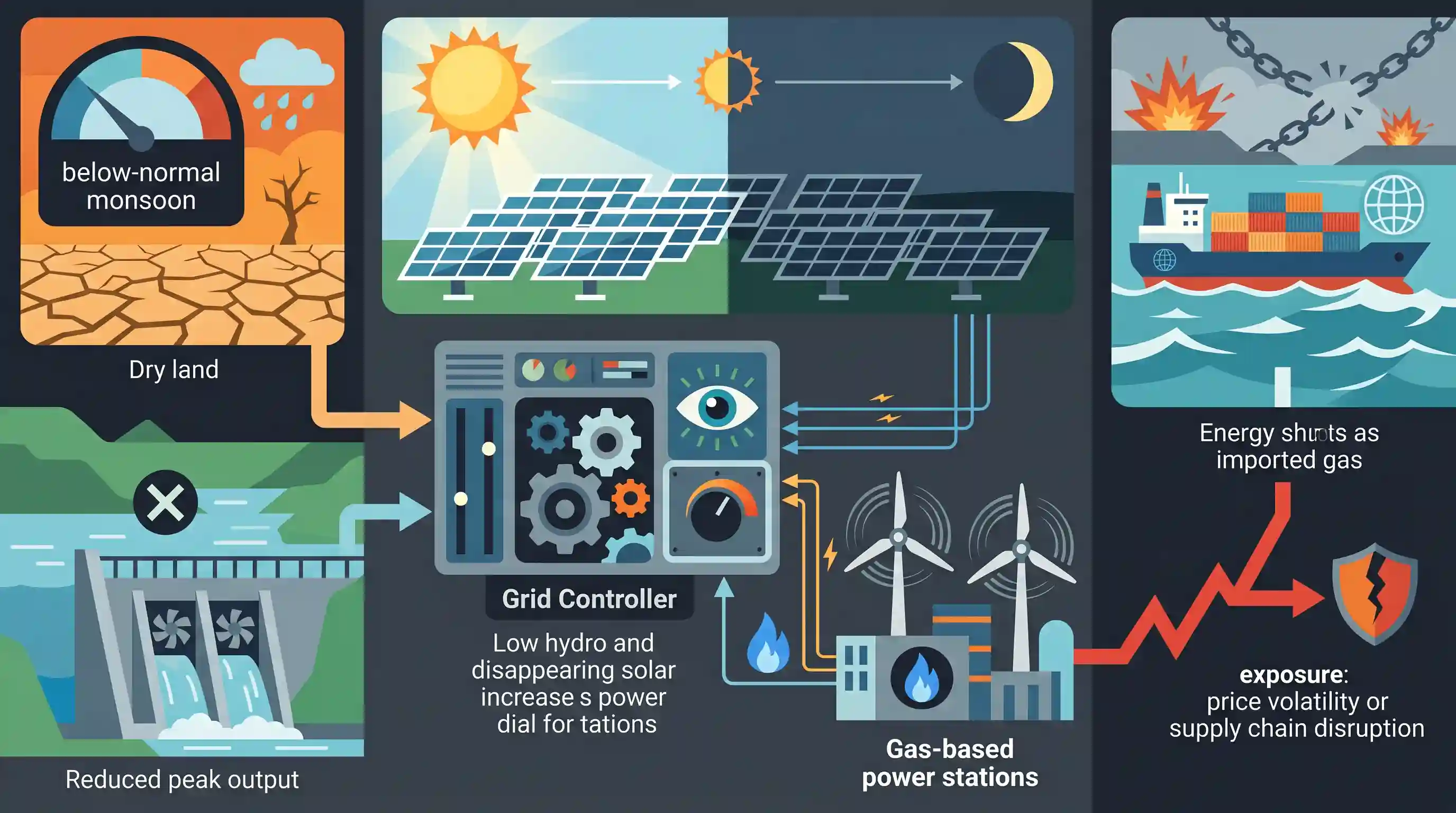
The article illustrates the interconnected challenges of India's energy transition. It highlights how climate variability (monsoon deficits) and geopolitical conflicts directly impact grid stability and energy costs, underscoring the critical need for a diverse and flexible energy mix to support renewable energy integration.
Summary
The Grid Controller of India has directed gas-based power stations to increase electricity generation to manage peak demand and ensure grid stability amid a forecasted below-normal monsoon. A monsoon deficit forces hydroelectric plants to conserve water, reducing their peak output. While India is rapidly expanding its solar capacity, gas power remains essential for rebalancing the grid during evening peak hours when solar generation plummets. However, increased reliance on imported natural gas exposes India to price volatility and supply chain disruptions linked to the ongoing conflict in West Asia, exposing vulnerabilities in its energy security strategy.
Key Points
- Grid India has directed gas-based power plants to boost generation to meet anticipated high electricity demand and ensure grid stability during the monsoon season.
- A forecasted below-normal monsoon requires hydroelectric plants to conserve reservoir water, constraining their ability to meet peak power demands.
- Gas-based plants provide critical grid flexibility, allowing rapid ramping up and down to offset the variability of renewable sources, especially during evening peaks when solar generation falls.
- Geopolitical conflicts in West Asia are disrupting LNG supply chains, forcing power producers to buy spot-market natural gas on the Indian Gas Exchange at elevated prices.
Important Terms
Grid Controller of India (Grid-India)

A Ministry of Power enterprise (formerly POSOCO) responsible for the integrated operation of India's national electricity grid through National and Regional Load Despatch Centres (NLDC/RLDCs).
UPSC context
GS-III (Infrastructure/Energy); crucial for understanding power sector reliability, grid stability, and integration of intermittent renewable energy sources.
Indian Meteorological Department (IMD)
The principal government agency under the Ministry of Earth Sciences for meteorological observations and forecasting, essential for predicting monsoons and tropical cyclones.
UPSC context
GS-I (Geography/Monsoon) and GS-III (Disaster Management); tests knowledge of weather patterns and their impact on India's economy and agriculture.
Indian Gas Exchange (IGX)
India's first automated national-level trading platform for natural gas, enabling transparent price discovery and competitive trading to facilitate a gas-based economy.
UPSC context
GS-III (Infrastructure/Energy); important for policies aiming to increase natural gas's share in the energy mix and ensure energy security.
Prelims Trap
"The Indian Gas Exchange (IGX) operates under the regulatory jurisdiction of the Securities and Exchange Board of India (SEBI)."
While financial and commodity exchanges are generally regulated by SEBI, the Indian Gas Exchange (IGX) is exclusively regulated by the Petroleum and Natural Gas Regulatory Board (PNGRB).
Static Concepts Connected
What is the 'Duck Curve' in the context of renewable energy?
- Visual representation: A graph showing the timing imbalance between peak electricity demand and renewable (solar) power generation over a day.
- Evening surge: Solar generation drops rapidly at sunset, exactly when residential demand surges, creating a steep "neck" on the curve that stresses the grid.
- Peaking plants: Requires high-ramp-rate energy sources (like gas turbines or pumped hydro storage) to quickly fill the sudden evening supply gap.
What is the mandate of the Grid Controller of India?
- Nodal agency: A Miniratna Category-I CPSE under the Ministry of Power, formerly known as POSOCO.
- Core function: Operates the National Load Despatch Centre (NLDC) to ensure the real-time, secure, and reliable functioning of India's national electricity grid.
Cross-Topic Patterns
Monsoon deficit's multi-sectoral impact
A sub-par monsoon suppresses hydro-power, forcing reliance on expensive imported LNG. This connects physical geography (El Nino/monsoons) directly to macroeconomics (energy inflation and current account deficits).
Geopolitics dictating domestic grid
India's renewable transition relies on gas as a balancing fuel. West Asian instability directly threatens domestic grid stability by spiking LNG spot prices on energy exchanges.

The 'Duck Curve' phenomenon and PNGRB's regulatory mandate over the Indian Gas Exchange are prime targets for a 2026 Prelims question.
Linked PYQs · 2
Linked PYQs · 2
- 2018MainsGS3
“Access to affordable, reliable, sustainable and modern energy is the sine qua non to achieve Sustainable Development Goals (SDGs).” Comment on the progress made in India in this regard.
- 2020MainsGS3
Describe the benefits of deriving electric energy from sunlight in contrast to the conventional energy generation. What are the initiatives offered by our Government for this purpose?
