Synergy of Dietary Fibre and Protein in Nutrition
Source:Indian Express ↗
Why It Matters
Understanding the biological interplay of dietary components is essential for addressing India's dual burden of malnutrition (undernutrition and obesity). It informs public health campaigns, dietary guidelines, and welfare schemes aimed at improving the nation's human capital and reducing the prevalence of lifestyle-induced non-communicable diseases.
Summary
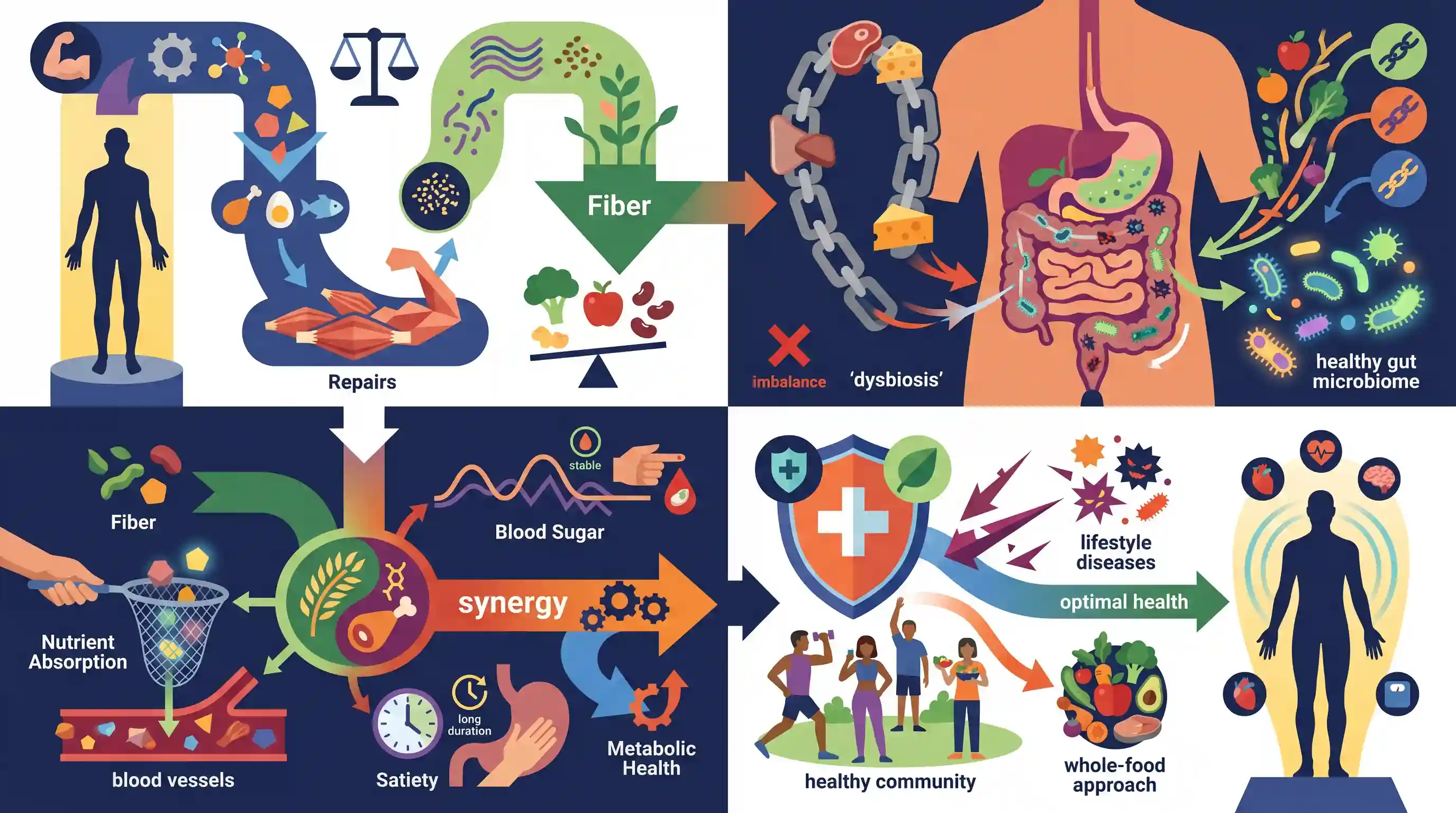
The article explores the vital nutritional synergy between dietary fibre and protein, explaining why they are essential counterparts in a balanced diet. While protein is crucial for muscle repair, growth, and cellular functions, diets heavily skewed towards protein often lack sufficient fibre, leading to digestive complications and an imbalanced gut microbiome. Fibre acts as a crucial bulking agent that facilitates digestion and serves as a prebiotic to nourish healthy gut bacteria. When consumed together, fibre and protein optimize nutrient absorption, regulate blood sugar levels, and promote prolonged satiety. This synergistic effect underscores the need for a holistic, whole-food approach to nutrition to combat lifestyle diseases and maintain optimal metabolic health.
Key Points
- Complementary Mechanisms: Protein is vital for tissue repair and muscle building, while dietary fibre maintains digestive tract health, counteracting issues like constipation that often accompany high-protein diets.
- Gut Microbiome Health: Dietary fibre (particularly soluble fibre) acts as a prebiotic. It ferments in the gut to nourish beneficial bacteria, which in turn optimizes overall digestion and enhances the absorption of nutrients, including amino acids from proteins.
- Metabolic Synergy: Consuming protein and fibre together slows gastric emptying, which helps stabilize blood glucose levels, prevents sharp insulin spikes, and mitigates the risks of metabolic syndrome.
- Satiety and Weight Management: The dual presence of protein and fibre promotes a prolonged feeling of fullness, significantly aiding in weight management and preventing obesity.
- Holistic Diet Strategy: The synergy highlights the importance of whole foods over isolated macronutrient supplements. Plant-based sources like lentils, chickpeas, and beans are ideal as they naturally package both protein and fibre.
Important Terms
Poshan Abhiyaan (National Nutrition Mission)

India’s flagship program (launched 2018) to improve nutritional outcomes for children, adolescent girls, pregnant women, and lactating mothers through technology and community participation.
UPSC context
GS Paper II: Social Justice and Governance. Tests knowledge of government schemes targeting malnutrition and public health.
Gut Microbiome
The complex ecosystem of trillions of microorganisms (bacteria, fungi, viruses) residing in the human digestive tract, essential for immunity, digestion, and metabolic health.
UPSC context
GS Paper III: Science & Technology. Relevant to biotechnology, human biology, and emerging healthcare research.
Dietary Fibre
Indigestible plant-derived carbohydrates that facilitate digestion, regulate blood sugar levels, and lower the risk of chronic metabolic disorders.
UPSC context
GS Paper III: Science/Health. Fundamental nutrition concept related to public health and disease prevention.
Prebiotics
Specialised plant fibres that remain undigested until they reach the colon, where they serve as food for beneficial gut bacteria (probiotics).
UPSC context
GS Paper III: Science & Technology. Tests understanding of biological processes and functional foods.
Non-Communicable Diseases (NCDs)
Chronic conditions like diabetes and heart disease that are not transmissible but result from genetic, environmental, and behavioral/lifestyle factors.
UPSC context
GS Paper II/III: Health and Social Sector. Crucial for issues related to India's rising epidemiological transition.
SDG 3.4
A specific target under Sustainable Development Goal 3 aiming to reduce premature mortality from NCDs by one-third through prevention and treatment by 2030.
UPSC context
GS Paper II/III: International Relations/Health. Important for monitoring India's progress on global health commitments.
Prelims Trap
"Human digestive enzymes break down dietary fibres in the small intestine to facilitate nutrient absorption."
Humans lack enzymes (like cellulase) to digest dietary fibre. It passes intact through the small intestine to the large intestine (colon), where the gut microbiome ferments it.
Static Concepts Connected
What is the difference between Prebiotics and Probiotics?
- Probiotics: Live beneficial microorganisms (bacteria and yeast, like Lactobacillus) that maintain or improve the "good" bacteria flora in the body.
- Prebiotics: Non-digestible plant carbohydrates (dietary fibres) that bypass human digestion to serve as food for probiotics in the gut.
- Synbiotics: Nutritional supplements or foods (like certain fortified yogurts) that combine both probiotics and prebiotics to synergistically promote gut health.
How does the human body process dietary fibre?
- Lack of enzymes: Humans lack the necessary enzymes (such as cellulase) to break down complex carbohydrates like cellulose in the stomach or small intestine.
- Colonic fermentation: Intact fibre reaches the colon where gut bacteria ferment it into beneficial short-chain fatty acids (SCFAs), optimizing overall digestion and immunity.
- Metabolic regulation: Soluble fibre forms a gel-like substance that slows gastric emptying, stabilizing blood glucose levels and preventing sharp insulin spikes.
Cross-Topic Patterns
Millets, Dietary Fibre, and Poshan Abhiyaan
The push for millets (Shree Anna) perfectly complements this biology concept, as millets naturally package both protein and dietary fibre to address India's dual burden of undernutrition and diabetic metabolic syndrome.
NCDs and Metabolic Syndrome Mitigation
Rising Type-2 Diabetes in India stems from low-fibre, refined-carb diets. Emphasizing fibre-rich whole foods directly aligns with India's National Programme for Prevention & Control of Non-Communicable Diseases (NP-NCD).

Gut microbiome (prebiotics/probiotics) is a UPSC favorite; expect a 2026 statement linking soluble fibre's role in insulin regulation.
Linked PYQs · 3
Linked PYQs · 3
- 2022PrelimsGS1
Consider the following statements in respect of probiotics : 1. Probiotics are made of both bacteria and yeast. 2. The organisms in probiotics are found in foods we ingest but they do not naturally occur in our gut. 3. Probiotics help in the digestion of milk sugars. Which of the statements given above is/are correct?
- 2024MainsGS2
Poverty and malnutrition create a vicious cycle, adversely affecting human capital formation. What steps can be taken to break the cycle ?
- 2008PrelimsGS1
Consider the following statements about probiotic food: 1. Probiotic food contains live bacteria which are considered beneficial to humans. 2. Probiotic food helps in maintaining gut flora. Which of the statements given above is/are correct?
