Dehradun Village Women Launch Night Patrol Against Drug Trafficking
Source:rediff ↗
Why It Matters
This grassroots development highlights the active role of women's collectives (similar to historical movements like the Chipko or anti-liquor campaigns in Uttarakhand) in maintaining social order, security, and confronting drug abuse, which aligns with Uttarakhand's broader developmental goals of drug eradication.
Summary
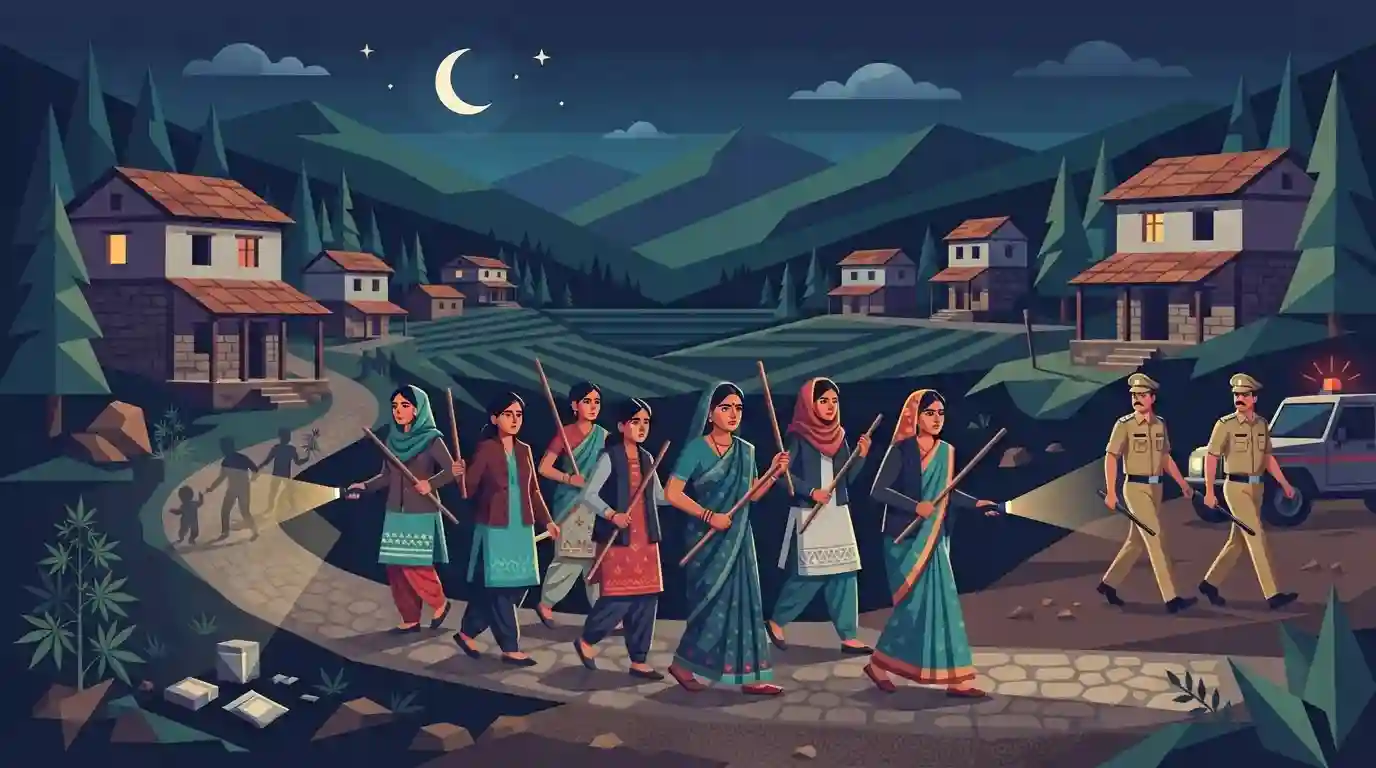
In Thani village, located on Old Mussoorie Road in Dehradun, Uttarakhand, local women have taken community safety into their own hands by launching a citizen-led night patrol under the 'Nari Jagriti Sangathan'. Spurred by a drastic surge in illegal drug trafficking—specifically cannabis and marijuana—which deteriorated the village atmosphere, the women patrol the streets late into the night carrying sticks and batons to deter drug buyers and suspicious individuals. Their efforts have prompted local law enforcement to assist, with police now deploying two officers daily for patrol rounds in the village.
Key Points
- Thani village on Old Mussoorie Road in Dehradun has become a focal point of a unique citizen-led night patrolling initiative run entirely by women.
- Faced with a surge in drug trafficking and illegal sale of cannabis and marijuana, which severely disrupted public peace and safety, the women established a local collective called Nari Jagriti Sangathan.
- Armed with sticks and batons, the women patrol the village lanes in shifts late into the night (until 1:00 or 2:00 am) to question suspicious outsiders and block drug purchasers from entering the area.
- Following a formal application submitted by the collective, the local police have initiated daily rounds, deploying two officers to support the village guards.
Important Terms
Nari Jagriti Sangathan

A citizen-led local women's organization based in Thani village, Dehradun, that conducts nighttime lathi patrols to deter drug traffickers and secure public spaces.
UPSC context
UKPSC General Studies; tests modern grassroots women-led safety initiatives and anti-drug social movements.
Mahila Mangal Dal
Traditional village-level women's collective groups in Uttarakhand that mobilize rural women for environmental conservation, forest protection, social reforms, and local governance.
UPSC context
UKPSC General Studies; tests understanding of community institutions, rural administration, and women's local governance.
Nasha Mukt Uttarakhand
The targeted state-level governance mission in Uttarakhand aimed at eradicating drug abuse, aligned with the national Nasha Mukt Bharat Abhiyaan.
UPSC context
UKPSC General Studies; tests knowledge of public health policies, social welfare, and state governance challenges.
Operation Uttaran
A comprehensive, tech-driven anti-drug campaign launched by the Uttarakhand government to dismantle international narcotics networks through advanced forensics and surveillance.
UPSC context
UKPSC General Studies; tests knowledge of modern policing technologies and state-led anti-crime measures.
"Nasha Nahi, Rozgar Do" Movement
A historic socio-political movement in Uttarakhand launched during the 1980s that campaigned for total drug and liquor prohibition linked with youth employment.
UPSC context
UKPSC History & Social Movements; tests understanding of regional anti-addiction agitations and women's historic activism.
Prelims Trap
The historic 'Nasha Nahi, Rozgar Do' movement of 1984 originated in Dehradun to combat cannabis smuggling.
The historic 1984 anti-drug movement originated in Almora (Kumaon region) under USV, whereas the modern Thani village initiative is in Dehradun (Garhwal). Do not confuse their locations or timelines.
Static Concepts Connected
What was the 'Nasha Nahi, Rozgar Do' movement in Uttarakhand's history?
- Origin & Date: Launched on February 2, 1984, in Ghungoli-Basbhida village of Chaukhutia, Almora district.
- Leadership: Spearheaded by the Uttarakhand Sangharsh Vahini (USV), which was established in July 1977 at Manan (Almora).
- Key Figures: Renowned leaders Chandi Prasad Bhatt and Shamsher Singh Bisht served as joint convenors of the USV.
- Core Objective: Demanded strict liquor prohibition and linked anti-addiction directly to local employment generation.
What is the institutional setup under 'Drugs Free Devbhoomi Mission-2025'?
- Target Year: Aims to make Uttarakhand completely drug-free by its silver jubilee year of statehood in 2025.
- Enforcement Wing: A three-tier Anti-Narcotics Task Force (ANTF) constituted in August 2022 to streamline enforcement.
- Three-Tier Structure: Operates at the State, District, and Police Station levels to intercept trafficking networks.
Cross-Topic Patterns
Women collectives & community policing
Connects grassroots women-led policing (Nari Jagriti Sangathan) with modern community policing schemes, highlighting how civic collectives bridge formal law enforcement gaps in hilly terrains.
Socio-economic distress & youth addiction
Links the 1984 slogan 'Nasha Nahi, Rozgar Do' to Uttarakhand's current economic migration (Palyan) crisis, showing how lack of local employment fuels rural youth drug addiction.

UKPSC may link 'Drugs Free Devbhoomi Mission-2025' with the historical 1984 'Nasha Nahi Rozgar Do' movement in multi-statement questions.
Linked PYQs · 2
Linked PYQs · 2
- 2024UKPSC_PRELIMSGS1
How many of the following women M.L.A.s were there in the first Legislative Assembly of Uttarakhand ?
- 2024UKPSC_PRELIMSGS1
Headquarters of which of the following is located in Dehradun, the Capital of Uttarakhand ?
