India US Bilateral Trade Negotiations and Frictions
Source:The Hindu ↗
આ શા માટે મહત્વનું છે
Understanding the friction points in India-U.S. trade relations is crucial for analyzing India's foreign economic policy, challenges of global protectionism, and the interplay between geopolitical alignment and economic divergences.
સારાંશ
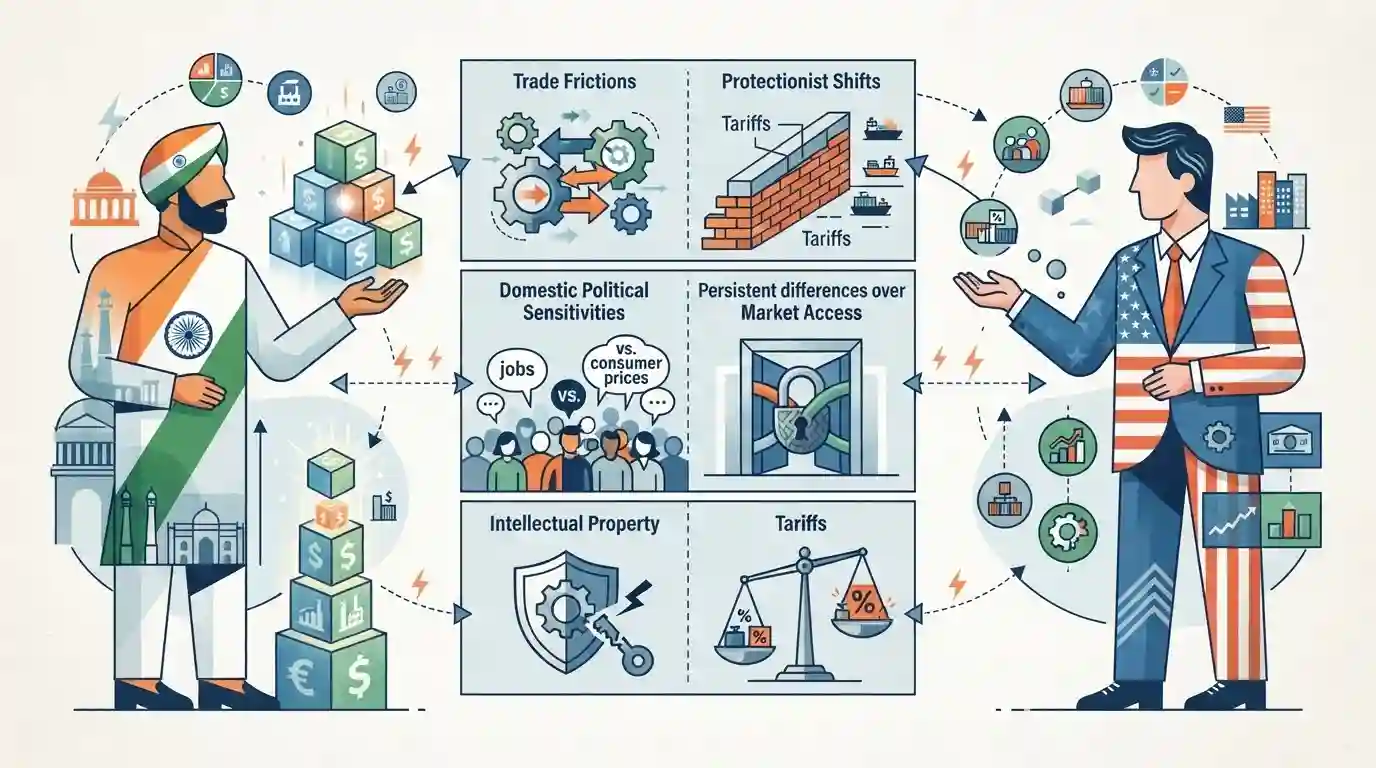
The article explains the factors behind the cooling off of trade deal negotiations between India and the United States, highlighting underlying trade frictions, protectionist shifts, domestic political sensitivities, and persistent differences over market access, intellectual property, and tariffs.
મુખ્ય મુદ્દા
- India and the United States are experiencing a cooling-off period regarding comprehensive bilateral trade agreements, driven by differing domestic economic priorities, protectionist trends, and strategic trade frictions.
- Key sticking points include market access, agricultural tariffs, intellectual property rights (IPR) protections, digital trade regulations, and data localization norms.
- Despite strong geostrategic convergence under frameworks like the Quad, trade negotiations remain challenging due to differing demands on reciprocal market opening and domestic political sensitivities in both nations.
- The shift toward bilateralism and protectionism globally complicates traditional multilateral trade frameworks, affecting policy choices for emerging economies like India.
મહત્વપૂર્ણ શબ્દો
Generalized System of Preferences (GSP)

A U.S. trade program designed to promote economic development by allowing duty-free entry for thousands of products from designated beneficiary developing countries. India was formerly its largest beneficiary before its termination in 2019.
UPSC context
UPSC GS Paper II (International Relations) & GS Paper III (Indian Economy): Bilateral trade negotiations, protectionism, and preferential market access issues.
United States Trade Representative (USTR)
The U.S. government agency responsible for developing and recommending international trade policy, conducting trade negotiations, and handling bilateral and multilateral trade disputes.
UPSC context
UPSC GS Paper II (International Relations): Important international institutions and key trade policy actors affecting India-US relations.
World Trade Organization (WTO)
A global international organization dealing with the rules of trade between nations, providing a framework for negotiating agreements and resolving trade disputes.
UPSC context
UPSC GS Paper II (International Relations) & GS Paper III (Economy): Multilateral trade rules, dispute settlement, and India's negotiating stance.
સંલગ્ન સ્થિર ખ્યાલો
What are the core mechanisms and exceptions under India's Patent Act (Section 3d)?
- Evergreening Ban: Prevents evergreening of patents by requiring a demonstration of significantly enhanced efficacy for derivative drugs.
- Compulsory Licensing: Permits compulsory licensing under specific public health emergencies (e.g., Section 92).
- TRIPS Compliance: Maintains compliance with TRIPS while prioritizing affordable domestic generic manufacturing access.
આંતર-વિષય પેટર્ન
Geopolitics vs. Geoeconomics in Bilateral Ties
Strategic convergence in plurilateral forums like the Quad does not automatically translate into bilateral trade alignment, often due to domestic political protectionism.

US-India trade friction points (IPR, agriculture, GSP status) frequently appear as matching or multi-statement Prelims questions.
સંલગ્ન PYQ · 2
સંલગ્ન PYQ · 2
- 2025MainsGS3
What are the challenges before the Indian economy when the world is moving away from free trade and multilateralism to protectionism and bilateralism? How can these challenges be met?
- 2019MainsGS2
‘What introduces friction into the ties between India and the United States is that Washington is still unable to find for India a position in its global strategy, which would satisfy India's national self-esteem and ambitions.’ Explain with suitable examples.
