WHO Seeks Clarity From India on Cough Syrup Export and Safety
Source:The Hindu ↗
Why It Matters
India is globally recognized as the "pharmacy of the world," but repeated instances of toxic cough syrups causing child fatalities undermine its pharmaceutical export credibility. Understanding the role of regulatory bodies like CDSCO and WHO, along with mechanisms to control harmful chemicals and Fixed-Dose Combinations, is essential for GS2 health and governance topics.
Summary
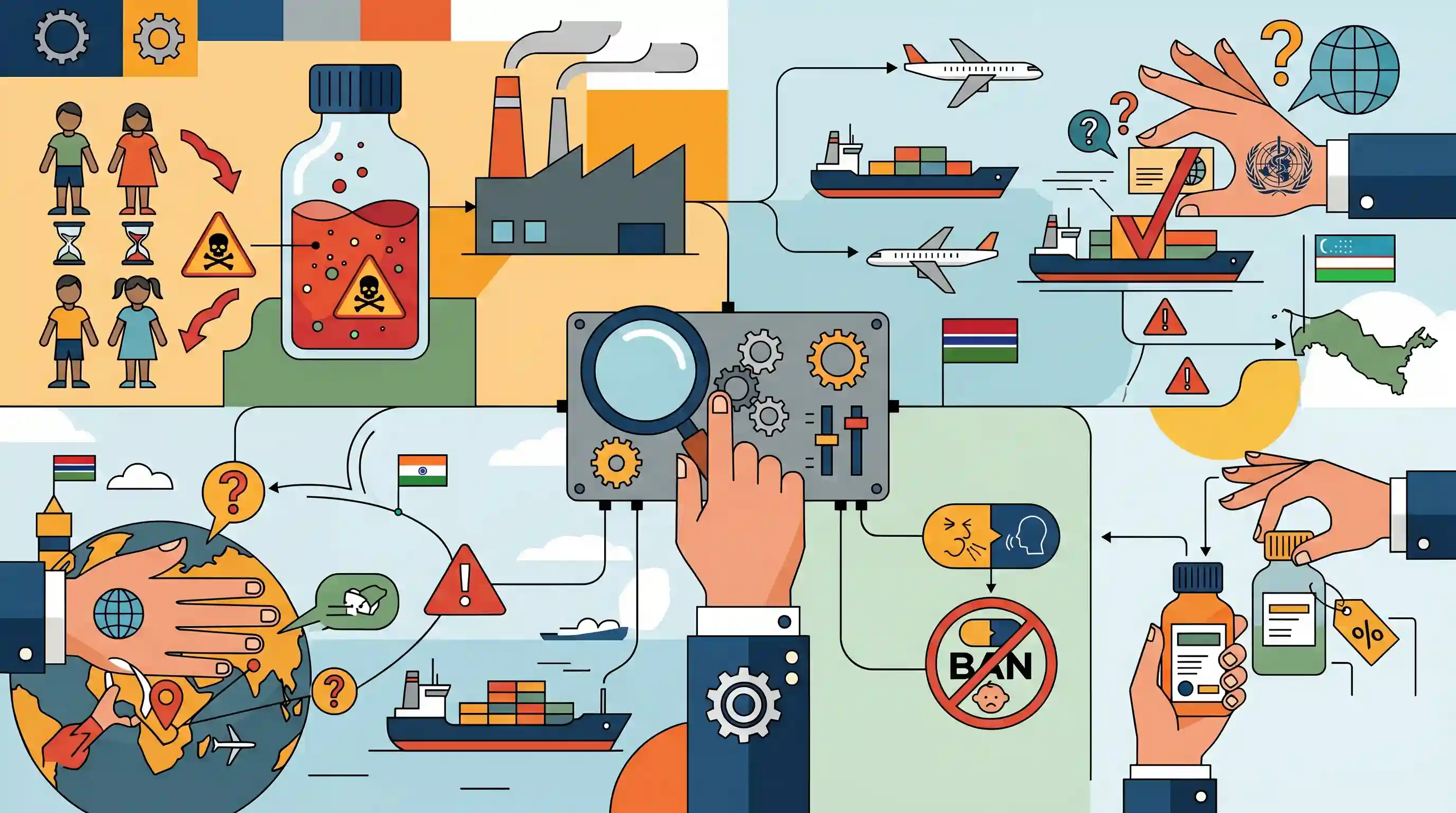
The World Health Organization (WHO) has asked India to clarify whether a domestic cough syrup, Coldrif, which has been linked to over 15 child deaths in Madhya Pradesh and Rajasthan, was exported. Following the detection of toxic diethylene glycol (DEG) in the syrup, regulators suspended operations at its manufacturer, Tamil Nadu-based Sresan Pharmaceuticals. The incident raises further concerns over drug safety, adding to previous global controversies involving Indian-made syrups in Gambia and Uzbekistan. Additionally, the CDSCO has recently banned the use of a common fixed-dose combination (FDC) for colds in children under four, prompting the AIOCD to ensure stringent labeling compliance by pharmaceutical companies.
Key Points
- The World Health Organization (WHO) has requested clarification from India regarding the possible export of 'Coldrif' cough syrup, which is allegedly linked to the deaths of over 15 children in Madhya Pradesh and Rajasthan.
- Manufacturing of the syrup by Tamil Nadu-based Sresan Pharmaceuticals was halted after samples tested positive for the toxic compound diethylene glycol (DEG).
- In response to previous global health incidents involving Indian cough syrups in Gambia, Uzbekistan, and Cameroon, India mandated testing for all cough syrup exports starting in mid-2023.
- The Central Drugs Standard Control Organisation (CDSCO) has prohibited the use of a fixed-dose combination (FDC) of chlorpheniramine maleate and phenylephrine HCl for children under four years old.
- The All India Organisation of Chemists and Druggists (AIOCD) instructed pharmaceutical companies to strictly enforce labeling warnings against using these preparations in infants and toddlers.
Important Terms
Central Drugs Standard Control Organisation (CDSCO)

India's national regulatory body under the Ministry of Health, responsible for drug approvals, clinical trials, and setting standards for pharmaceuticals, medical devices, and cosmetics.
UPSC context
GS Paper 2: Statutory/Regulatory Bodies; GS Paper 3: Science & Tech (Pharma Regulation). Tests knowledge of India's health governance framework.
World Health Organization (WHO)
A United Nations specialized agency responsible for international public health, setting global health standards, and coordinating responses to cross-border health emergencies.
UPSC context
GS Paper 2: International Institutions. Important for global health security, International Health Regulations (IHR), and India's diplomatic health engagements.
Fixed-Dose Combination (FDC)
A pharmaceutical product containing two or more active ingredients in a fixed ratio within a single dosage form (e.g., one tablet).
UPSC context
GS Paper 2: Public Health; GS Paper 3: Science & Tech. Tests understanding of 'irrational drugs' and regulatory bans on combinations.
Directorate General of Foreign Trade (DGFT)
An attached office of the Ministry of Commerce and Industry responsible for formulating and implementing India’s Foreign Trade Policy (FTP) and regulating exports.
UPSC context
GS Paper 3: Indian Economy (Trade Policy). Relevant for pharma export mandates and international trade compliance.
Central Drugs Laboratory (CDL)
Statutory laboratories under the CDSCO (e.g., Kasauli for vaccines, Kolkata for drugs) responsible for quality control testing and acting as appellate laboratories.
UPSC context
GS Paper 2: Governance/Health. Key for understanding the technical infrastructure behind drug safety and vaccine certification in India.
All India Organisation of Chemists and Druggists (AIOCD)
A powerful national trade association representing over 12 lakh chemists and distributors, influencing pharmaceutical supply chains, pricing, and retail regulatory compliance.
UPSC context
GS Paper 2: Governance. Relevant for pharmaceutical supply chain management and the role of professional associations in public health.
Prelims Trap
The CDSCO is the sole authority responsible for issuing manufacturing licenses to pharmaceutical companies in India.
While CDSCO approves new drugs and regulates imports, manufacturing and sales licenses for existing drugs are issued by individual State Drug Regulatory Authorities (SDRAs).
Static Concepts Connected
How is drug regulation divided between the Centre and States in India?
- Central Role: The Central Drugs Standard Control Organisation (CDSCO) approves new drugs, clinical trials, and controls imports.
- State Role: State Drug Regulatory Authorities (SDRAs) issue licenses for the manufacturing, sales, and distribution of drugs within their respective states.
- Statutory Framework: This fragmented regulatory structure is governed by the colonial-era Drugs and Cosmetics Act of 1940, often leading to enforcement gaps.
What are Fixed-Dose Combinations (FDCs) and why are they heavily regulated?
- Definition: FDCs are pharmaceutical products containing two or more active pharmacological ingredients combined in a fixed ratio into a single dosage form.
- Inherent Risks: Unscientific FDCs lack therapeutic justification, exposing patients to higher risks of adverse drug interactions and contributing to antimicrobial resistance.
- Regulatory Action: The CDSCO frequently bans irrational FDCs under Section 26A of the Drugs and Cosmetics Act to protect public health.
Cross-Topic Patterns
Pharma exports + India's soft power
Contaminated cough syrups threaten India's soft power as the "Pharmacy of the Global South," highlighting the tension between export volume and domestic regulatory enforcement.
DEG adulteration + Chemical toxicity
Diethylene glycol (DEG) and ethylene glycol are cheap industrial solvents (antifreeze) illegally substituting pharmaceutical-grade propylene glycol, causing fatal acute kidney injuries.

Expect a 2026 multi-statement question on the split jurisdiction of drug regulation (CDSCO vs State) paired with the chemical nature of DEG.
Linked PYQs · 3
Linked PYQs · 3
- 2021PrelimsGS1
'Triclosan', considered harmful when exposed to high levels for a long time, is most likely present in which of the following?
- 2020MainsGS2
Critically examine the role of WHO in providing global health security during the Covid-19 pandemic.
- 2015MainsGS2
For achieving the desired objectives, it is necessary to ensure that the regulatory institutions remain independent and autonomous. Discuss in the light of the experiences in recent past.
