Madhya Pradesh temples celebrate Independence Day by Hindu calendar
Source:mid-day ↗
Why It Matters
MPPSC State Service Prelims routinely asks objective questions mapping temples, rivers, and unique cultural practices to specific districts in Madhya Pradesh (e.g., Pashupatinath on the Shivna river in Mandsaur). Understanding these locations and cultural traditions is critical for the exam.
Summary
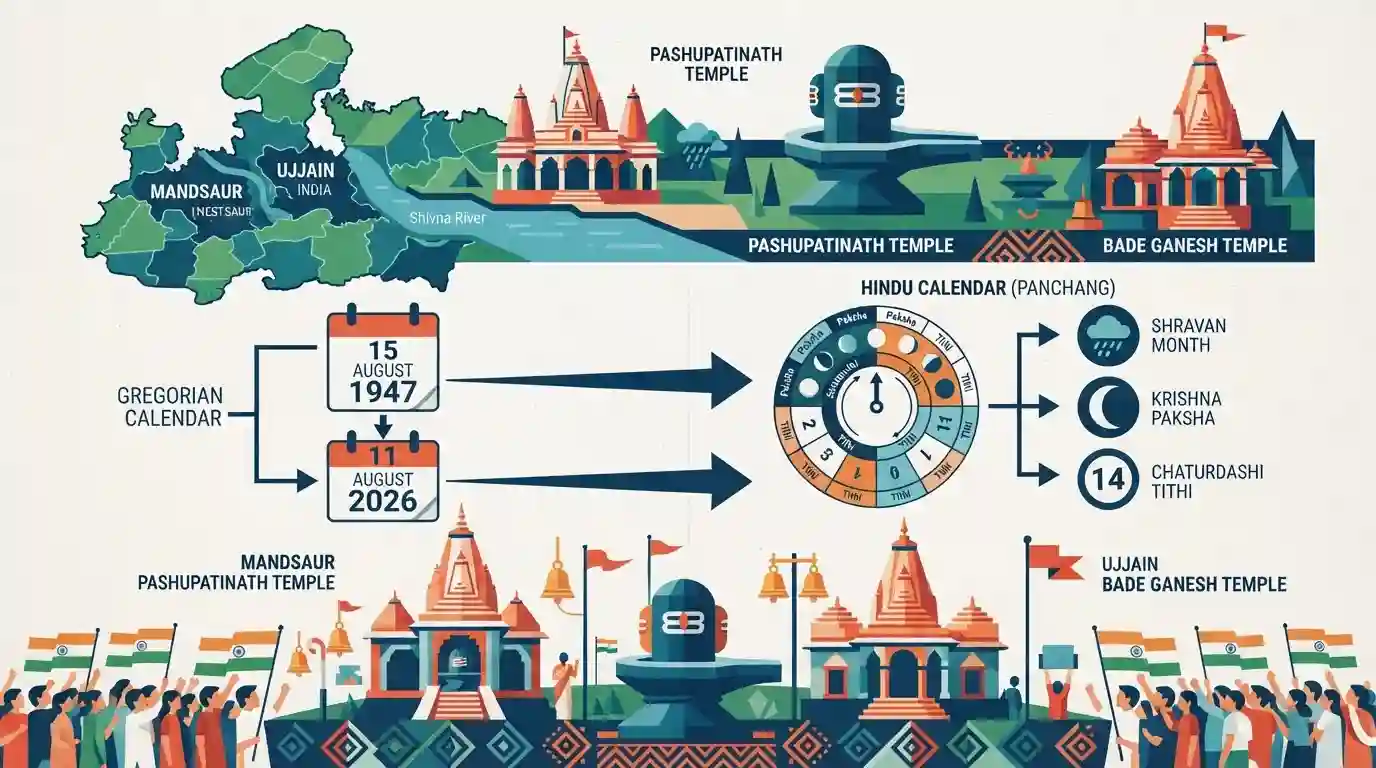
Two historical temples in Madhya Pradesh, the Pashupatinath Temple in Mandsaur and the Bade Ganesh Temple in Ujjain, continue a unique tradition of celebrating India's Independence Day according to the Hindu calendar (Panchang). They observe the celebration on the 'Chaturdashi' of the 'Krishna Paksha' in 'Shravan' month, the tithi corresponding to August 15, 1947. Consequently, in 2026, the celebration took place on August 11. The tradition highlights the cultural blend of patriotism and regional religious practices, prominently featuring the eight-faced Shivling at Mandsaur located on the Shivna river.
Key Points
- Two prominent temples in Madhya Pradesh, Pashupatinath in Mandsaur and Bade Ganesh in Ujjain, celebrate Independence Day according to the traditional Hindu calendar rather than the Gregorian date.
- The celebration occurs on the 'Chaturdashi' (14th day) of the 'Krishna Paksha' (waning phase of the moon) in the 'Shravan' month, mirroring the exact 'tithi' of August 15, 1947.
- In 2026, this auspicious Hindu date fell on August 11, resulting in the Independence Day celebrations at these shrines taking place four days early.
- The Pashupatinath Temple is situated on the banks of the Shivna River in Mandsaur and is renowned for its unique eight-faced Shivling.
Important Terms
Pashupatinath Temple (Mandsaur)

An ancient temple in Mandsaur, Madhya Pradesh, situated on the Shivna river. It is famous for its unique Ashtamukhi (eight-faced) Shivling and uniquely celebrates India's Independence Day based on the Hindu calendar.
UPSC context
Relevant for Prelims (Art & Culture). Tests knowledge of regional heritage sites and unique cultural traditions.
Bade Ganesh Temple
A prominent historic shrine in Ujjain, Madhya Pradesh, which reveres Lord Ganesha as the 'God of the republic.' It observes national festivals like Independence Day according to Hindu lunar tithis.
UPSC context
Important for Prelims (Art & Culture), highlighting the intersection of national patriotism and regional religious customs.
Shivna River
A tributary of the Chambal River that flows through Rajasthan and Madhya Pradesh. The historical town of Mandsaur and its famous Pashupatinath Temple are located on its banks.
UPSC context
Crucial for Geography (Drainage Systems). UPSC frequently tests river tributaries and associated historical or cultural towns.
Shravan Krishna Chaturdashi
The 14th lunar day of the dark fortnight in the Hindu month of Shravan. According to the Panchang, it corresponds to August 15, 1947.
UPSC context
Relevant for Art & Culture (Indian Calendar System). Tests understanding of the lunar Panchang and its historical intersections.
Prelims Trap
The Pashupatinath Temple of Mandsaur is situated directly on the banks of the Narmada or Chambal rivers.
While Shivna is a tributary of the Chambal, the temple is specifically located on the Shivna. UPSC often tricks aspirants by listing the larger parent river instead of the exact tributary.
Static Concepts Connected
What is the historical significance of the Dashapura (Mandsaur) Inscription?
- Gupta Era: Dated to the 5th century CE, it was issued during the reign of Gupta Emperor Kumaragupta I.
- Silk Weavers Guild: It records the migration of a wealthy guild (shreni) of silk weavers from Lata (Gujarat) to Dashapura.
- Sun Temple Construction: The inscription details how this corporate guild collectively funded the construction and repair of a Sun temple.
How does the traditional Hindu Lunisolar Calendar structure its months?
- Lunar Fortnights (Pakshas): Each month is divided into two 15-day phases: Krishna Paksha (waning moon) and Shukla Paksha (waxing moon).
- Tithi System: A lunar day is called a tithi, calculated by the longitudinal angle between the sun and the moon.
- National Integration: While traditional calendars vary regionally (Vikram, Saka), the official Indian National Calendar is based on the Saka Era.
Cross-Topic Patterns
Ancient economic geography + Inscriptions
Mandsaur's ancient identity as Dashapura is frequently tested in UPSC by linking ancient geographical sites to economic institutions like Shrenis (weavers' guilds).
Syncretic nationalism & Calendar systems
The translation of a modern political milestone (August 15) into a traditional Panchang tithi highlights the assimilation of national history into regional socio-religious timekeeping.

Expect a multi-statement question pairing ancient cities (Dashapura) with modern districts (Mandsaur), rivers (Shivna), and guilds.
Linked PYQs · 3
Linked PYQs · 3
- 2020MPPSC_PRELIMSGS1
In Which city of Madhya Pradesh, the Parikrama of 7 Sea, 9 Narayanas and 84 Mahadevas completed?
- 2024MPPSC_PRELIMSGS1
Where is the world's first "Vedic Clock" installed?
- 2023MPPSC_PRELIMSGS1
Where is the historical Matangeshwar temple situated?
