Animals as Instruments of Soft Power and Environmental Ethics
Source:Indian Express ↗
Why It Matters
Provides a critical ethical and political perspective on wildlife conservation and diplomacy. It challenges aspirants to think beyond technical conservation and analyze the political sociology and ethical dimensions of human-animal relations, which is highly relevant for GS4 (Environmental Ethics) and GS3 (Conservation).
Summary
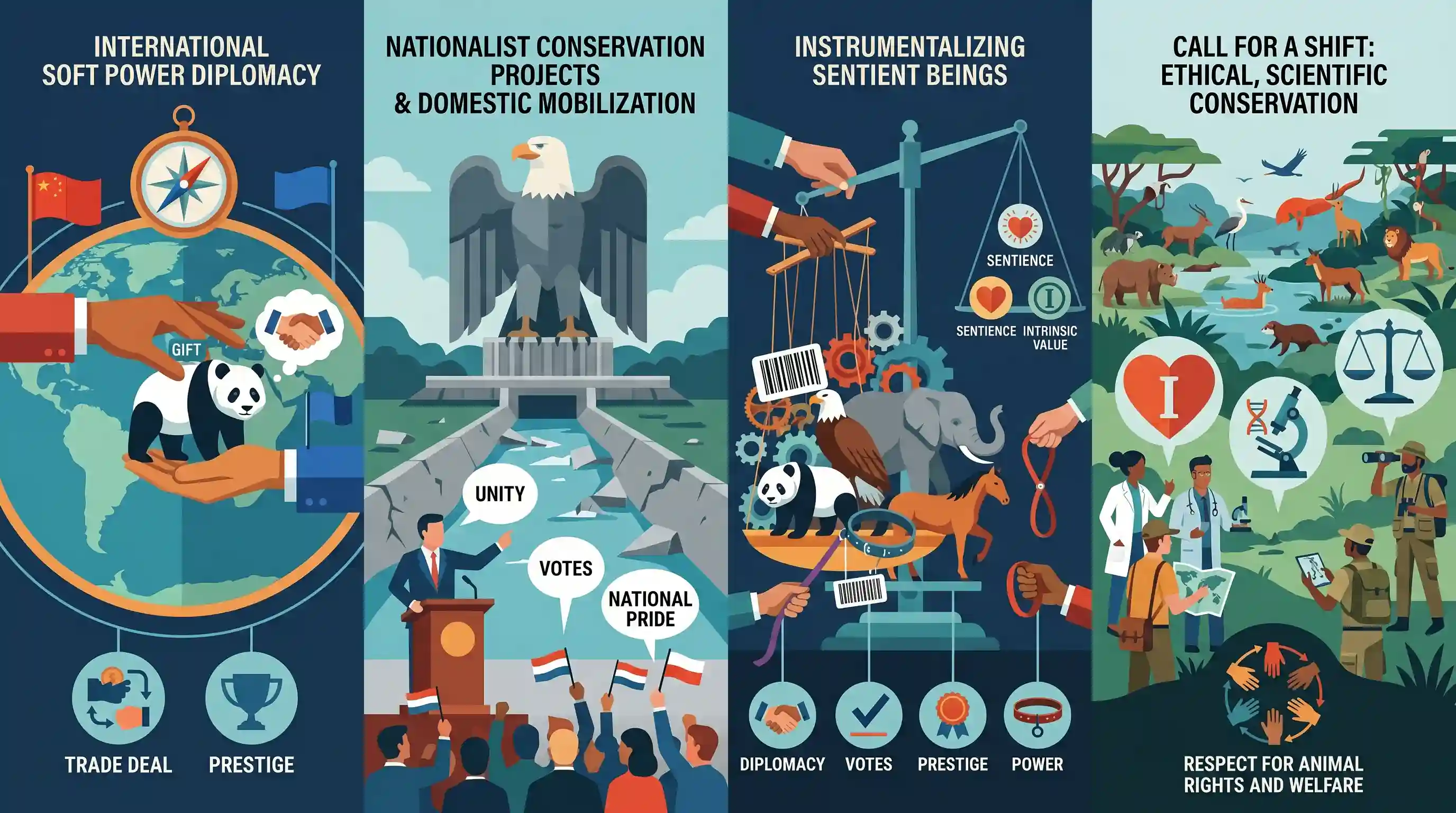
The article critiques the growing trend of utilizing animals as instruments of political power, diplomacy, and national prestige. It explores how wildlife and domestic animals are co-opted for human agendas—ranging from international 'soft power' diplomacy to domestic political mobilization and nationalist conservation projects. The piece argues that this instrumentalization reduces sentient beings to mere political tools, violating principles of environmental ethics. Ultimately, it calls for a shift from politically motivated conservation to scientifically grounded, ethically responsible approaches that respect the intrinsic value of animals.
Key Points
- Animals are increasingly deployed as tools of 'soft power' in international relations, serving as diplomatic gifts to forge alliances or signal geopolitical intent (e.g., panda diplomacy).
- Domestic political narratives often weaponize specific animals as cultural or religious symbols, leading to social mobilization and the consolidation of political power.
- Mega-conservation initiatives, such as the transcontinental relocation of charismatic megafauna, are frequently driven by desires for national prestige and political messaging rather than sound ecological science.
- The reduction of animals to political instruments raises profound questions in environmental ethics, contrasting the instrumental value assigned by humans with the intrinsic rights of wildlife.
- Effective conservation requires disentangling ecological welfare from state power dynamics, ensuring that animal well-being is prioritized over political optics.
Important Terms
Project Cheetah

India's national initiative to reintroduce the cheetah, which became extinct in the country in 1952, through the world’s first intercontinental translocation of large carnivores from Namibia and South Africa.
UPSC context
GS Paper 3 (Environment); critical for questions on species reintroduction, biodiversity conservation, and human-wildlife conflict.
Animal Diplomacy
The strategic use of wildlife (gifting or lending) by nations as tools of soft power to build goodwill, strengthen international ties, or improve national image.
UPSC context
GS Paper 2 (International Relations) and GS Paper 4 (Ethics); tests understanding of soft power and the instrumentalization of nature.
Environmental Ethics
A branch of ethics studying the moral relationship between humans and the environment, often debating the 'intrinsic value' of animals versus their 'instrumental value' for human agendas.
UPSC context
GS Paper 4 (Ethics); foundational for essays and case studies involving development versus conservation and sentient beings' rights.
Wildlife Translocation
The intentional movement and release of a species from one location to another for conservation, population management, or reintroduction purposes.
UPSC context
GS Paper 3 (Environment); relevant for technical questions on biodiversity management and the ecological challenges of species relocation.
Soft Power
A nation's ability to influence others through appeal and attraction (culture, values, diplomacy) rather than coercion; in this context, achieved through 'charismatic' wildlife ambassadors.
UPSC context
GS Paper 2 (International Relations); key for analyzing non-traditional diplomatic tools and India's global cultural/ecological positioning.
Flagship Species
A species chosen to represent an environmental cause, such as an ecosystem in need of conservation, often used as a symbol for political and fundraising efforts.
UPSC context
GS Paper 3 (Environment); tested in the context of ecosystem-based conservation strategies and national pride in biodiversity.
Prelims Trap
Article 51A(g) explicitly mandates the State to have compassion for living creatures.
Article 51A(g) is a Fundamental Duty assigned to citizens, not a Directive Principle for the State. The State's mandate to protect wildlife is under Article 48A (DPSP).
Static Concepts Connected
What are the constitutional provisions for animal welfare in India?
- Fundamental Duties: Article 51A(g) mandates every citizen to protect the natural environment and have compassion for living creatures.
- DPSP: Article 48A directs the State to safeguard forests and wildlife. Article 48 focuses on organizing animal husbandry on modern lines.
- Seventh Schedule: 'Prevention of cruelty to animals' falls under Entry 17 of the Concurrent List in the Seventh Schedule.
What is the difference between instrumental and intrinsic value in environmental ethics?
- Instrumental Value: Valuing nature and animals purely for their utility or benefit to humans (e.g., economic resources, diplomatic gifts, tourism).
- Intrinsic Value: Recognizing that sentient beings have an inherent right to exist and flourish independent of any human use or economic benefit.
- Conservation Ethics: Ecocentric approaches prioritize intrinsic value, condemning the reduction of wildlife to mere political or cultural tools.
Cross-Topic Patterns
Ecological Diplomacy & Soft Power
Mega-conservation efforts like Project Cheetah double as South-South diplomatic tools, extending India-Africa geopolitical relations beyond traditional economic and security ties.
GS4 Ethics vs. Constitutional Law
The tension between viewing animals as cultural/diplomatic tools versus recognizing their legal personhood reflects ongoing debates in Supreme Court rulings (e.g., Jallikattu case).

Expect a GS4 or GS2 mains question evaluating 'ecological diplomacy' and the ethical limits of using wildlife for geopolitical soft power.
Linked PYQs · 3
Linked PYQs · 3
- 2015MainsGS4
What is meant by 'environmental ethics'? Why is it important to study? Discuss any one environmental issue from the viewpoint of environmental ethics.
- 2015MainsGS2
Terrorist activities and mutual distrust have clouded India-Pakistan relations. To what extent the use of soft power like sports and cultural exchanges could help generate goodwill between the two countries? Discuss with suitable examples.
- 2020MainsGS4
‘The will to power exists, but it can be tamed and be guided by rationality and principles of moral duty.’ Examine this statement in the context of international relations.
