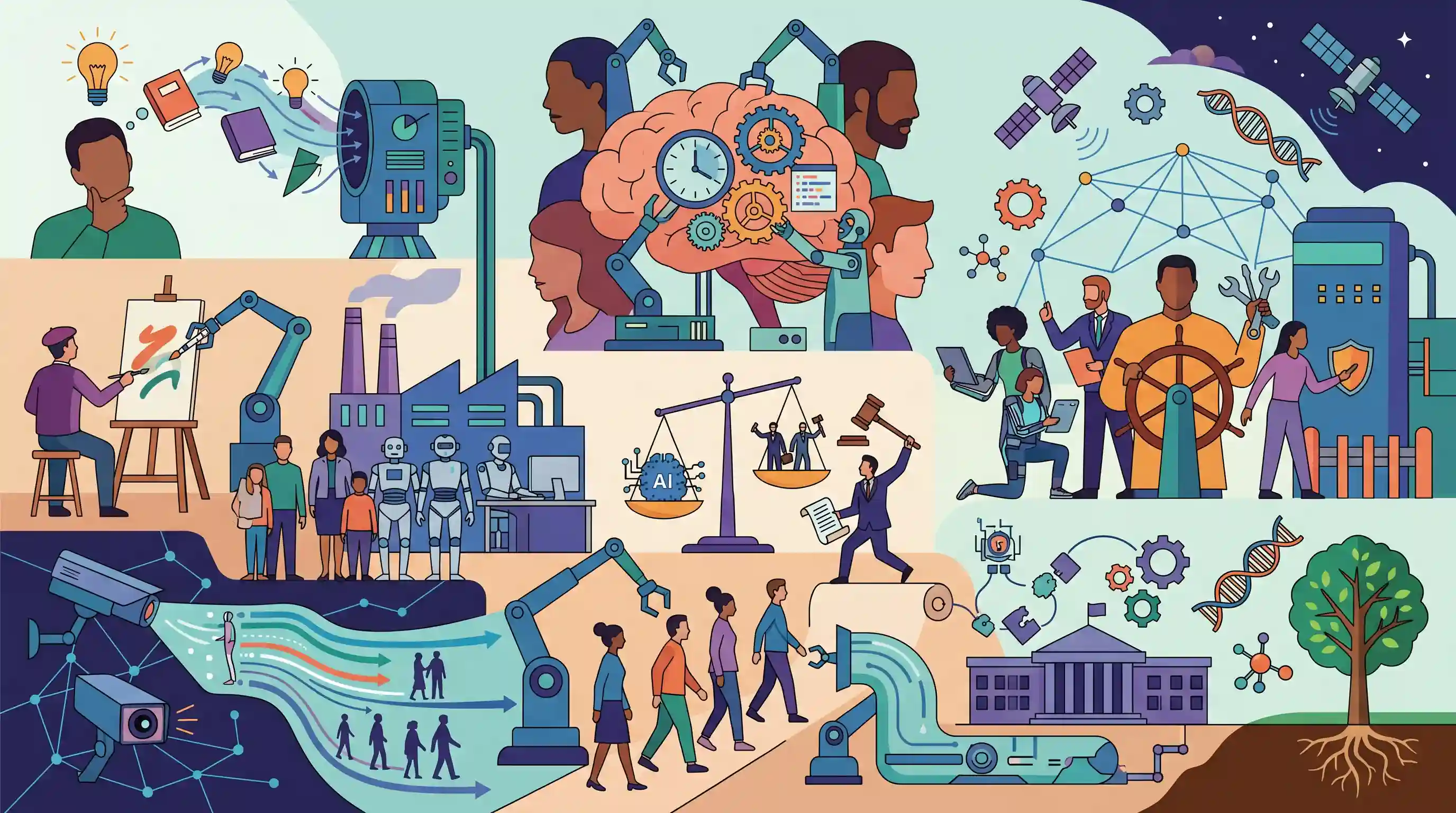
Cognitive Deskilling and Ethical Risks of Excessive AI Dependence
Source:Indian Express ↗
Why It Matters
Understanding the multi-dimensional impacts of AI is critical for civil servants, as they must navigate the ethical, economic, and security challenges posed by emerging technologies while framing policies that protect human agency and societal welfare.
Summary
An analytical exploration of the intangible and tangible losses humanity faces due to the rapid proliferation of Artificial Intelligence. The article underscores how outsourcing cognitive tasks, creativity, and administrative decision-making to AI threatens human critical thinking, moral agency, and empathy. Beyond the philosophical and ethical concerns of cognitive deskilling, it highlights the socioeconomic risks of job displacement and privacy violations, urging a regulatory and ethical framework where AI augments rather than replaces human capability and judgment.
Key Points
- Cognitive Deskilling: Excessive reliance on AI for writing, analytical tasks, and problem-solving risks eroding fundamental human cognitive abilities, memory, and critical thinking skills.
- Erosion of Human Creativity: The automation of art, literature, and communication by generative AI models risks reducing creative expression to derivative algorithmic outputs, removing authentic emotional depth.
- Ethical and Moral Deficit: Delegating complex administrative, judicial, or healthcare decisions to AI systems introduces risks of algorithmic bias and removes vital human traits like empathy, compassion, and moral nuance.
- Economic and Employment Disruptions: AI threatens widespread job displacement across both physical and knowledge-based sectors, exacerbating inequality and creating a pressing need for rapid workforce upskilling.
- Threats to Privacy and Agency: The massive data harvesting required to train AI models raises severe privacy concerns, while AI-generated misinformation and deepfakes threaten individual agency and democratic discourse.
Prelims Trap
"Because they are machines, AI systems ensure completely objective, bias-free decision-making."
AI models inherit and amplify societal prejudices present in their training data, leading to skewed or discriminatory outcomes.
Static Concepts Connected
What is Algorithmic Bias in public administration?
- Definition: Systematic and repeatable errors in AI systems that create unfair, discriminatory, or inequitable outcomes.
- Origin: Stems from historically prejudiced training data or the subjective assumptions of the developers coding the algorithms.
- Ethical risk: Directly compromises foundational public service values such as impartiality, equity, justice, and empathy.
How are deepfakes and AI misinformation currently regulated in India?
- IT Rules 2021: Requires social media intermediaries to take down impersonation or deepfake content within 24 hours of receiving a complaint.
- BNS 2023: Contains penal provisions for forgery, defamation, and spreading false information that threatens public tranquility.
- DPDP Act 2023: Restricts the non-consensual harvesting of personal data, imposing limits on how AI models are trained on user images.
Cross-Topic Patterns
AI vs. India's Demographic Dividend
As India's working-age population peaks, AI automation of entry-level BPO and coding jobs threatens mass displacement, risking turning the demographic dividend into a demographic disaster without rapid upskilling.
Generative AI & Internal Security Threats
Deepfakes and AI misinformation offer non-state actors a cheap, scalable weapon to manipulate public opinion, incite communal disharmony, and destabilize elections.

Expect a GS4 case study on deploying AI in welfare delivery, testing the conflict between bureaucratic efficiency and algorithmic bias.
Linked PYQs · 4
Linked PYQs · 4
- 2023MainsGS3
Introduce the concept of Artificial Intelligence (AI). How does Al help clinical diagnosis? Do you perceive any threat to privacy of the individual in the use of Al in healthcare?
- 2024MainsGS4
The application of Artificial Intelligence as a dependable source of input for administrative rational decision-making is a debatable issue. Critically examine the statement from the ethical point of view.
- 2019MainsEssay
Rise of Artificial Intelligence: the threat of jobless future or better job opportunities through reskilling and upskilling
- 2022MainsGS4
Apart from intellectual competency and moral qualities, empathy and compassion are some of the other vital attributes that facilitate the civil servants to be more competent in tackling the crucial issues or taking critical decisions. Explain with suitable illustrations.
