Developmental Nationalism Offers Blueprint for Electoral Success
Source:Indian Express ↗
Why It Matters
Understanding the ideological and strategic differences between political movements in India and Western democracies helps in analyzing global political trends. For UPSC aspirants, it provides valuable insights into comparative politics (GS Paper 2) and the dynamics of modern democracy, nationalism, and populism, which are frequent themes in Essays and governance discussions.
Summary
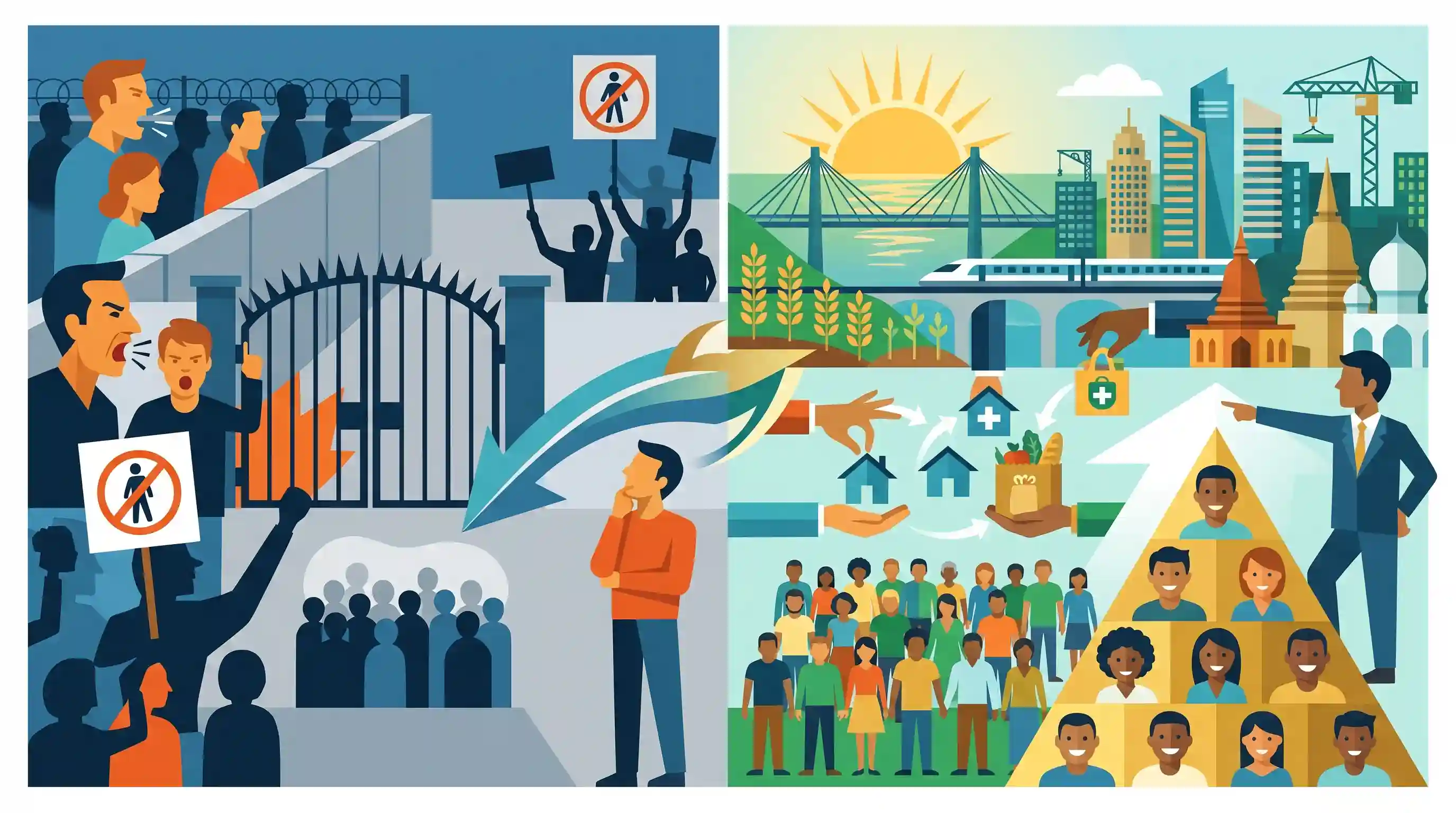
The article contrasts the political strategies of the European right with the Indian right-wing model, arguing that European movements can draw significant lessons from India's democratic experience. While the European right often remains confined to reactive, anti-immigrant populism, the Indian right has successfully combined civilizational nationalism with robust developmentalism, targeted welfarism, and strong grassroots organization. By presenting a positive, forward-looking narrative rather than relying merely on grievance politics, the Indian model offers a blueprint for building a broader, more sustainable electoral coalition.
Key Points
- European right-wing movements often rely on reactive, anti-immigrant, and anti-establishment populism, lacking a comprehensive developmental agenda.
- The Indian right-wing model has achieved sustained success by blending civilizational nationalism with a forward-looking economic and developmental narrative.
- A crucial factor in the Indian model is targeted welfarism, which creates a broad electoral coalition of beneficiaries that transcends traditional social cleavages.
- India's political right relies on extensive grassroots organizational structures, providing stability and deeper societal penetration beyond the charisma of individual leaders.
- European conservative movements could learn from India by constructing a positive, inclusive civilizational vision rather than depending solely on grievance politics.
Important Terms
Civilizational Nationalism

A form of nationalism where the nation is defined by its shared cultural and historical civilization rather than just territory or citizenship. It often seeks to revive ancient heritage.
UPSC context
Relevant for GS Paper II (Comparative Politics) and PSIR, testing understanding of global ideological shifts and Indian political identity.
Hindutva
The core political ideology of the Indian right-wing, which seeks to define Indian culture in terms of Hindu values and establish a Hindu-centric national identity.
UPSC context
Crucial for GS Paper I (Social Empowerment/Communalism) and Paper II, examining political ideologies and their impact on Indian democracy.
Targeted Welfarism
A political strategy of providing direct benefits, such as housing or sanitation, to specific demographic groups to build a broad and loyal electoral base.
UPSC context
GS Paper II (Governance) and Paper III (Economy). Tests knowledge of welfare mechanisms and leur connection to electoral politics.
Right-Wing Populism
A political approach that pits 'the people' against 'the elite' or 'outsiders' (like immigrants), often emphasizing national sovereignty and traditional values.
UPSC context
GS Paper II (Global Political Trends). Important for understanding comparative democratic challenges and international relations.
Bharatiya Janata Party (BJP)
India's dominant right-wing political party, which advocates for Hindutva and combines cultural nationalism with a focus on development and national security.
UPSC context
GS Paper II (Political Parties). Core to understanding the current executive's ideological framework and national policy direction.
Cultural Nationalism
A movement that defines national identity through shared cultural heritage, language, or religion, often contrasted with 'liberal' or 'civic' nationalism.
UPSC context
GS Paper I and PSIR. Essential for analyzing the historical and modern evolution of the Indian state.
Static Concepts Connected
What defines the 'New Welfarism' model in India's political economy?
- Tangible Private Goods: Shift from traditional public goods (like primary health/education) to the provision of tangible, individually attributable goods (gas cylinders, housing, toilets).
- Labharthi Class: Creation of a new voter base transcending traditional caste or regional divides through direct benefit transfers and tech-enabled delivery.
- Centralization of Credit: Welfare delivery is closely tied to the central executive, bypassing local intermediaries to build a direct, visible citizen-state connection.
How does Indian political mobilization differ from Western right-wing populism?
- Grievance vs. Development: Western populism relies heavily on reactive, anti-immigrant, and anti-establishment grievance politics.
- Civilizational Nationalism: Indian mobilization successfully blends civilizational pride with a forward-looking economic and technological developmental agenda.
- Grassroots Organization: Western movements often hinge on individual charismatic leaders, whereas the Indian right relies on extensive socio-cultural grassroots organizations for structural stability.
Cross-Topic Patterns
New Welfarism + Digital Public Infrastructure
The Indian model's targeted welfarism relies heavily on the JAM Trinity (Jan Dhan, Aadhaar, Mobile) to eliminate leakages and create a direct state-citizen connection, merging GS2 governance with GS3 tech.
Civilizational State + Foreign Policy Posture
The domestic political narrative of civilizational nationalism directly feeds into India's foreign policy posture, projecting the nation as a 'Vishwa Bandhu' (global friend) bridging East and West.

Expect a GS2 Mains question analyzing the 'Labharthi' (beneficiary) class and how 'New Welfarism' alters traditional electoral behavior.
Linked PYQs · 3
Linked PYQs · 3
- 2018MainsGS2
India and USA are two large democracies. Examine the basic tenets on which the two political systems are based.
- 2020MainsGS2
Indian diaspora has a decisive role to play in the politics and economy of America and European Countries'. Comment with examples.
- 2023MainsGS2
Compare and contrast the British and Indian approaches to Parliamentary sovereignty.
