Physiological causes and clinical significance of syncope
Source:The Hindu ↗
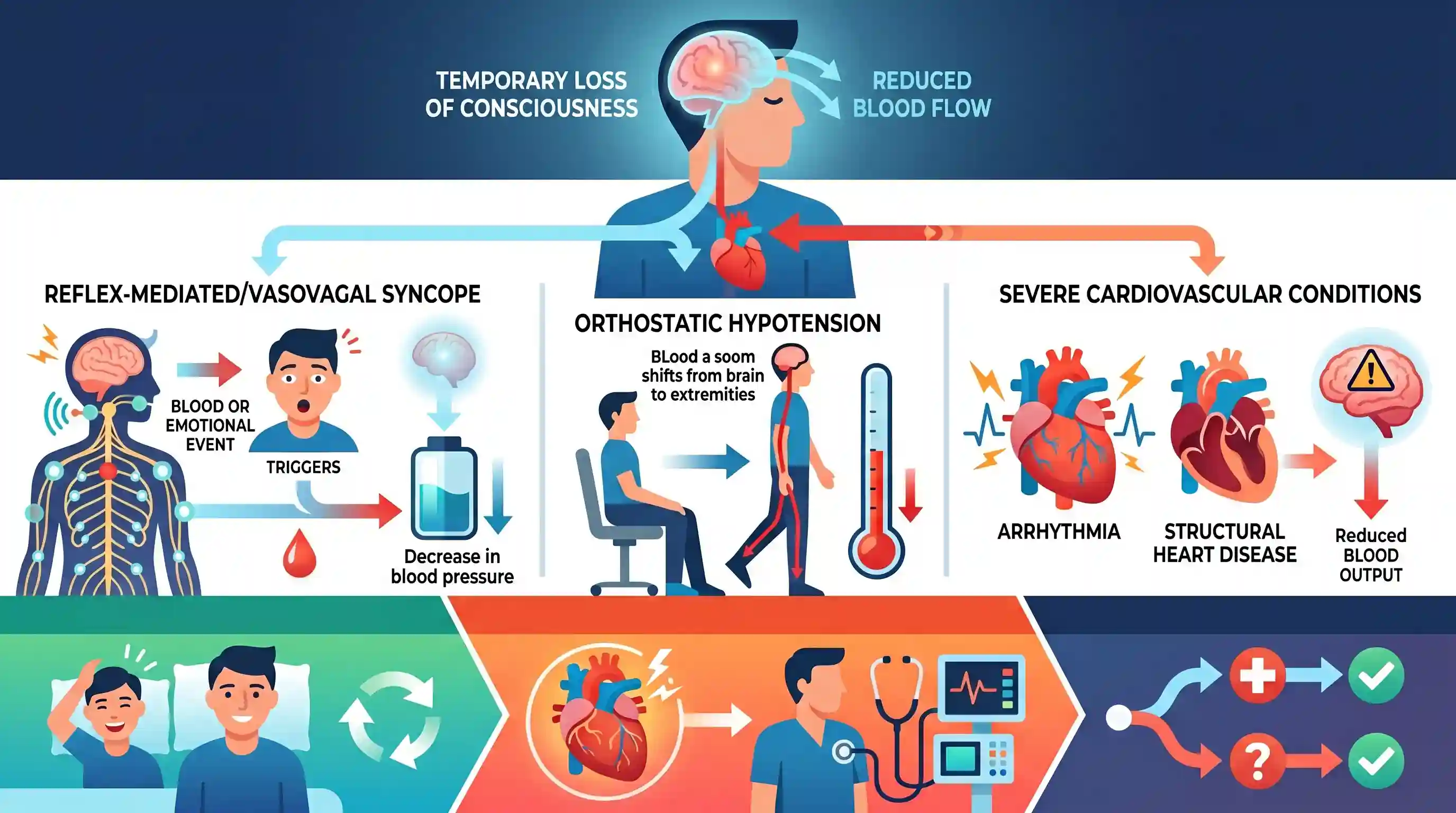
Why It Matters
Basic science and human physiology are recurring themes in the UPSC Prelims. Understanding the physiological mechanisms behind common health phenomena like syncope—such as vasodilation, blood circulation, and neurological responses—is essential for answering questions on human biology and public health awareness.
Summary
Syncope, or fainting, is a temporary loss of consciousness resulting from insufficient blood flow to the brain. The condition can stem from multiple physiological pathways, including reflex-mediated (vasovagal) triggers, sudden drops in blood pressure upon standing (orthostatic hypotension), or more severe underlying cardiovascular and neurological conditions. While many fainting episodes are benign and self-resolving, recurrent or unprovoked syncope can serve as a critical warning sign for serious structural heart diseases or arrhythmias. Proper diagnosis is essential to differentiate routine fainting from life-threatening medical emergencies and to ensure appropriate healthcare management.
Key Points
- Syncope, commonly known as fainting, is a transient loss of consciousness caused by a temporary decrease in blood flow to the brain (cerebral hypoperfusion).
- The condition is often triggered by vasovagal responses, where the body overreacts to triggers like emotional stress, heat, or prolonged standing, causing sudden vasodilation and a drop in heart rate.
- Other significant causes include cardiovascular issues such as arrhythmias (irregular heartbeats) and structural heart diseases, which can impede normal blood circulation.
- Orthostatic hypotension, characterized by a sudden drop in blood pressure upon standing, is another common cause, particularly affecting older adults or those on specific medications.
- Accurate clinical diagnosis is crucial to differentiate benign fainting spells from potentially life-threatening cardiac or neurological disorders that require immediate medical attention.
Prelims Trap
Vasovagal syncope is caused by a sudden, dangerous spike in heart rate and blood pressure during stress.
It is the exact opposite. Vasovagal syncope involves a sudden drop in heart rate (bradycardia) and widening of blood vessels (vasodilation), dropping blood pressure.
Static Concepts Connected
How does the autonomic nervous system regulate heart rate and blood flow?
- Sympathetic system: Drives the 'fight or flight' response, releasing adrenaline to increase heart rate and constrict blood vessels.
- Parasympathetic system: Drives the 'rest and digest' response, primarily via the vagus nerve, which slows the heart rate and dilates blood vessels (causing vasodilation).
What is the difference between systolic and diastolic blood pressure?
- Systolic pressure: The pressure in arteries when the heart muscle contracts. Orthostatic hypotension is defined by a sudden drop (20 mm Hg or more) in this pressure upon standing.
- Diastolic pressure: The pressure in arteries when the heart rests between beats. It represents the lower number in a standard blood pressure reading.
Cross-Topic Patterns
Wearable tech & cardiac monitoring
UPSC frequently tests wearable technology. The use of smartwatches to detect arrhythmias (irregular heartbeats) and prevent cardiac syncope perfectly links everyday emerging tech with basic human biology.
Climate change & heat-induced health burdens
Rising extreme heat events (geography/environment) trigger severe vasodilation and dehydration. This directly increases vasovagal syncope cases, linking climate shifts to physiological public health impacts.

Expect a Prelims matching question pairing physiological terms (Syncope, Hypoxia, Arrhythmia, Ischemia) with their bodily mechanisms.
Linked PYQs · 3
Linked PYQs · 3
- 1997PrelimsGS1
Arteries supplying blood to the heart are called
- 2024PrelimsGS1
Which one of the following is synthesised in human body that dilates blood vessels and increases blood flow?
- 2022MainsGS3
The increase in life expectancy in the country has led to newer health challenges in the community. What are those challenges and what steps need to be taken to meet them?
