Nail abnormalities as clinical indicators of disease and malnutrition
Source:The Hindu ↗
Why It Matters
Understanding clinical indicators of malnutrition and disease helps contextualize India's public health challenges, such as the high prevalence of anemia, and underscores the importance of nutritional interventions like the National Nutrition Mission.
Summary
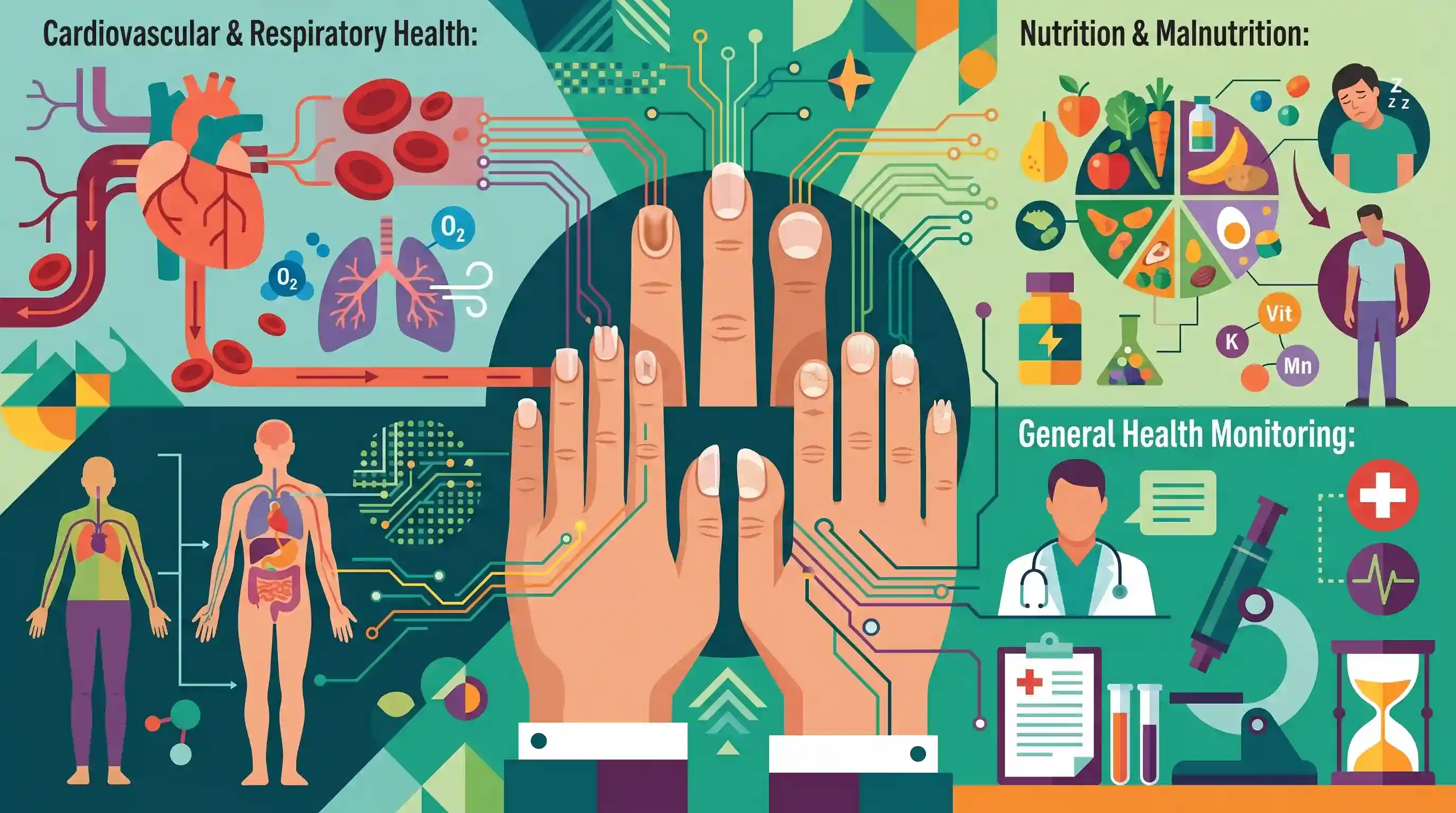
This article discusses how changes in the appearance, texture, and shape of nails can serve as vital clinical indicators of a person's overall health. It explains that specific nail abnormalities can reveal underlying nutritional deficiencies, physical trauma, and chronic systemic illnesses, such as cardiovascular or respiratory diseases. By highlighting the connection between physical symptoms like anemia-induced spoon nails and broader health, the piece emphasizes the importance of early detection and intervention in addressing malnutrition and managing chronic health conditions.
Key Points
- Nails can act as a diagnostic window, with changes in their color, shape, and texture often indicating underlying health issues.
- Specific abnormalities, such as spoon-shaped nails (koilonychia) or clubbing, are clinically linked to nutritional deficiencies (like iron-deficiency anemia) and chronic systemic diseases (like respiratory or cardiovascular conditions), respectively.
- Nutritional shortfalls, including a lack of essential vitamins, minerals (like zinc), and proteins, frequently manifest as brittle nails, ridges, or discoloration.
- Recognizing these physical signs early can facilitate timely medical intervention and help address broader public health challenges related to malnutrition and chronic disease.
Important Terms
Poshan Abhiyaan (National Nutrition Mission)

India's flagship National Nutrition Mission launched in 2018 to reduce stunting, undernutrition, and anemia among children, pregnant women, and lactating mothers using technology and multi-ministerial convergence.
UPSC context
GS Paper II: Government policies, social justice, and issues relating to hunger and health. Crucial for schemes-based questions.
Anemia
A medical condition characterized by a deficiency of red blood cells or hemoglobin, affecting oxygen transport; it is a severe public health problem in India impacting over 50% of women.
UPSC context
GS Paper II: Health and Social Sector. Often linked to discussions on the 'Anaemia Mukt Bharat' strategy.
Malnutrition
Deficiencies, excesses, or imbalances in nutrient intake, manifesting as stunting (low height-for-age), wasting (low weight-for-height), or micronutrient deficiencies like iron or Vitamin A.
UPSC context
GS Paper II: Poverty and Hunger. Vital for analyzing India's human capital and demographic dividend challenges.
Non-Communicable Diseases (NCDs)
Also known as chronic diseases, these are non-infectious conditions (e.g., cardiovascular diseases, diabetes, cancer) caused by a combination of genetic, environmental, and behavioral factors.
UPSC context
GS Paper II: Health and Paper III: Science & Technology. Represents 66% of mortality in India.
Koilonychia (Spoon Nails)
A clinical sign characterized by thin, spoon-shaped, concave nails; it is a hallmark physical indicator of chronic iron deficiency anemia and systemic malnutrition.
UPSC context
GS Paper III: Science & Technology (Biology). Tests awareness of clinical symptoms of widespread nutritional deficiencies.
National Family Health Survey (NFHS)
A comprehensive, large-scale survey providing essential data on health, family welfare, and nutrition indicators in India, used by policymakers to track the success of health interventions.
UPSC context
GS Paper II: Governance and Social Justice. The primary source for socio-economic data in Mains answers.
Prelims Trap
"Nail clubbing is a primary clinical indicator of severe calcium and Vitamin D deficiency."
Nail clubbing is actually a physiological sign of chronic hypoxia (low blood oxygen) linked to respiratory (TB) or cardiovascular diseases, not a micronutrient deficiency.
Static Concepts Connected
What is "Hidden Hunger" and its primary clinical manifestations?
- Hidden Hunger: A condition where individuals lack essential vitamins and minerals (like iron and zinc) despite having an adequate caloric intake.
- Clinical Signs: Common non-invasive markers include koilonychia (spoon nails for iron), goiter (iodine), and night blindness (Vitamin A).
What are the core components of the Anemia Mukt Bharat (AMB) strategy?
- 6x6x6 Framework: Utilizes a '6x6x6' strategy targeting 6 beneficiary groups, through 6 interventions, relying on 6 institutional mechanisms.
- Key Interventions: Includes Prophylactic Iron and Folic Acid (IFA) supplementation, bi-annual deworming, and point-of-care testing.
- Dietary Fortification: Mandatory provision of iron and vitamin-fortified foods in public health programs like ICDS and PM-POSHAN.
Cross-Topic Patterns
Non-invasive markers in rural health screening
Physical symptoms like koilonychia empower ASHA workers to identify hidden hunger without immediate bloodwork, strengthening primary diagnostics under missions like Anemia Mukt Bharat.
Hidden hunger & Biofortified crops
Clinical manifestations of micronutrient deficiencies underscore the GS3 agricultural imperative to develop and distribute biofortified crops, such as iron-rich pearl millet and zinc-wheat.

Expect a "disease vs symptom/deficiency" matching question in Prelims 2026 mapping koilonychia, clubbing, and Beau's lines to causes.
Linked PYQs · 4
Linked PYQs · 4
- 2024MainsGS2
Poverty and malnutrition create a vicious cycle, adversely affecting human capital formation. What steps can be taken to break the cycle ?
- 2017PrelimsGS1
Which of the following are the objectives of 'National Nutrition Mission'? 1. To create awareness relating to malnutrition among pregnant women and lactating mothers. 2. To reduce the incidence of anaemia among young children, adolescent girls and women. 3. To promote the consumption of millets, coarse cereals and unpolished rice. 4. To promote the consumption of poultry eggs. Select the correct answer using the code given below:
- 2021MainsGS2
“Besides being a moral imperative of a Welfare State, primary health structure is a necessary precondition for sustainable development.” Analyze.
- 2022PrelimsGS1
Which one of the following statements best describes the role of B cells and T cells in the human body?
