West Bengal Proposes PPP Model for Rural Health Centres
Source:medicaldialogues ↗
Why It Matters
This policy proposal represents a significant structural shift in West Bengal's healthcare delivery model by leveraging private medical institutions to enhance rural public health infrastructure at the block primary health centre level.
Summary
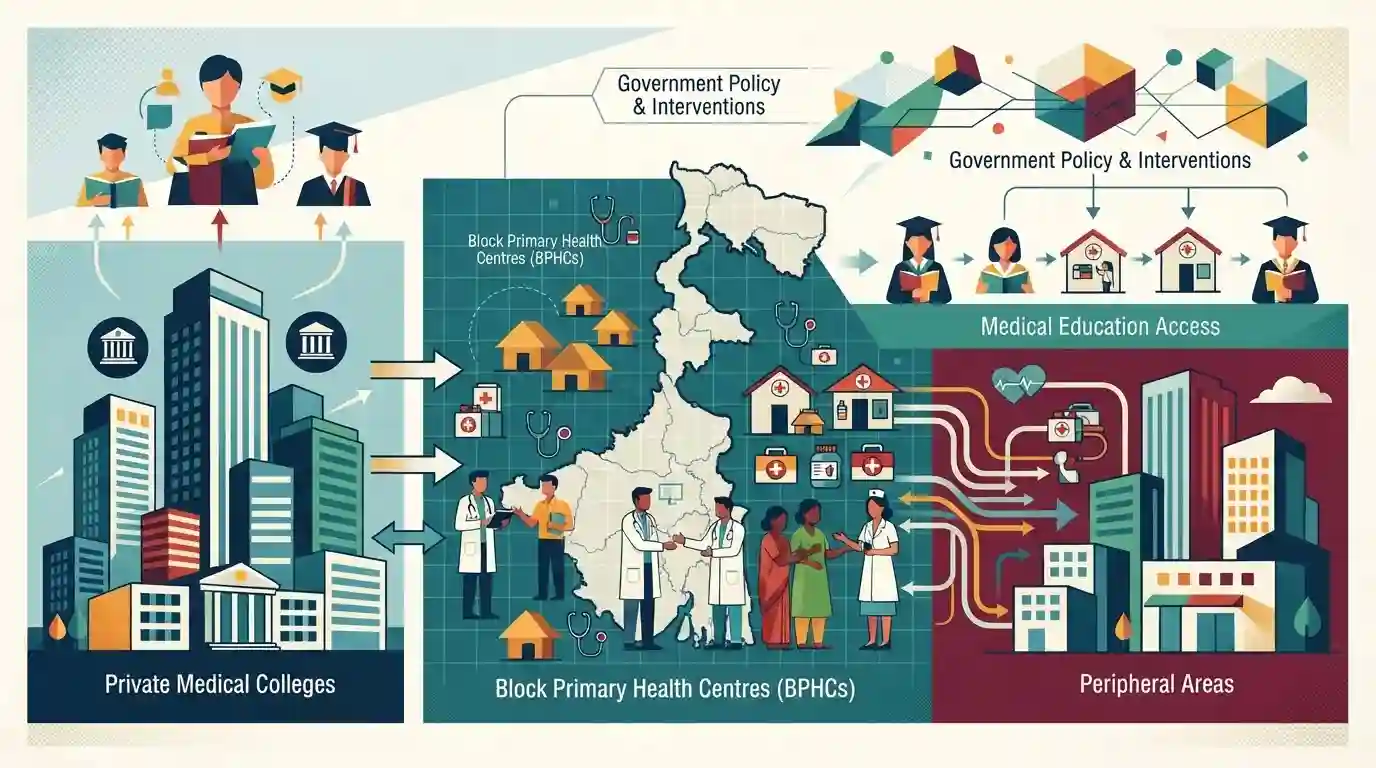
The West Bengal government is exploring a partnership model between private medical colleges and block primary health centres (BPHCs) to strengthen rural healthcare infrastructure, improve access to medical education, and enhance healthcare delivery across peripheral areas of the state.
Key Points
- The West Bengal government is considering a novel public-private partnership (PPP) model where private medical colleges could be linked with block primary health centres (BPHCs).
- The initiative aims to boost rural healthcare infrastructure, expand medical education opportunities, and address the shortage of clinical hands in peripheral areas.
- It seeks to bridge the gap in healthcare delivery between urban-centric medical institutions and rural block-level facilities.
Important Terms
Block Primary Health Centres (BPHCs)

State-run rural healthcare facilities in West Bengal functioning at the block level, typically equipped with around 20 beds to provide primary, preventive, and curative services as well as emergency stabilization for local populations.
UPSC context
Important for WBCS (Public Health, Rural Infrastructure, and West Bengal Administration) focusing on grassroots healthcare delivery and state policy initiatives.
West Bengal Government
The administrative and political authority of West Bengal, responsible for formulating state policies, managing public welfare schemes, and administering peripheral healthcare networks like BPHCs and rural hospitals.
UPSC context
Crucial for WBCS Polity and Governance, covering state-level executive functions, regional policy interventions, and administrative organization.
Static Concepts Connected
What is the administrative tier structure of rural healthcare delivery under the National Health Mission in India?
- Sub-Centres: Sub-Centres (SCs) form the grassroot-level contact point for a population of 3,000 to 5,000 in plain areas.
- Primary Health Centres: Primary Health Centres (PHCs) act as the first referral unit for 4-6 Sub-Centres, covering 20,000 to 30,000 population.
- Community Health Centres: Community Health Centres (CHCs) serve as referral centers for 4 PHCs, covering 80,000 to 1.2 lakh population with specialist care.
Cross-Topic Patterns
Rural Public Health & Panchayati Raj
Rural healthcare delivery models like BPHC tie-ups connect public health administration with administrative decentralization under the Panchayati Raj system (73rd Constitutional Amendment).

WB healthcare PPP models for BPHCs could be tested in Mains descriptive papers (Public Health governance) or WB prelims schemes.
Linked PYQs · 1
Linked PYQs · 1
- 2021WBCS_PRELIMSGS1
How many new Government Medical Colleges have become functional in West Bengal during the last ten years?
