West Bengal Plans Mangrove Restoration in Sundarbans
Source:The Hindu ↗
Why It Matters
Crucial for understanding regional environmental issues, ecological conservation policies, and vulnerability of the Sundarbans delta in West Bengal.
Summary
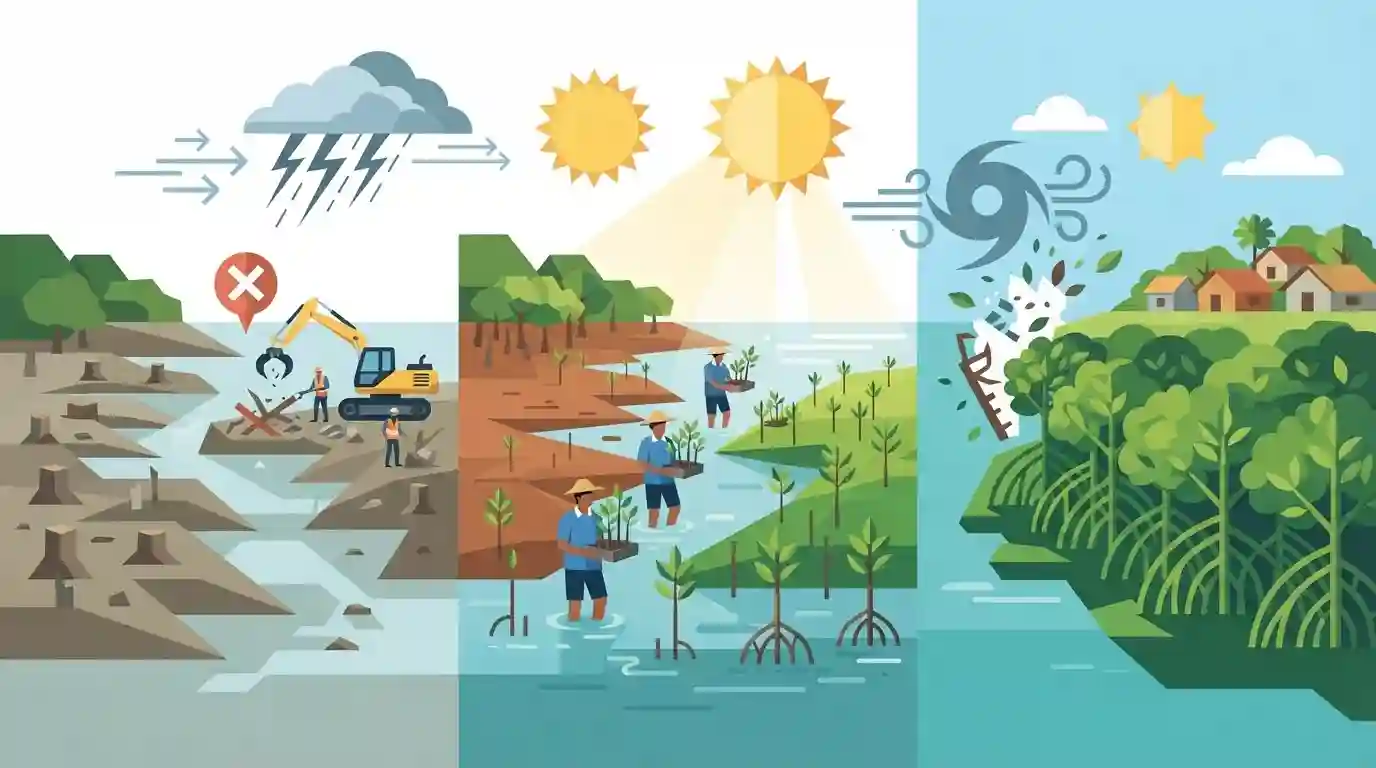
The West Bengal government has vowed to restore mangroves in the Sundarbans region that have been lost due to illegal encroachments, aiming to protect the vulnerable coastal ecosystem and enhance climate resilience against cyclones.
Key Points
- West Bengal Minister for Sundaran Affairs Bankim Chandra Hazra announced initiatives to restore mangroves lost to encroachments in the Sundarbans.
- Encroachments on mangrove lands pose a serious threat to the fragile deltaic ecosystem and coastal security against cyclones.
- The state plans stringent measures to clear illegal occupations and plant indigenous mangrove species.
Important Terms
Sundarbans

A vast deltaic wetland spanning India and Bangladesh, known for dense tidal forests, UNESCO World Heritage status, and high biodiversity including the Royal Bengal Tiger. West Bengal accounts for over 42% of India's total mangrove cover here.
UPSC context
WBCS Paper III (Geography and Environment) — tests regional physical geography, deltaic ecology, climate vulnerability, and coastal conservation policies.
Mangroves
Salt-tolerant evergreen halophytic trees and shrubs that grow in intertidal coastal zones, providing natural bio-shields against tropical cyclones, storm surges, and coastal erosion.
UPSC context
WBCS Paper III (Environment & Ecology) — tests coastal ecosystem services, biodiversity conservation, and climate change adaptation strategies.
West Bengal Government
The executive authority governing the state of West Bengal, responsible for formulating administrative policies, managing state forest resources, and executing environmental and conservation mandates.
UPSC context
WBCS Paper II (Polity & Administration) and Paper III — tests state-level governance, administrative jurisdiction, and environmental policy implementation.
Brackish Water Aquaculture Bheries
Shallow earthen ponds created through the illegal conversion of forest and wetland tracts in the Sundarbans for commercial brackish water prawn and fish farming.
UPSC context
WBCS Paper III (Environment and Economy) — tests threats to fragile deltaic ecosystems, land-use violations, and sustainable development issues.
Static Concepts Connected
What is the significance and historical demarcation of the Sundarbans in West Bengal?
- Dampier-Hodges Line: Dampier-Hodges line (surveyed 1829–1833) serves as the historical northern and eastern boundary separating the Sundarbans forest from cultivated lands.
- UNESCO Status: UNESCO World Heritage Site recognized for its unique deltaic mangrove forests, rich biodiversity, and home to the Royal Bengal Tiger.
- Coastal Defense: Bio-shield role in acting as a natural barrier against severe tropical cyclones like Amphan, Sidr, and Yaas, protecting coastal inhabitants.
Cross-Topic Patterns
Sundarbans Mangroves + National Carbon Sinks
Sundarbans mangrove restoration initiatives directly tie into national climate commitments under India's NDC for carbon sinks and state-level disaster mitigation under WBIDMP.

Expect a statement-based prelims question on the Dampier-Hodges line, UNESCO status, or ecological role of Sundarbans mangroves.
Linked PYQs · 3
Linked PYQs · 3
- 2019WBCS_PRELIMSGS1
Sundarban is declared as 'World Heritage Site' for
- 2021WBCS_PRELIMSGS1
The boundary line of Sundarban was demarcated by
- 2024WBCS_PRELIMSGS1
On a per hectare basis which of the following forests will hold maximum amount of carbon?
