Sundarbans coastal conservation and mangrove habitat protection
Source:The Hindu ↗
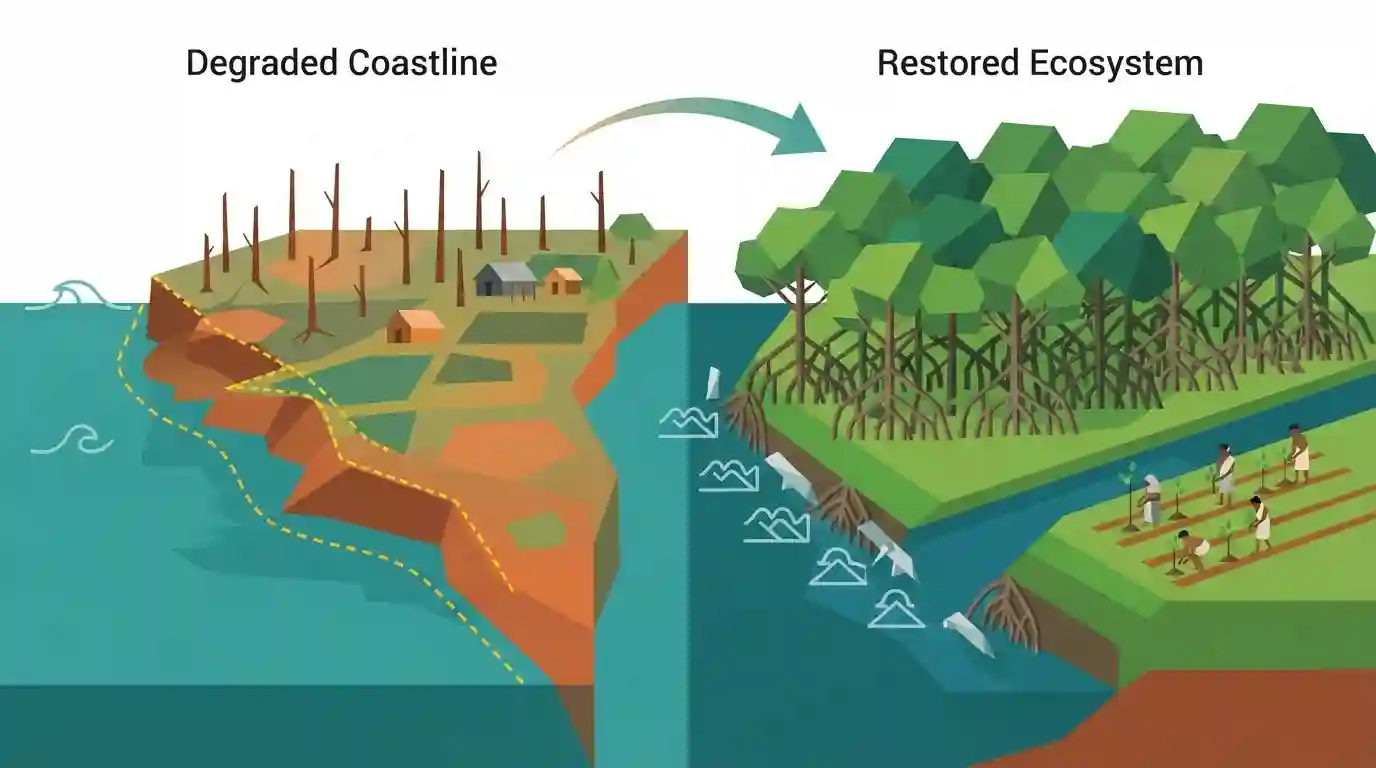
Why It Matters
Crucial for civil services and state examinations focusing on West Bengal's regional environment, geography, and administrative initiatives for ecological protection.
Summary
The West Bengal government has committed to restoring mangrove forests in the Sundarbans region that have been cleared or lost due to encroachments, emphasizing ecological preservation and coastal security.
Key Points
- A West Bengal Minister has pledged to restore mangroves in the Sundarbans that have been lost due to illegal encroachments.
- The Sundarbans delta ecosystem faces severe ecological threats from land grabbing, climate change, and human settlement encroachments.
- Mangrove restoration is critical for coastal protection, biodiversity conservation, and mitigating cyclonic storm impacts in West Bengal.
Important Terms
Sundarbans Mangroves

A massive deltaic mangrove ecosystem located in southern West Bengal, home to the Royal Bengal Tiger. It acts as a critical natural buffer against cyclones and storm surges.
UPSC context
WBCS Paper I & II (Geography and Environment): Tests knowledge of West Bengal's physical geography, coastal ecosystems, and biodiversity conservation.
Mangrove Encroachment
The illegal conversion of protected forestland for commercial fish or shrimp farming (bheries) by clearing mangrove vegetation and blocking tidal water flows.
UPSC context
WBCS Paper II (Environment & Current Affairs): Important for questions on ecological threats, land degradation, and coastal management in West Bengal.
West Bengal Government
The administrative body responsible for framing state-level forest policies, environmental protection laws, and conservation initiatives within West Bengal.
UPSC context
WBCS Paper I & IV (Polity and Governance): Tests understanding of state administrative machinery, environmental governance, and regional policy implementation.
Static Concepts Connected
What are the key geographical and ecological features of the Sundarbans mangrove ecosystem in West Bengal?
- Mangrove Share: Largest share: West Bengal accounts for approximately 42.45% of India's total mangrove cover, concentrated in the deltaic Sundarbans.
- Coastal Defense: Natural bio-shield: Acts as a vital barrier against severe cyclonic storms, storm surges, coastal erosion, and rising sea levels.
- Major Threats: Ecological threats: Encroachments for shallow fish ponds (bheries), climate change, and salinity ingress threaten interior mangrove islands.
Cross-Topic Patterns
Sundarbans: Disaster Management Meets Deltaic Geomorphology
Sundarbans mangrove conservation directly impacts both coastal disaster management under WBCS Paper VI and deltaic geomorphology under Paper I physical geography.
Aquaculture Encroachments vs. Coastal Ecology
The conversion of mangroves into commercial aquaculture (bheries) highlights the constant conflict between rural livelihoods and ecological preservation in coastal West Bengal.

Expect a statement-based question on West Bengal's mangrove share (42.45%) and specific threats like bheries in the Sundarbans.
Linked PYQs · 2
Linked PYQs · 2
- 2020WBCS_PRELIMSGS1
How many Indian States have touched the border of West Bengal?
- 2015WBCS_PRELIMSGS1
West Bengal has international boundaries on
