West Bengal merges Madrasah Service Commission with SSC
Source:opindia ↗
Why It Matters
Important for WBCS aspirants tracking institutional and administrative changes within West Bengal's educational framework and public service bodies.
Summary
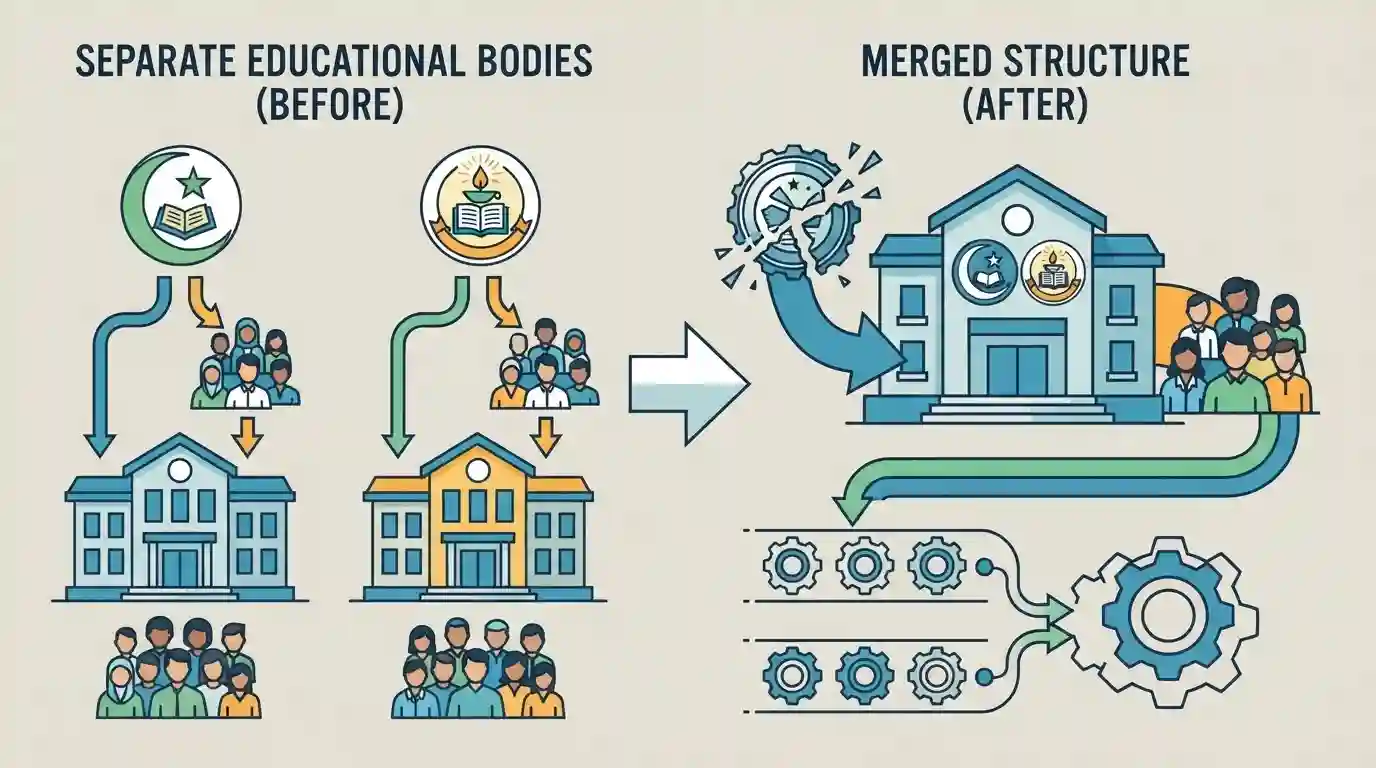
The West Bengal government has dissolved the West Bengal Madrasah Service Commission and merged its operations and responsibilities with the West Bengal School Service Commission, bringing significant structural changes to state educational recruitment bodies.
Key Points
- The West Bengal government dissolved the state's Madrasah Service Commission.
- The functions and administration of the Madrasah Service Commission have been merged into the West Bengal School Service Commission.
- This administrative restructuring changes the recruitment and management mechanism for educational institutions in the state.
Important Terms
West Bengal Madrasah Service Commission

A statutory body formerly responsible for the recruitment of teachers and non-teaching staff in recognized state-aided madrasas across West Bengal, dissolved and merged into the WBSSC.
UPSC context
WBCS (Polity & Governance / State Administration): Tests knowledge of state-level statutory recruitment bodies and recent administrative reforms in educational governance.
West Bengal School Service Commission
The central examining and recruiting body for teachers and staff in West Bengal's state-aided schools, now expanded to oversee appointments for madrasas as well.
UPSC context
WBCS (State Administration & Educational Governance): Tests candidate awareness regarding public sector recruitment agencies and institutional restructuring in West Bengal.
West Bengal Government
The executive government of West Bengal responsible for policy-making, administrative governance, legislative enactments, and structural reforms across state educational institutions.
UPSC context
WBCS (Polity & Governance): Tests understanding of state executive authority, administrative decision-making, and state-level policy execution.
Prelims Trap
The West Bengal government dissolved the state's Madrasah Service Commission and merged it with the School Service Commission, violating constitutional minority rights.
Aspirants might assume madrasah boards are entirely autonomous and immune to state legislative restructuring, confusing religious administration rights with secular staff recruitment and funding oversight.
Static Concepts Connected
What are the constitutional provisions regarding minority educational institutions under Indian Law?
- Article 30(1): All minorities, whether based on religion or language, have the right to establish and administer educational institutions of their choice under Article 30(1).
- Article 30(2): The state shall not, in granting aid to educational institutions, discriminate against any educational institution on the ground that it is under the management of a minority, under Article 30(2).
- Reasonable Regulation: While administration is protected, reasonable regulations concerning academic standards, health, sanitation, and discipline can be imposed by the state without infringing minority rights.
Cross-Topic Patterns
Minority Education Rights vs. State Regulatory Power
The closure of unapproved madrasas and administrative merger touch upon minority education rights under Article 30 and the regulatory reach of state administrative bodies under Schedule VII.

WB institutional restructuring (Madrasah Commission merger, Aliah University shift) will feature in WBCS state governance/polity MCQs.
Linked PYQs · 2
Linked PYQs · 2
- 2020WBCS_PRELIMSGS1
'Chancellor' of the State-run Universities in West Bengal is
- 2023WBCS_PRELIMSGS1
A Public Service Commission was established in India for the first time by
