Chenab Beas Link hydro project raises ecological alarms in Himachal
Source:timesofindia-indiatimes ↗
Why It Matters
Directly relevant to HPAS aspirants studying Himachal geography, infrastructure projects, and ecological vulnerabilities of the state's river basins.
Summary
The article discusses safety and disaster alarms raised by the Chenab Beas Link Hydro Project in Himachal Pradesh, highlighting the environmental vulnerabilities of large-scale hydro projects in the Himalayan region.
Key Points
- The Chenab Beas Link Hydro Project has raised disaster and environmental security alarms in Himachal Pradesh.
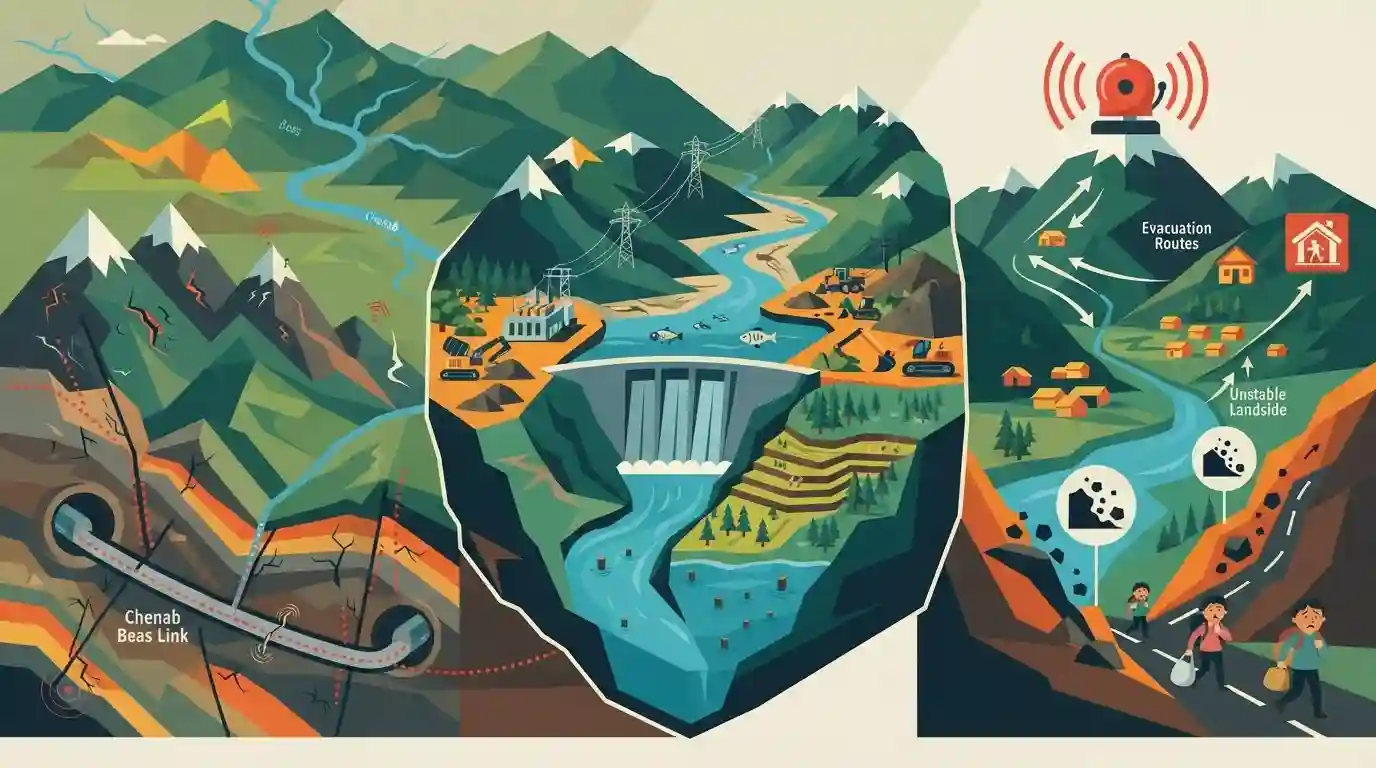
- Local concerns center around the ecological fragility of the Himalayan terrain, risks of tunneling, and downstream water displacement.
- Hydroelectric project planning in the state faces increasing friction between developmental energy generation and disaster mitigation.
Important Terms
Chenab Beas Link Hydro Project

An ambitious river-linking initiative designed to divert surplus water from the Chenab basin into the Beas river system through an 8.7 km tunnel, implemented by NHPC.
UPSC context
Important for HPAS/UPSC (Geography and Environment): tests understanding of inter-basin water transfers, Himalayan ecology, and developmental vs environmental challenges.
Prelims Trap
Chenab-Beas Link Hydro Project diverts water within the Beas basin without crossing river systems.
Aspirants often confuse inter-basin water transfer projects in HP with intra-basin projects, assuming all Himalayan hydro schemes carry identical environmental clearance protocols and downstream riparian implications.
Static Concepts Connected
What are the key ecological and disaster risks associated with large hydroelectric projects in the Himalayan terrain?
- Tunneling hazards: Uncontrolled tunneling through young fold mountains triggers severe strata destabilization and localized landslides.
- Hydrological alteration: Massive barrages and reservoirs increase siltation, alter downstream aquatic ecology, and heighten vulnerability to flash floods.
- Glacial vulnerability: Proximity to glaciers and permafrost zones escalates exposure to Glacial Lake Outburst Floods (GLOFs) and avalanches.
Cross-Topic Patterns
Inter-basin transfers and the Indus Waters Treaty
Inter-basin water transfers raise critical questions under the Indus Waters Treaty, balancing state energy demands against international riparian obligations and transboundary water security.
Himalayan hydrology meets ecological fragility
Large Himalayan tunnels and barrages alter fragile mountain ecosystems, exacerbating risks of GLOFs, slope destabilization, and local seismicity in high-altitude zones.

Expect a multi-statement Mains or Prelims question linking inter-basin water transfers (Chenab-Beas) with Himalayan disaster risks and the IWT.
Linked PYQs · 2
Linked PYQs · 2
- 2024HPAS_PRELIMSGS1
Arrange the following climatic zones of Himachal Pradesh according to rainfall amount from lowest to highest : (1) Frigid aridic zone (2) Wet temperate zone (3) Humid sub-tropical zone (4) Sub-humid sub-tropical zone Choose the correct answer from the options given below :
- 2025HPAS_PRELIMSGS1
Mountain Soil Zone in Himachal Pradesh is found between :
