Generative AI Deepfakes and Political Propaganda in US Protests
Source:Indian Express ↗
Why It Matters
The use of AI-generated content by heads of state to mock or intimidate citizens represents a novel challenge in technology governance. It is highly relevant for UPSC aspirants studying the ethical dimensions of technology (GS4), the security implications of social media (GS3), and the evolving nature of global democracies (GS2).
Summary
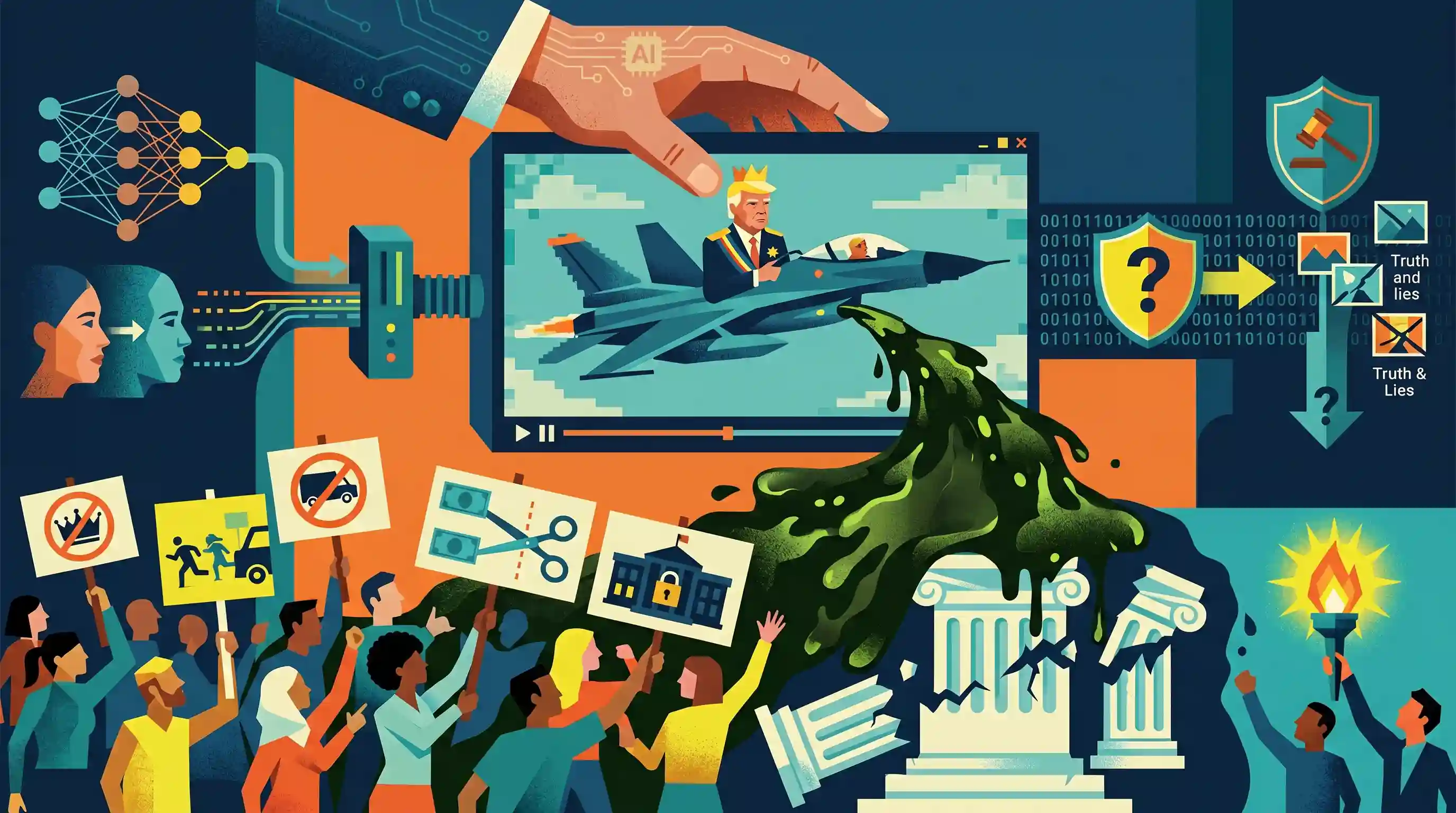
Amid widespread 'No Kings' protests across the United States against the current administration's policies—such as immigration raids, social program cuts, and a federal shutdown—President Donald Trump shared an AI-generated video of himself flying a fighter jet and dropping sludge on demonstrators. This event marks a significant escalation in the use of generative Artificial Intelligence for political propaganda by a world leader, raising profound ethical, regulatory, and democratic concerns about the weaponization of social media and digital technologies to target political opposition.
Key Points
- US President Donald Trump shared an AI-generated video on Truth Social depicting himself in a fighter jet dropping sludge on 'No Kings' protesters.
- Hundreds of thousands of Americans have participated in the 'No Kings' uprising, protesting against policies including immigration raids, social program cuts, and military deployment in cities.
- The official White House X account simultaneously posted provocative imagery featuring crowns being thrown in the trash, intensifying the political rhetoric.
- The incident highlights the alarming normalization of using generative AI and deepfakes by highest state offices for political propaganda and polarization.
Important Terms
Generative Artificial Intelligence (AI)

Machine learning systems capable of creating new digital content—such as text, images, and videos—by learning patterns from existing data datasets.
UPSC context
GS III (Science & Technology). Tests awareness of disruptive technologies and their impact on information integrity and democratic processes.
Deepfakes
AI-generated synthetic media where a person's likeness in an image or video is convincingly replaced with another, often used for misinformation.
UPSC context
GS III (Cyber Security). Examines the threat posed by digital manipulation to internal security and public trust.
Department of Government Efficiency (DOGE)
A 2025 U.S. initiative led by Elon Musk and Vivek Ramaswamy tasked with slashing federal spending, cutting regulations, and modernizing government IT.
UPSC context
GS II (International Relations). Significant for understanding foreign administrative reforms and their potential influence on global governance models.
Weaponization of Social Media
The strategic use of digital platforms to spread propaganda, manipulate public sentiment, and influence political outcomes or social stability.
UPSC context
GS III (Internal Security). Analyzes non-traditional security threats and the role of information warfare in modern democracy.
Ethics in Politics
The application of moral standards—like integrity and accountability—to political behavior, especially concerning the use of technology and dissent.
UPSC context
GS IV (Ethics). Tests the ability to evaluate ethical dilemmas involving political power, propaganda, and democratic values.
Social Media Regulation
Legal frameworks and policies that govern the content, accountability, and conduct of digital intermediaries to ensure user safety and public order.
UPSC context
GS II (Governance). Explores the balance between fundamental rights (free speech) and the state's power to regulate misinformation.
Prelims Trap
Social media intermediaries enjoy absolute immunity from liability for third-party AI deepfakes.
Intermediary safe harbour (Section 79) is conditional. It is revoked if platforms fail to observe due diligence or ignore takedown notices.
Static Concepts Connected
How do Generative Adversarial Networks (GANs) create deepfakes?
- Generator Network: An algorithm that creates synthetic images, audio, or video aiming to closely mimic realistic data.
- Discriminator Network: Evaluates the generated synthetic data against actual real-world data to detect anomalies and fakes.
- Adversarial Training: The two networks continuously train against each other until the synthetic media becomes virtually indistinguishable from reality.
What is the constitutional basis for the right to protest in India?
- Article 19(1)(a): Guarantees the fundamental right to freedom of speech and expression, forming the bedrock of expressing dissent.
- Article 19(1)(b): Grants citizens the right to assemble peaceably and without arms, facilitating organized protests and gatherings.
- Reasonable Restrictions: These rights are not absolute; they are subject to restrictions like public order, sovereignty, and integrity under Articles 19(2) and 19(3).
Cross-Topic Patterns
Generative AI and Electoral Integrity
The intersection of deepfakes and voter manipulation explicitly links GS3 (AI/Cybersecurity) with GS2 (Role of Election Commission in ensuring free and fair elections).
Ethical Limits of Political Communication
Leaders using synthetic media to demean citizens contradicts foundational GS4 principles of objectivity, empathy, and responsible public service communication.

Expect a 2026 Mains question linking deepfakes (GANs) with internal security threats and the limits of Section 79 safe harbour provisions.
Linked PYQs · 3
Linked PYQs · 3
- 2024MainsGS4
The application of Artificial Intelligence as a dependable source of input for administrative rational decision-making is a debatable issue. Critically examine the statement from the ethical point of view.
- 2024MainsGS3
Social media and encrypting messaging services pose a serious security challenge. What measures have been adopted at various levels to address the security implications of social media? Also suggest any other remedies to address the problem.
- 2016MainsGS3
Use of Internet and social media by non-state actors for subversive activities is a major security concern. How have these been misused in the recent past? Suggest effective guidelines to curb the above threat.
