Visa Global Cybercrime Command Center and Fraud Mitigation
Source:The Hindu ↗
Why It Matters
The article vividly illustrates the convergence of cybercrime, emerging technologies (AI/Deepfakes), and transnational organized crime (human trafficking in Myanmar). It provides concrete examples of how non-state actors leverage 'fraud-as-a-service' on the dark web, making it highly relevant for GS-3 answers on internal security, cross-border cyber threats, and the evolving nature of organized crime.
Summary
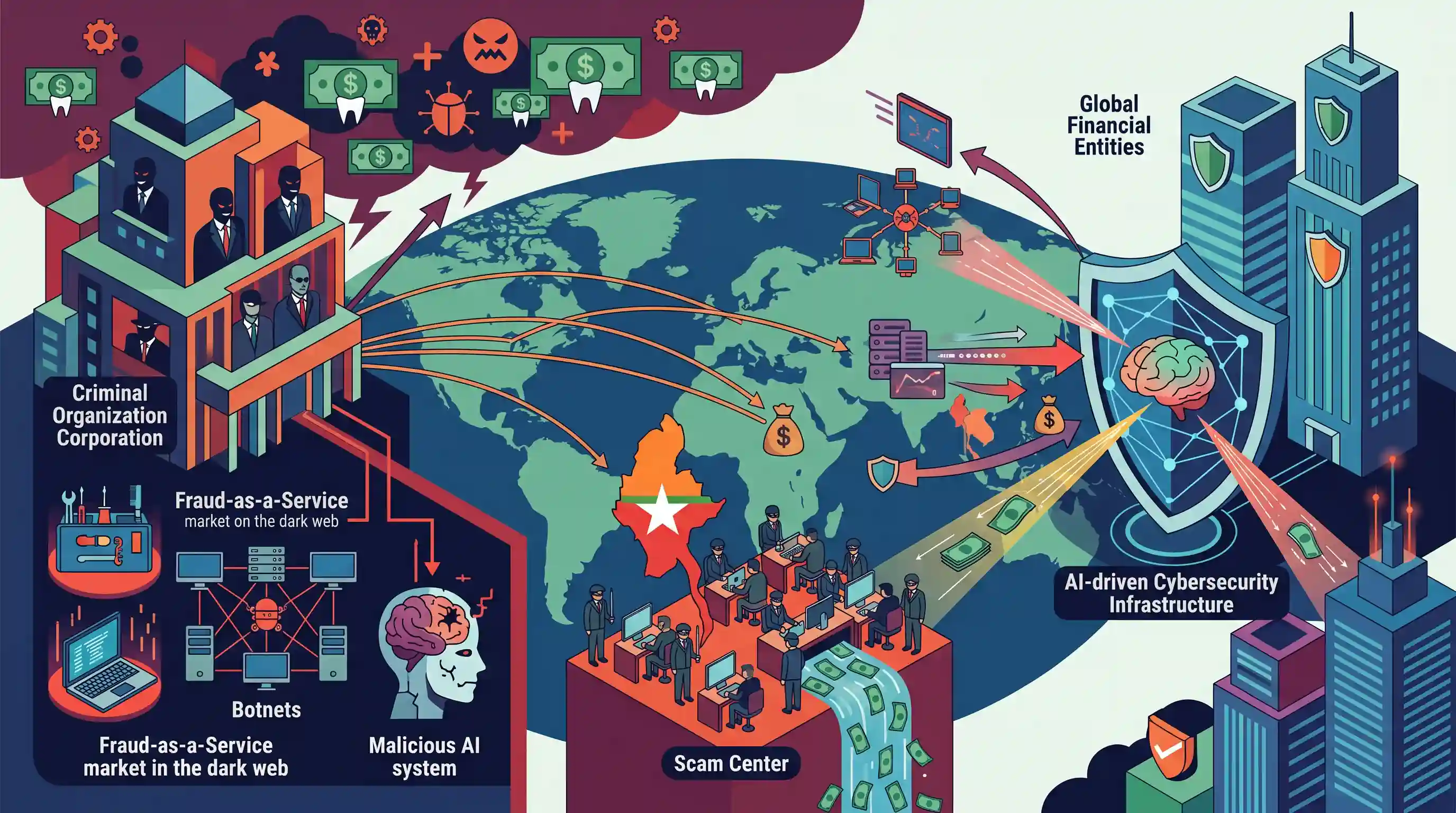
Visa's global fraud command center highlights the increasing scale and sophistication of modern cybercrime, which now poses a major threat to the global economy. Criminal organizations have adopted corporate structures and "fraud-as-a-service" models, utilizing dark web toolkits, botnets, and AI technologies to launch massive attacks and consumer scams. Alarmingly, this cyber ecosystem is increasingly linked to transnational organized crime, with syndicates in places like Myanmar forcing human-trafficking victims to operate multi-billion-dollar scam centers. In response, global financial entities are heavily investing in AI-driven cybersecurity infrastructure to proactively detect and neutralize these complex cross-border threats.
Key Points
- Visa's global fraud command center processes $15 trillion annually, defending against cyber threat actors ranging from individuals to highly structured criminal syndicates.
- The cybercrime landscape has evolved into a "fraud-as-a-service" model where criminals can easily purchase toolkits, malware, and botnets on the dark web.
- Modern cybercriminals operate with corporate-style management and leverage emerging technologies like AI chatbots and deepfake software for scams.
- Transnational organized crime networks in Myanmar's border regions run multi-billion-dollar cyber scam centers using forced labor from human-trafficking victims.
- To counter these threats, financial institutions like Visa are investing heavily in AI-powered fraud detection and maintaining 24/7 global vigilance through specialized cyber fusion centers.
Important Terms
Transnational Organized Crime

Profit-motivated illegal activities coordinated across borders by structured groups. It involves violence and corruption to bypass laws, significantly threatening global security and national sovereignty.
UPSC context
GS-III Internal Security. Tests awareness of cross-border security challenges and their impact on national and global stability.
Money Laundering
The process of disguising the origins of illegally obtained money to make it appear legitimate. It often utilizes shell companies and complex financial layers to evade detection.
UPSC context
GS-III Internal Security. Relates to "Money-laundering and its prevention," testing understanding of financial crime frameworks and PMLA.
Human Trafficking
The illegal recruitment or transport of people using force, fraud, or coercion for exploitation, such as forced labor or sexual slavery, often linked to criminal syndicates.
UPSC context
GS-II Governance and GS-III Internal Security. Tests knowledge of Article 23 protections and the transnational links of organized crime.
Dark Web
An encrypted part of the deep web not indexed by search engines. It requires specialized software like Tor and is frequently used for anonymous illegal transactions.
UPSC context
GS-III Science & Tech and Internal Security. Tests understanding of hidden cyber threats and the difficulties in digital law enforcement.
Fraud-as-a-Service (FaaS)
A cybercrime model where advanced hackers sell pre-packaged toolkits, stolen data, and technical infrastructure to other criminals, lowering the barrier to entry for large-scale attacks.
UPSC context
GS-III Cybersecurity. Tests insight into the industrialization of cybercrime and the evolving nature of internal security threats.
Botnet
A network of private computers infected with malicious software and controlled as a group without the owners' knowledge, typically used for DDoS attacks or spam.
UPSC context
GS-III Cybersecurity. Tests technical comprehension of digital attack vectors and security threats to critical information infrastructure.
Prelims Trap
"Fraud-as-a-Service (FaaS) is an authorized banking mechanism to report financial frauds to the central bank."
FaaS is an illicit dark-web business model where criminal organizations commodify and sell cyberattack toolkits and malware to other threat actors.
Static Concepts Connected
What is the institutional framework for combating cybercrime in India?
- I4C: Nodal point under the Ministry of Home Affairs to tackle cybercrime in a coordinated and comprehensive manner.
- CERT-In: National nodal agency under MeitY for responding to computer security incidents as they occur.
- NCIIPC: Created under the IT Act, 2000 to identify and protect the nation's Critical Information Infrastructure (CII).
How does transnational organized crime intersect with modern cyber threats?
- Convergence: Traditional crime syndicates diversify into digital fraud, utilizing crypto-assets and shell companies for anonymous, cross-border money laundering.
- Exploitation: Syndicates use human-trafficked forced labor, particularly in Southeast Asia, to staff and run large-scale digital scam centers.
- Commodification: Dark web markets now operate like corporate entities, selling 'Fraud-as-a-Service' toolkits to unsophisticated threat actors.
Cross-Topic Patterns
AI's dual-use in financial cybercrime
AI enables both deepfake-driven "Fraud-as-a-Service" attacks for criminals and the 24/7 predictive threat detection infrastructure used by global financial hubs to neutralize them.
Human trafficking fuels cyber syndicates
Transnational crime networks in Southeast Asia now traffic individuals across borders, holding them captive as forced operators in multi-billion-dollar digital scam centers.

Expect a GS3 Mains question on the convergence of AI, human trafficking, and 'Fraud-as-a-Service' models in transnational organized crime.
Linked PYQs · 5
Linked PYQs · 5
- 2020MainsGS3
Discuss different types of cyber crimes and measures required to be taken to fight the menace.
- 2017MainsGS3
Discuss the potential threats of Cyber attack and the security framework to prevent it.
- 2021MainsGS3
Keeping in view India's internal security, analyse the impact of cross-border cyber attacks. Also discuss defensive measures against these sophisticated attacks.
- 2022MainsGS3
Discuss the types of organised crimes. Describe the linkages between terrorists and organised crime that exist at the national and transnational levels.
- 2018MainsGS3
India's proximity to two of the world's biggest illicit opium-growing states has enhanced her internal security concerns. Explain the linkages between drug trafficking and other illicit activities such as gunrunning, money laundering and human trafficking. What counter-measures should be taken to prevent the same?
