Achieving technological sovereignty and innovation for Viksit Bharat
Source:Indian Express ↗
Why It Matters
Technological sovereignty and indigenization are core components of India's strategic vision for 2047. This topic is crucial for GS-3 questions relating to self-reliance in science and technology, digital infrastructure, and industrial policy.
Summary
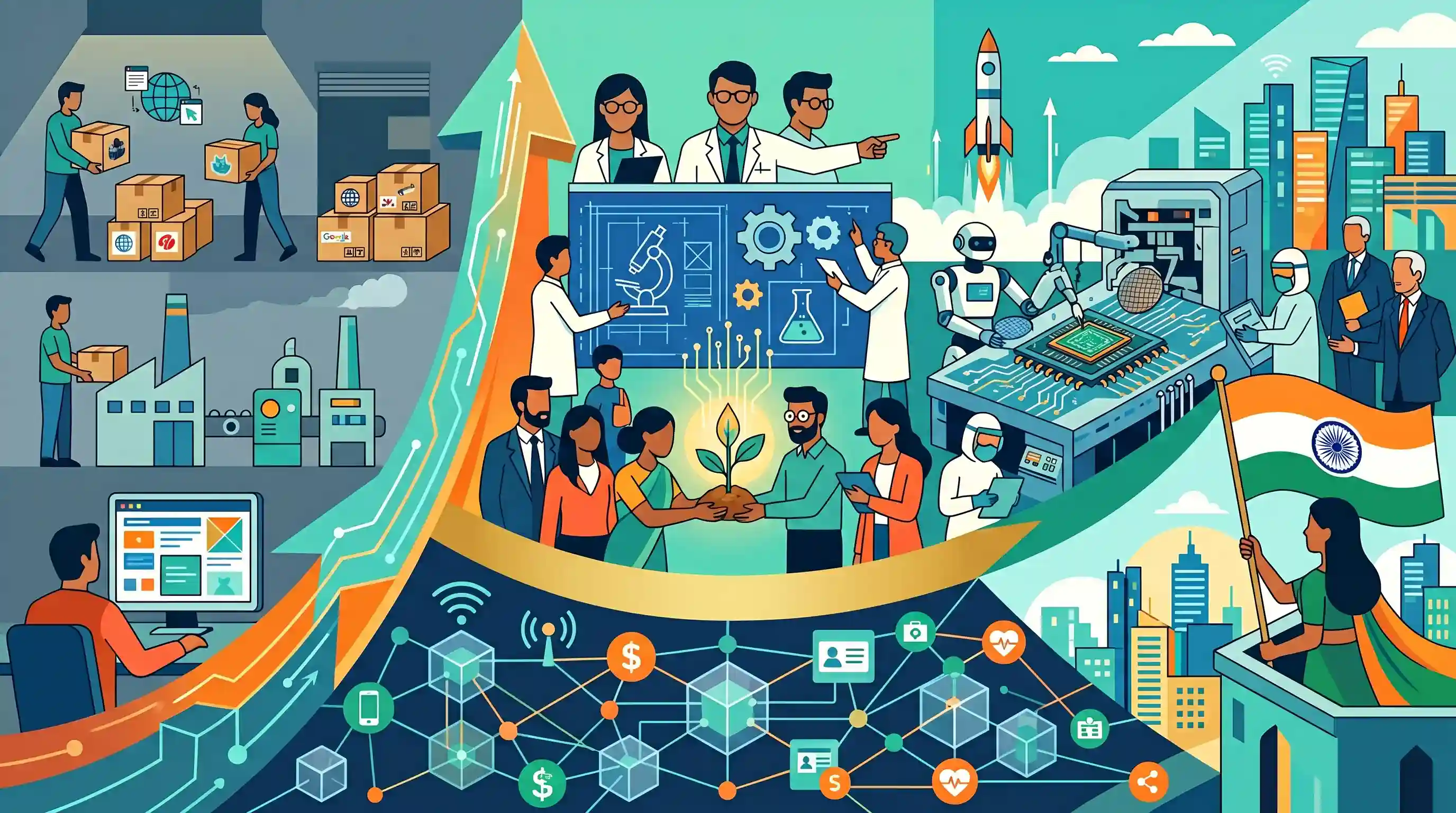
The article underscores the imperative for India to transition from a mere consumer of global technologies to an incubator and creator of innovations that the rest of the world relies on. Achieving the vision of 'Viksit Bharat' and 'Atmanirbhar Bharat' is fundamentally contingent upon establishing tech sovereignty. This requires robust domestic research and development, scaling up indigenous high-tech manufacturing such as semiconductors, and moving beyond assembling imported components. Furthermore, India’s successful track record in developing globally viable open-source digital public infrastructure provides a strong foundation for future technological leadership.
Key Points
- Transitioning from a consumer of global technologies to an incubator of global solutions is essential for achieving Viksit Bharat.
- Achieving tech sovereignty protects national security and ensures economic independence in critical emerging technologies.
- Robust domestic R&D and scaling indigenous high-tech manufacturing (e.g., semiconductors) are necessary for self-reliance.
- India can leverage its success in building open-source digital public infrastructure (DPI) as a template to lead in other technological domains.
Important Terms
Viksit Bharat

The government's long-term roadmap to transform India into a developed nation by 2047, targeting a $30 trillion economy and high per-capita income through inclusive and sustainable growth.
UPSC context
GS Paper III (Growth/Development); relevant for essays on India’s future economic trajectory and "India @ 100."
Atmanirbhar Bharat
A vision for a "Self-reliant India" launched to reduce import dependency and strengthen domestic manufacturing and supply chains while maintaining global economic engagement.
UPSC context
GS Paper III (Indian Economy/Manufacturing); tests understanding of industrial policy, PLI schemes, and self-sufficiency.
Tech Sovereignty
A nation's capacity to independently design, develop, and govern critical digital infrastructure (hardware and software) to ensure strategic autonomy, national security, and economic resilience.
UPSC context
GS Paper III (Science & Technology/Security); evaluates awareness of strategic autonomy and reducing foreign technology dependency.
India Semiconductor Mission
A ₹76,000-crore flagship initiative aimed at establishing a robust domestic semiconductor and display ecosystem, covering chip design, fabrication, testing, and packaging.
UPSC context
GS Paper III (Science & Technology/Infrastructure); key for questions on high-tech manufacturing and supply chain resilience.
Digital Public Infrastructure (DPI)
Open-source, interoperable digital systems (e.g., UPI, Aadhaar) that act as foundational "public rails" to enable secure, large-scale delivery of essential services and financial inclusion.
UPSC context
GS Paper III (Digital Economy/Inclusive Growth); tests knowledge of the "India Stack" and global public goods.
Indigenization of Technology
The process of developing and manufacturing technologies within India using domestic R&D to replace foreign imports and enhance national self-reliance.
UPSC context
GS Paper III (Science & Technology); focuses on R&D capacity, "Make in India," and defense self-reliance.
Prelims Trap
"India's DPI platforms are built exclusively on proprietary, closed-source technologies to prevent cyber threats."
India's DPI relies heavily on open APIs and open-source foundations to ensure scalability, interoperability, and avoid vendor lock-in, distinguishing it from closed systems.
Static Concepts Connected
What are the three foundational layers of the India Stack (DPI)?
- Identity Layer: Anchored by Aadhaar, it provides secure, universal biometric and demographic digital authentication.
- Payments Layer: Driven by UPI and AePS, this layer enables fast, interoperable, and cashless financial transactions.
- Data Layer: Built on the Data Empowerment and Protection Architecture (DEPA) via DigiLocker and Account Aggregators.
How does 'Indigenization' differ from 'Technology Transfer' in S&T?
- Technology Transfer: Involves licensing foreign know-how to manufacture locally, often leaving core IP and design control with the foreign originator.
- Indigenization: Developing domestic capabilities to design, innovate, and produce technologies natively from scratch, thereby securing complete technological sovereignty.
Cross-Topic Patterns
DPI + Global South Diplomacy
India is offering its open-source DPI templates to developing nations, transforming domestic e-governance successes into a potent soft-power tool for Global South diplomacy.
PLI + Semiconductor Strategy
The evolution from basic electronics assembly under PLI to the India Semiconductor Mission illustrates the critical jump from import-substitution to generating core intellectual property.

Tech sovereignty + DPI layers (DEPA, Beckn) + Semiconductor supply chains are primed for a high-weightage GS3 Mains question in 2026.
Linked PYQs · 4
Linked PYQs · 4
- 2025MainsGS3
India aims to become a semiconductor manufacturing hub. What are the challenges faced by the semiconductor industry in India? Mention the salient features of the India Semiconductor Mission.
- 2023MainsGS3
Faster economic growth requires increased share of the manufacturing sector in GDP, particularly of MSMEs. Comment on the present policies of the Government in this regard.
- 2023MainsGS3
What is the status of digitalization in the Indian economy? Examine the problems faced in this regard and suggest improvements.
- 2022PrelimsGS1
Consider the following : 1. Aarogya Setu 2. CoWIN 3. DigiLocker 4. DIKSHA Which of the above are built on top of open-source digital platforms?
