Calcutta High Court jurisprudence on vexatious litigation
Source:lawchakra ↗
Why It Matters
Understanding the legal stance on vexatious litigation is important for aspirants studying judicial administration, court reforms, judicial backlog, and the balance between access to justice and preventing abuse of process in India.
Summary
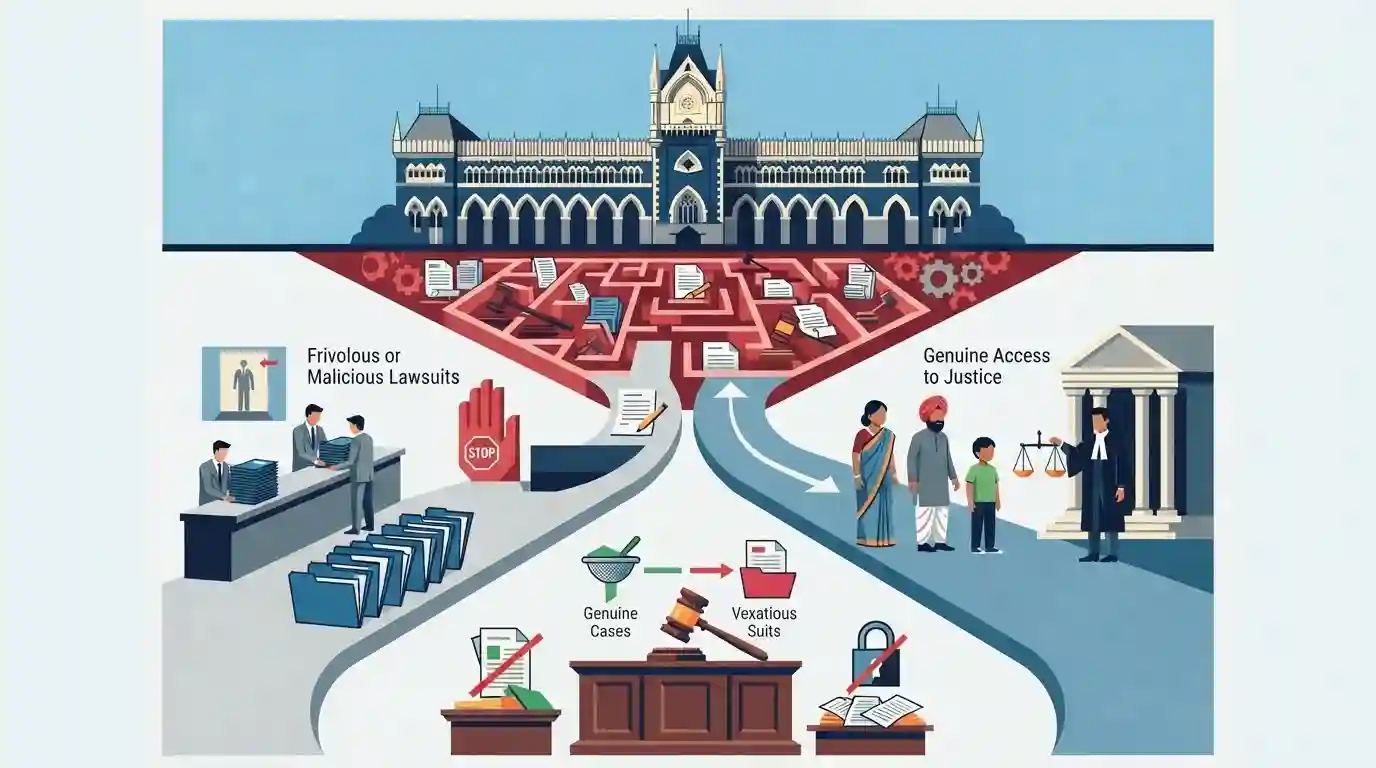
This article covers recent legal discourses or rulings from the Calcutta High Court concerning 'vexatious litigation'—frivolous or malicious lawsuits aimed at harassing opponents and clogging judicial machinery. It highlights the judicial mechanisms available to curb the abuse of court processes while protecting genuine access to justice.
Key Points
- The Calcutta High Court examined legal frameworks and principles surrounding vexatious litigation, which involves the filing of meritless, repetitive, or abusive lawsuits intended to harass opponents or abuse the judicial process.
- Vexatious litigation laws and court procedures aim to safeguard judicial time, protect courts from being overburdened, and prevent the abuse of the legal system by habitual litigants.
- The discussion emphasizes balancing citizens' fundamental right to access justice (under Article 21/Article 226) with the necessity to curb frivolous and malicious litigation.
Important Terms
Vexatious Litigation Law

Legal provisions or judicial mechanisms designed to prevent frivolous, malicious, or habitual lawsuits aimed at harassing opponents and clogging judicial machinery.
UPSC context
Important for WBCS Paper V (Indian Polity and Judiciary) as it covers access to justice, judicial reforms, and prevention of abuse of process.
Calcutta High Court
The constitutional court exercising original and appellate jurisdiction over West Bengal and the Andaman and Nicobar Islands, holding key administrative and judicial powers under Article 226.
UPSC context
Crucial for WBCS West Bengal-specific polity, legal history, and current judicial developments affecting state administration and public interest litigation.
Static Concepts Connected
What are the constitutional provisions regarding the Advocate General for a State in India?
- Constitutional Office: Appointed by the Governor of the state under Article 165, the Advocate General must be qualified to be appointed as a Judge of a High Court.
- Primary Duty: Acts as the highest law officer in the state, giving legal advice to the state government and performing duties of a legal character assigned by the Governor.
- Legislative Right: Has the right to speak and take part in the proceedings of both Houses of the State Legislature (or committees) without the right to vote (Article 177).
Cross-Topic Patterns
Vexatious Litigation & State Legislative Powers
Vexatious litigation laws require State Legislative enactment under the State List or Concurrent List, intersecting with judicial administration and the administrative powers of the Governor and Advocate General under Article 165.

Calcutta HC calling for a Vexatious Litigation Act links judicial delays, Article 226 powers, and state legislative competence for WBCS.
Linked PYQs · 2
Linked PYQs · 2
- 2024WBCS_PRELIMSGS1
Public Interest Litigation is primarily associated with which concept?
- 2021WBCS_PRELIMSGS1
The Chief Justice of High Court is appointed by the
