Uttarakhand To Study Wildfire Threats In Alpine Ecosystems
Source:newindianexpress ↗
Why It Matters
Crucial for understanding shifting environmental vulnerabilities and disaster profiles in the fragile Himalayan state of Uttarakhand, aligning with core UKPSC Prelims questions on regional geography, ecology, and climate impact.
Summary
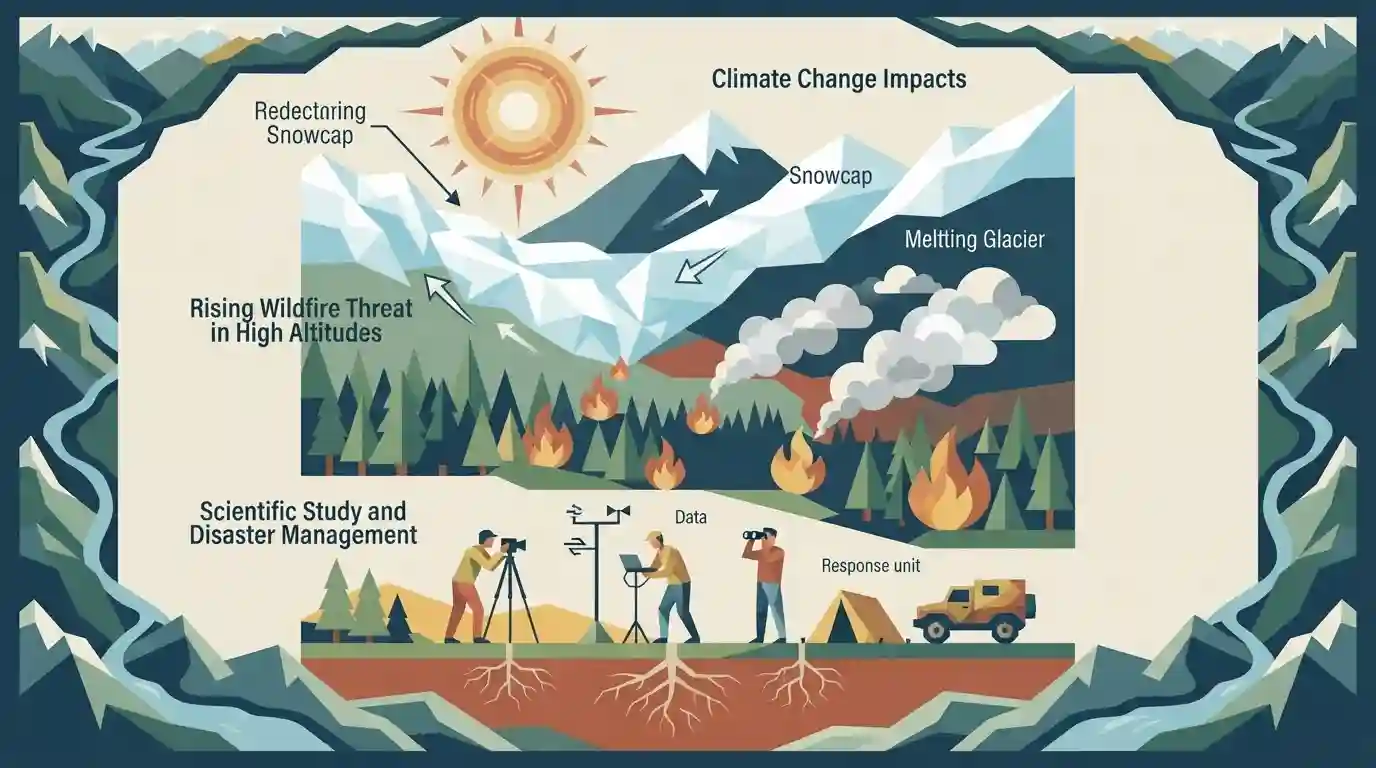
Uttarakhand is initiating a scientific study to address the rising threat of wildfires in high-altitude ecosystems, which traditionally remained insulated but are now increasingly vulnerable due to climate change, posing severe risks to Himalayan biodiversity and alpine meadows.
Key Points
- Uttarakhand is undertaking a dedicated study to evaluate the increasing threat of wildfires to high-altitude ecosystems and alpine meadows (bugyals).
- High-altitude forest fires and scrub fires disrupt fragile Himalayan biodiversity, carbon sinks, and traditional pastoral migration routes.
- Climate change, rising temperatures, and shifting dry spells are driving fire incidents further up into higher elevations previously safe from severe burning.
Important Terms
Bugyals

Vast, high-altitude alpine grasslands in the Himalayas (2,500–4,000 meters) renowned for endemic flora and fauna, now increasingly vulnerable to unseasonal wildfires due to climate change.
UPSC context
UKPSC Paper V (Geography & Environment) & Mains: Important Himalayan ecosystems, floral biodiversity, and climate change impacts on alpine zones.
Uttarakhand Forest Department
The state government body responsible for protecting, managing, and regulating Uttarakhand's forest wealth, currently leading scientific initiatives to study and mitigate high-altitude forest fires.
UPSC context
UKPSC Prelims & Mains: State governance, administrative bodies, and forest conservation policies in Uttarakhand.
Climate Change Impacts on Himalayas
Long-term shifts in temperature and weather patterns in mountain regions, driving extended dry spells, early snowmelt, and rising temperatures that elevate wildfire risks across Himalayan habitats.
UPSC context
UKPSC General Studies Paper V (Environment & Ecology): Climate vulnerabilities, glacial retreat, and alpine ecosystem degradation in Uttarakhand.
Prelims Trap
high-altitude ecosystems and alpine meadows which were traditionally insulated from fires
Aspirants often assume high-altitude alpine meadows (bugyals) are completely safe from fires due to cold climate and absence of pine trees, ignoring scrub and grass fires driven by warming.
Static Concepts Connected
What are the ecological and geographical characteristics of Bugyals in Uttarakhand?
- Elevation Range: High altitude alpine grasslands situated above the tree line (typically 3,000m to 4,000m).
- Ecological Role: Serve as natural summer pastures for local pastoral communities and support endemic Himalayan flora.
- Prominent Examples: Examples include Dayara Bugyal, Ali Bugyal, and Bedni Bugyal in Uttarakhand.
Cross-Topic Patterns
Bugyals Ecology + Sustainable Tourism Carrying Capacity
Alpine meadows (bugyals) are ecologically vulnerable both to unmonitored tourism and climate-induced wildfires, testing the state's carrying capacity frameworks.
Pirul Biomass Energy + Forest Fire Mitigation
Pine needles (pirul) fuel both destructive forest fires and serve as a biomass resource for state green energy generation initiatives.

High-altitude wildfires and bugyal degradation will likely be tested via assertion-reasoning on climate-Himalayan ecology linkages.
Linked PYQs · 3
Linked PYQs · 3
- 2025UKPSC_PRELIMSGS1
Given below are two statements, one is Assertion (A) and other is Reason (R). Select the correct answer from the given codes: Assertion (A): Uttarakhand is rich in forest and bio-diversity. Reason (R): Topography and climate primarily determine the forest and bio-diversity.
- 2025UKPSC_PRELIMSGS1
Consider the following statements with reference to animal husbandry in Uttarakhand. Select the correct answer from the codes given below : 1. Animal husbandry is a supplementary occupation of agriculture. 2. Sheep rearing in the mountainous areas has been affected by environmental degradation.
- 2025UKPSC_PRELIMSGS1
Consider the following statements and select the correct answer from the options given below : Statement 1 : Uttarakhand is highly vulnerable to climate change. Statement 2 : Climate change is causing water stress and depleting biodiversity in Uttarakhand.
