Uttarakhand high-altitude ecosystems wildfire threat study
Source:newindianexpress ↗
Why It Matters
Directly relevant to Uttarakhand regional geography, disaster management, and environmental challenges concerning alpine ecosystems and bugyals.
Summary
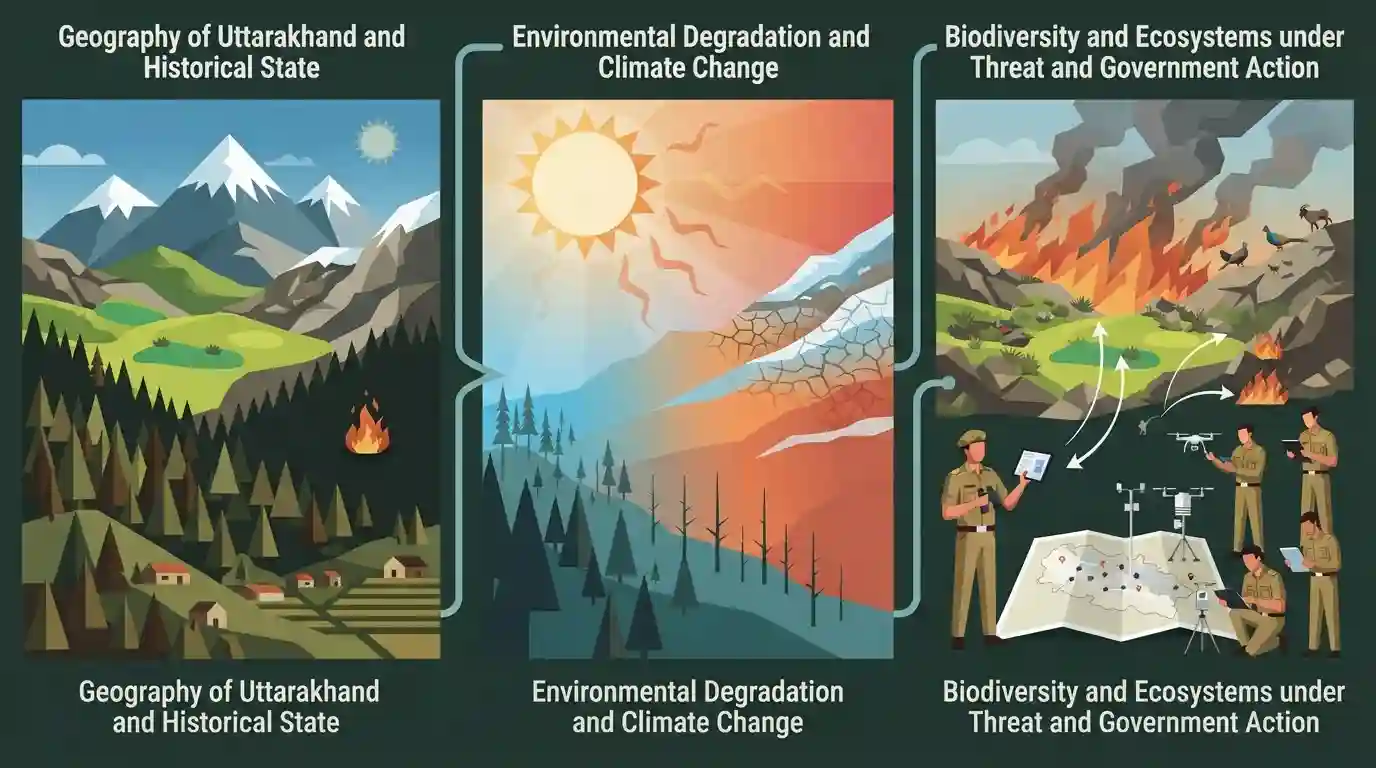
The Uttarakhand government/forest department is initiating a specialized study to understand and mitigate the increasing threat of wildfires in high-altitude ecosystems, which were historically immune or less prone to such disasters compared to lower pine-dominated forests.
Key Points
- Uttarakhand is launching a comprehensive study to assess the rising threat of wildfires in high-altitude ecosystems, including alpine meadows and bugyals.
- Traditionally, forest fires in Uttarakhand were concentrated in lower and middle-altitude pine forests, but changing climatic patterns have expanded the threat to higher elevations.
- High-altitude fires pose a grave danger to fragile Himalayan biodiversity, endemic flora, fauna, and traditional pastoral livelihoods.
Important Terms
Bugyals

High-altitude alpine pasture lands and meadows in Uttarakhand (typically 3,300 to 4,000 meters above sea level) that are critical biodiversity hotspots, traditionally immune to wildfires but now facing emerging fire risks.
UPSC context
UKPSC Geography and Environment — tests understanding of unique Himalayan ecosystems, alpine flora, and conservation challenges in protected state meadows.
Chir Pine Forests
A species of pine tree (Pinus roxburghii) native to the Himalayas whose dry, resinous fallen needles (pirul) fuel the vast majority of severe forest fires in Uttarakhand.
UPSC context
UKPSC Environmental Degradation — tests knowledge of dominant regional flora, forest fire dynamics, and flammable fuel accumulation in Himalayan forests.
Uttarakhand Forest Department
The state government body responsible for managing, protecting, and conserving state forest resources, wildlife habitats, and addressing environmental hazards like escalating wildfires.
UPSC context
UKPSC General Studies / State Administration — tests administrative roles in disaster management, forest conservation, and policy formulation in Uttarakhand.
Prelims Trap
Wildfires in Uttarakhand are exclusively confined to lower and middle-altitude pine-dominated forests.
Aspirants often assume forest fires in Uttarakhand are restricted only to lower-altitude pine forests, forgetting that climate change has expanded them to high-altitude alpine zones and bugyals.
Static Concepts Connected
What are Bugyals and what is their ecological significance in the Uttarakhand Himalayas?
- Definition & Location: High-altitude alpine grasslands or meadows situated above the tree line (usually 3,300m to 4,000m) in the Himalayas.
- Ecological Role: Serve as natural grazing grounds for pastoral communities like Van Gujjars and Bhotias, while supporting endemic Himalayan flora and fauna.
- Hydrological Importance: Act as natural sponges that regulate hydrological cycles and prevent soil erosion in fragile mountain slopes.
Cross-Topic Patterns
Climate Change vs Himalayan Biodiversity & Pastoralism
Climate change induced shifting of wildfire regimes directly threatens fragile alpine biodiversity, alpine pastures, and traditional pastoral livelihoods in Himalayan states.
Wildfires vs Downstream Himalayan Hydrology
High-altitude forest fires alter hydrological regimes and snowmelt patterns, directly impacting downstream water security and river basin dynamics across northern India.

UKPSC questions on Uttarakhand ecology frequently test specific geographical features; expect match-the-following on bugyals and fire zones.
Linked PYQs · 4
Linked PYQs · 4
- 2024UKPSC_PRELIMSGS1
Which district of Uttarakhand has highest forest cover share percentage to its total geographical area ?
- 2025UKPSC_PRELIMSGS1
Consider the following statements with reference to animal husbandry in Uttarakhand. Select the correct answer from the codes given below : 1. Animal husbandry is a supplementary occupation of agriculture. 2. Sheep rearing in the mountainous areas has been affected by environmental degradation.
- 2025UKPSC_PRELIMSGS1
Consider the following statements and select the correct answer from the options given below : Statement 1 : Uttarakhand is highly vulnerable to climate change. Statement 2 : Climate change is causing water stress and depleting biodiversity in Uttarakhand.
- 2024UKPSC_PRELIMSGS1
Temporary habitats in the high altitude pastures of Garhwal Himalayas are called as
