Uttarakhand to study wildfire threat in high-altitude zones
Source:newindianexpress ↗
Why It Matters
Extremely relevant for Uttarakhand state-specific questions in UKPSC Prelims focusing on environmental challenges, alpine ecology (bugyals), climate vulnerabilities, and forest management.
Summary
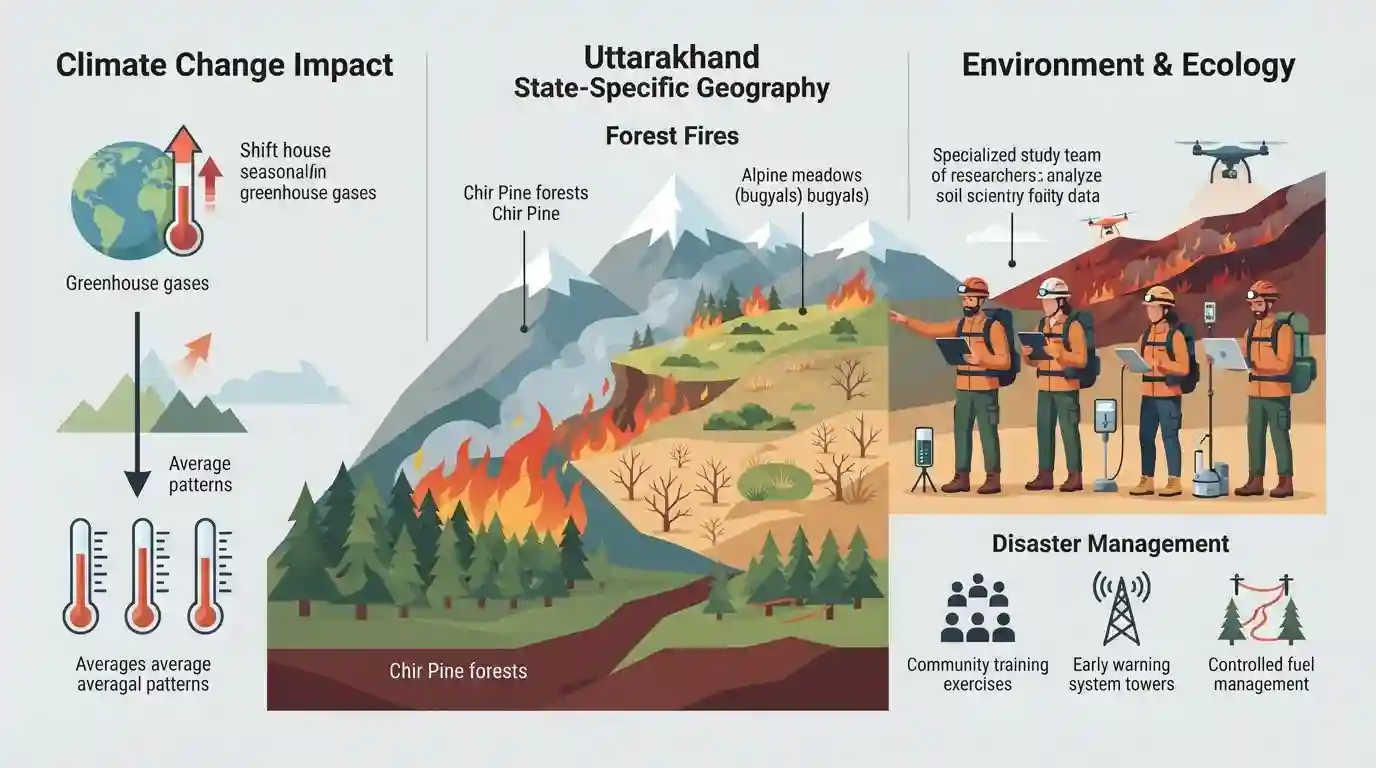
Uttarakhand is launching a specialized study to understand and mitigate the expanding threat of wildfires into high-altitude Himalayan ecosystems, driven by changing climatic patterns and rising temperatures affecting alpine meadows and forests.
Key Points
- The Uttarakhand government has initiated a comprehensive study to assess the rising threat of wildfires in high-altitude ecosystems, which were traditionally safe from major forest fires.
- Climate change, rising temperatures, and shifting precipitation patterns are extending fire seasons and moving wildfire threats further up into alpine zones and meadows (bugyals).
- High-altitude wildfires pose a severe threat to fragile Himalayan biodiversity, endemic flora and fauna, carbon sinks, and water sources.
Important Terms
Uttarakhand Forest Department

The apex state body responsible for managing, protecting, and conserving forest resources, wildlife, and tackling forest fires across the hill state.
UPSC context
Important for UKPSC Prelims/Mains under state governance, environmental administration, and disaster management initiatives for forest conservation.
Prelims Trap
High-altitude Himalayan ecosystems and alpine meadows were traditionally safe from major forest fires and remain immune to changing climate patterns.
Aspirants often assume forest fires are strictly a low-to-mid altitude phenomenon in Uttarakhand, overlooking that climate change has made high-altitude alpine meadows (bugyals) highly vulnerable.
Static Concepts Connected
What are Alpine Meadows (Bugyals) and their ecological significance in Uttarakhand?
- Definition: High-altitude grazing lands located above the timberline and below the snow line in the Himalayas.
- Ecological Role: Support rare endemic flora, serve as crucial summer pastures, and act as fragile carbon sinks.
- Climate Vulnerability: Increasingly threatened by rising temperatures, shifting precipitation, and unprecedented high-altitude wildfires.
Cross-Topic Patterns
Alpine Wildfires and Biodiversity Vulnerability
High-altitude alpine fires threaten endemic Himalayan flora and fauna, intersecting directly with biodiversity conservation mandates under the Wildlife Protection Act and climate vulnerability assessments.
Forest Fires and Himalayan Hydrology
Rising timberline fires impact Himalayan catchments and perennial river systems, linking disaster management directly with state water security and glacier health.

High-altitude bugyal fires + Western Himalayan vulnerability patterns tested via multi-statement or assertion-reasoning questions.
Linked PYQs · 2
Linked PYQs · 2
- 2025UKPSC_PRELIMSGS1
Consider the following statements with reference to animal husbandry in Uttarakhand. Select the correct answer from the codes given below : 1. Animal husbandry is a supplementary occupation of agriculture. 2. Sheep rearing in the mountainous areas has been affected by environmental degradation.
- 2025UKPSC_PRELIMSGS1
Consider the following statements and select the correct answer from the options given below : Statement 1 : Uttarakhand is highly vulnerable to climate change. Statement 2 : Climate change is causing water stress and depleting biodiversity in Uttarakhand.
