Uttarakhand Cabinet Meetings in Border Areas Boost Tribal Welfare
Source:livemint ↗
Why It Matters
Crucial for understanding governance innovations, decentralization of administrative machinery, and tribal development policies specific to Uttarakhand's geographic and strategic landscape.
Summary
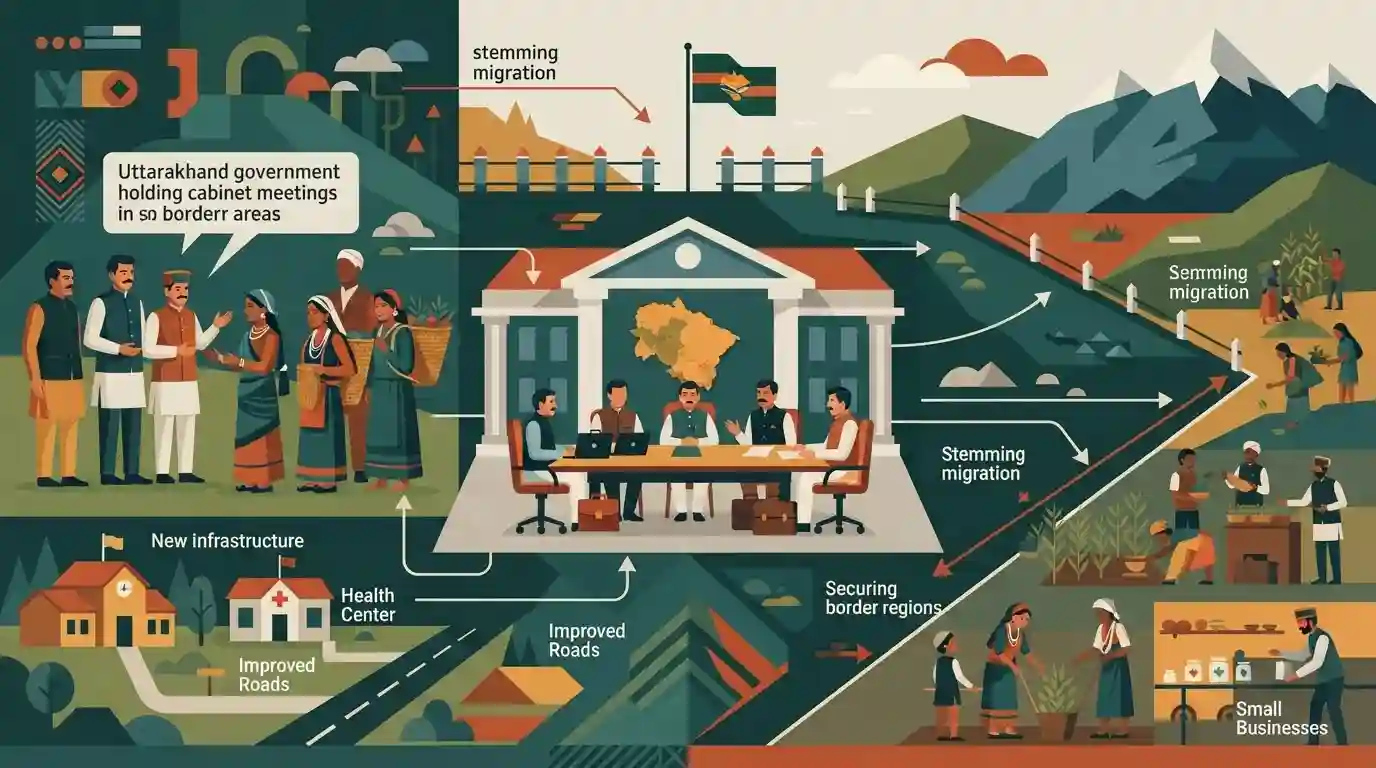
The Uttarakhand government is holding cabinet meetings in border areas to enhance administrative outreach, address regional developmental backlogs, and expand welfare measures for tribal and remote communities, helping to stem migration and secure border regions.
Key Points
- The Uttarakhand government has adopted a unique governance approach by taking cabinet meetings directly to remote border areas.
- The initiative focuses heavily on expanding tribal development, improving infrastructure, and addressing the socio-economic challenges of remote and vulnerable communities.
- Aims to curb out-migration from border villages by boosting local livelihood opportunities and administrative access.
Important Terms
Uttarakhand Cabinet

The highest executive body in Uttarakhand, headed by the Chief Minister, responsible for formulating state policies, administering governance, and taking key strategic decisions such as holding decentralized cabinet meetings in remote border areas.
UPSC context
Relevant for UKPSC Paper V (State Governance and Administration) — tests understanding of executive decision-making, administrative outreach, and decentralized governance in hill states.
Tribal Development Department Uttarakhand
A specialized state government wing tasked with the socio-economic empowerment, educational advancement, and cultural preservation of Scheduled Tribes (STs) like Tharu, Buksa, Jaunsari, Bhotia, and Raji.
UPSC context
Relevant for UKPSC Paper V (Tribal Development and Social Welfare) — tests policies, institutional mechanisms, and welfare schemes for tribal communities.
Prelims Trap
Cabinet meetings in border areas indicate the formal extension of the Sixth Schedule to Uttarakhand's tribal districts.
Aspirants might assume Uttarakhand has extended the Sixth Schedule to its border tribal areas, whereas tribal administration in the state operates through other special welfare frameworks.
Static Concepts Connected
What are the major Scheduled Tribes recognized in the state of Uttarakhand?
- Recognized Tribes: Total Tribes: Uttarakhand has five major notified Scheduled Tribes, namely Tharu, Buxa, Jaunsari, Bhotia, and Raji.
- Distribution: Geographical Distribution: Jaunsaris primarily inhabit Dehradun's Chakrata region, Bhotias reside along the Indo-Tibet border, and Tharus and Buxas are concentrated in Udham Singh Nagar and parts of Nainital.
- Largest Tribe: Demographics: Jaunsari is the most populous scheduled tribe in the state, followed by the Tharu community.
Cross-Topic Patterns
Border Area Development + National Security
Uttarakhand's strategy of holding cabinet meetings in border areas directly supports national security objectives by reducing out-migration and cementing civilian presence in vulnerable frontier districts.
Tribal Welfare + Panchayati Raj Decentralization
Decentralizing governance to tribal belts intersects with Fifth/Sixth Schedule provisions and decentralized planning mandates under the 73rd and 74th Constitutional Amendment Acts.

UKPSC may ask statement-based questions on Uttarakhand's unique border governance initiatives and their impact on reverse migration.
Linked PYQs · 2
Linked PYQs · 2
- 2025UKPSC_PRELIMSGS1
In which of the following year were the Jaunsari, Tharu, Bhotia, Buksa and Raji tribes declared Scheduled Tribes in Uttarakhand?
- 2021UKPSC_PRELIMSGS1
How many districts of Uttarakhand are linked with the international boundaries ?
