Uttarakhand Transfers Tablet Funds to Students Via DBT
Source:dailypioneer ↗
Why It Matters
Important for understanding state-level welfare initiatives and digital education interventions in Uttarakhand.
Summary
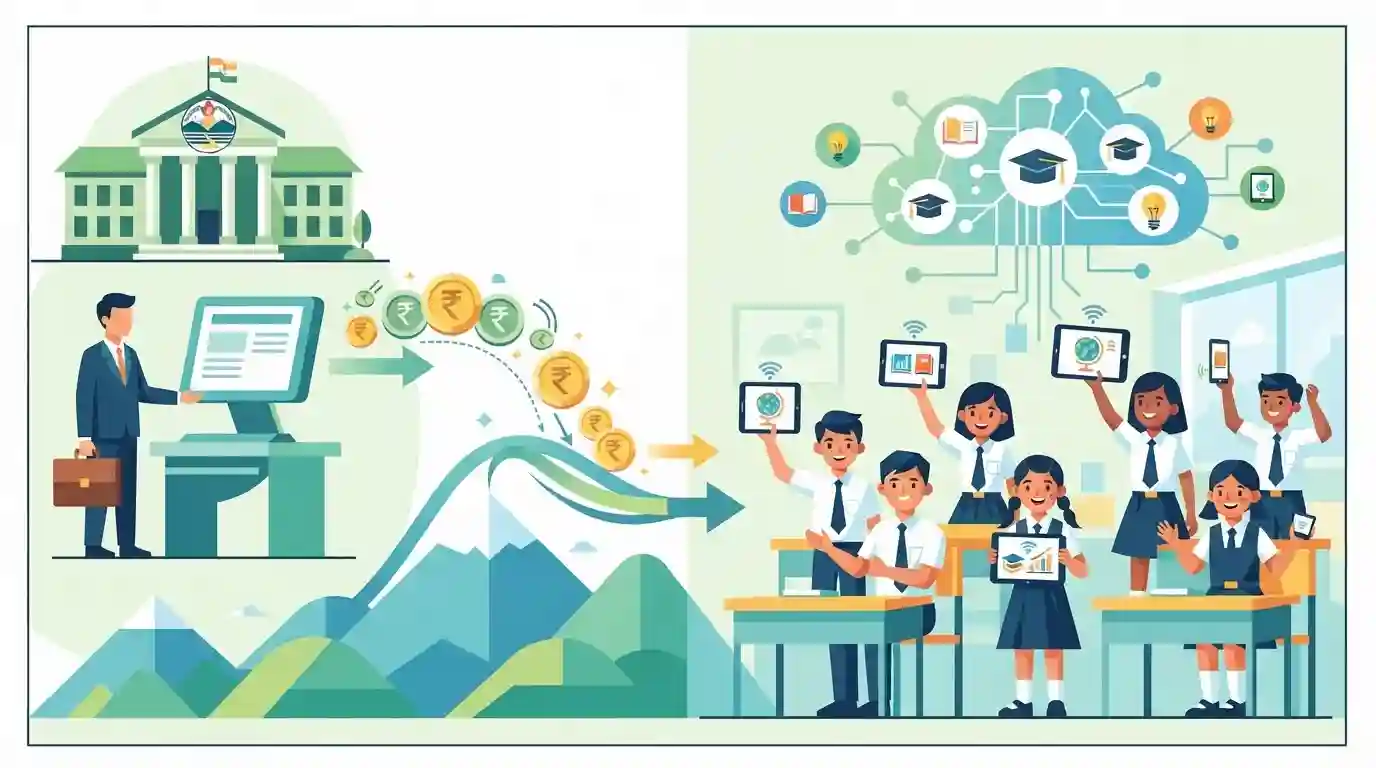
The Uttarakhand government has initiated fund transfers via Direct Benefit Transfer (DBT) to students of classes 10 and 12 for the procurement of tablets, aiming to enhance digital learning access across the state and improve educational outcomes in remote hill areas.
Key Points
- The Uttarakhand government is transferring funds directly to the bank accounts of class 10 and 12 students for purchasing tablets via Direct Benefit Transfer (DBT).
- This initiative aims to boost digital literacy, bridge the digital divide, and improve online education access among high school and intermediate students in the state.
- Using the DBT mechanism ensures transparency, reduces leakages, and enables timely delivery of educational benefits directly to beneficiaries.
Important Terms
Direct Benefit Transfer DBT tablet scheme

A welfare disbursement mechanism where government funds for purchasing tablets are transferred directly into the bank accounts of eligible Class 10 and 12 students in Uttarakhand, ensuring transparency and reducing leakages.
UPSC context
Important for UKPSC Paper V (Social Welfare & Governance in Uttarakhand) and Paper II, evaluating state-level welfare delivery mechanisms.
Uttarakhand Government
The apex executive authority of the state responsible for formulating and implementing public policies, welfare schemes, and administrative decisions in Uttarakhand.
UPSC context
Core topic for UKPSC Prelims and Mains (Uttarakhand Polity and Administration), testing administrative structure and executive policies.
State Education Department Uttarakhand
The state administrative body tasked with managing school education, executing educational reforms, and administering welfare measures like digital learning and textbook distribution in Uttarakhand schools.
UPSC context
Relevant for UKPSC Paper V (Education Policy and Human Resource Development in Uttarakhand).
Prelims Trap
procurement of tablets through bulk state-level purchase and physical distribution to all schools
Aspirants often assume the government directly distributes physical tablets purchased in bulk, whereas this scheme uses Direct Benefit Transfer (DBT) to credit funds directly to students' or parents' bank accounts.
Static Concepts Connected
What are the core components and architecture of the Direct Benefit Transfer (DBT) mechanism in India?
- Fund Flow: Direct Transfer - Transfers subsidies and welfare funds directly to beneficiaries' bank accounts, minimizing intermediaries.
- JAM Trinity: Trinity Link - Relies on Jan Dhan accounts, Aadhaar, and Mobile numbers (JAM Trinity) for accurate targeting.
- Efficiency: Leakage Reduction - Significantly curtails ghost beneficiaries, delays, and administrative leakages in welfare delivery.
Cross-Topic Patterns
Digital Education Schemes + NEP 2020 Implementation
Digital literacy schemes in hill states directly intersect with the National Education Policy (NEP) 2020 objectives of integrating technology and reducing dropout rates in remote terrain.
Direct Benefit Transfer (DBT) + Hill State Governance
Using DBT for targeted asset transfers in Uttarakhand connects state welfare administration with broader Aadhaar-enabled payment system governance frameworks.

UKPSC often frames scheme-based questions testing target beneficiary classes and fund delivery mechanisms like DBT for state-specific initiatives.
Linked PYQs · 2
Linked PYQs · 2
- 2024UKPSC_PRELIMSGS1
UTDB is established in Uttarakhand to promote:
- 2025UKPSC_PRELIMSGS1
Consider the following statements about mobile courts in Uttarakhand and choose the correct answer from the options given below : 1. Under mobile e-courts project, mobile vans having facilities of court rooms, computer, printer and internet connectivity will visit villages. 2. The idea is to deliver justice at the door steps of the public living particularly in remote areas.
