Uttarakhand Approves Long Term Power Procurement Agreement
Source:economictimes ↗
Why It Matters
Understanding state-level energy procurement strategies is crucial for analyzing India's power sector, particularly how states with seasonal hydro-generation fluctuations (like Uttarakhand) ensure year-round energy security through long-term thermal or diversified power purchase agreements (PPAs).
Summary
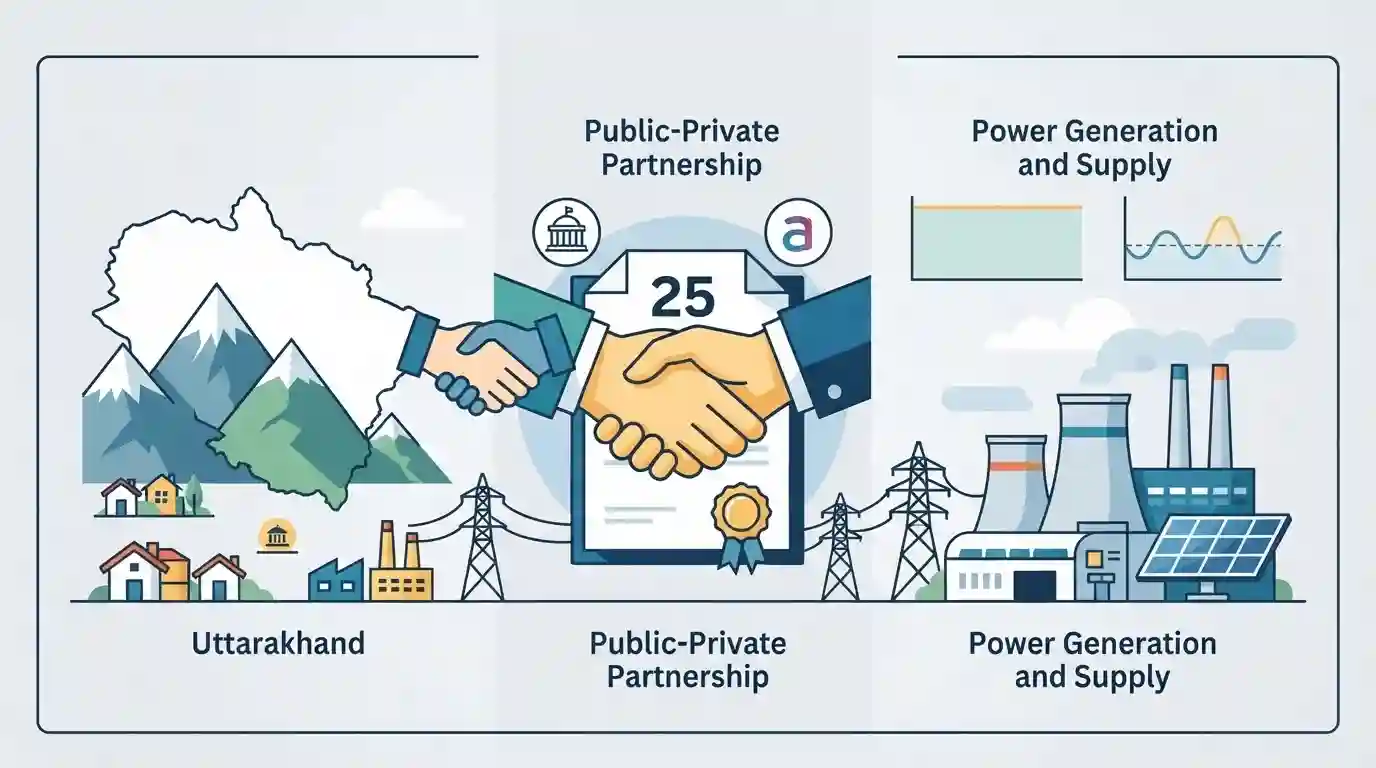
The Uttarakhand government has approved a 25-year power procurement agreement with Adani Power. This long-term Power Purchase Agreement (PPA) aims to secure a stable and reliable supply of electricity for the state, helping it meet growing energy demands and mitigate the seasonal fluctuations typical of its heavy reliance on hydropower. The move is a significant step toward ensuring long-term energy security for both domestic and industrial consumers in Uttarakhand.
Key Points
- The Uttarakhand state government has greenlit a 25-year long-term power purchase agreement (PPA) with Adani Power.
- The procurement is intended to ensure long-term energy security and a steady electricity supply for the state.
- Uttarakhand traditionally relies heavily on hydropower, which is subject to seasonal fluctuations, especially reduced generation during winter months.
- The long-term agreement will help mitigate power shortages, meeting the growing energy demands of residential and industrial sectors.
Important Terms
Power Purchase Agreement (PPA)

A long-term legal contract between an electricity generator and a buyer. For Uttarakhand, this 25-year agreement secures a steady power supply at fixed rates, protecting the state from volatile energy exchange prices.
UPSC context
UKPSC General Studies Paper 5. Tests understanding of public-private energy infrastructure financing and state procurement strategies.
Uttarakhand Power Corporation Limited (UPCL)
The government-run electricity distribution entity in Uttarakhand. The state cabinet recently authorized UPCL to execute a 1320 MW power supply agreement with Adani Power to address the state's growing electricity demand.
UPSC context
UKPSC Paper 6 (Uttarakhand State Profile). Tests knowledge of key state parastatals and their role in infrastructure management.
Base-load Power
The minimum, continuous electrical power needed to meet daily demand. Uttarakhand approved coal-based power to secure reliable base-load supply, stabilizing the grid when seasonal weather variations cause hydropower generation to drop.
UPSC context
UKPSC Paper 6 (Uttarakhand Economy). Connects to the state's energy mix, grid stability, and industrial planning.
Energy Security
The uninterrupted, affordable availability of energy sources. By diversifying its energy mix away from heavy dependence on seasonal hydropower, Uttarakhand aims to guarantee stable electricity for domestic and industrial consumers.
UPSC context
UKPSC Paper 5 & 6. Core topic assessing long-term state infrastructure planning and mitigation of seasonal power deficits.
Adani Power Limited
The private energy developer that emerged as the lowest bidder to supply 1,320 MW of coal-based electricity to Uttarakhand. The power will be generated at a pit-head thermal plant in Chhattisgarh.
UPSC context
UKPSC Current Affairs. Highlights major corporate infrastructure bids, public-private partnerships, and inter-state energy supply arrangements.
Prelims Trap
The new 1,320 MW thermal power plant to supply electricity to Uttarakhand will be established within the state.
Uttarakhand has no operational thermal plants due to environmental constraints. The state is procuring power externally; this specific Adani plant will be located in Raigad, Chhattisgarh.
Static Concepts Connected
What is the difference between Base-load and Peak-load power generation?
- Base-load power: Plants that operate continuously at maximum output to meet the minimum consistent electricity demand (e.g., Coal, Nuclear).
- Peak-load power: Plants designed to quickly ramp up generation during periods of maximum daily demand (e.g., Gas turbines, Pumped storage hydro).
- Uttarakhand's challenge: The state relies on hydro, which drops in winter. This forces reliance on external thermal base-load imports to prevent outages.
What are the characteristics of Run-of-the-River (RoR) hydroelectric projects?
- Design mechanism: They generate electricity by utilizing the natural flow and elevation drop of a river without creating massive dam reservoirs.
- Seasonal vulnerability: Output heavily depends on seasonal river flows. In Uttarakhand, winter freezing and lack of monsoon rain drastically reduce generation capacity.
Cross-Topic Patterns
Hydropower vulnerability to climate
Shrinking glaciers and changing monsoons impact lean-season river flow, forcing eco-sensitive Himalayan states to rely on distant coal-based PPAs to secure winter base-load power.
Inter-state energy dependency
Demonstrates a geographical energy model where Himalayan states with zero thermal capacity import baseload electricity from coal-rich central Indian states like Chhattisgarh via long-term PPAs.

Expect a multi-statement question on Uttarakhand's energy mix, specifically contrasting its winter hydro-deficits with thermal power imports.
