Uttarakhand to develop eight forest areas as eco-tourism hubs
Source:indianmasterminds ↗
Why It Matters
Important for Uttarakhand state-specific current affairs regarding environmental policy, forest management, and eco-tourism development.
Summary
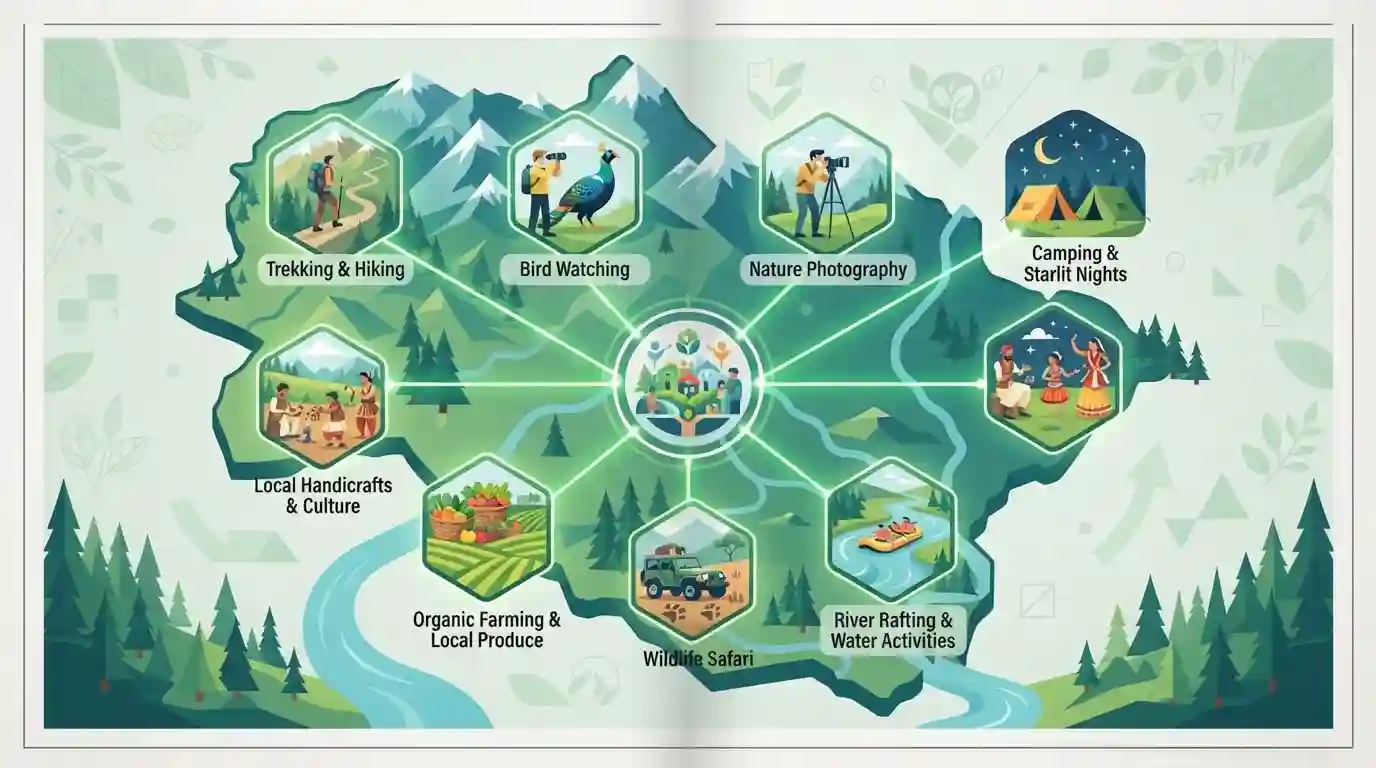
The Uttarakhand government has planned to transform eight forest regions into dedicated eco-tourism hubs to promote sustainable tourism, boost local green economies, and preserve the state's unique biodiversity.
Key Points
- Uttarakhand has decided to develop eight forest areas across the state as major eco-tourism hubs.
- The initiative aims to promote sustainable tourism while generating livelihood opportunities for local communities.
- It focuses on balancing environmental conservation with tourism growth by showcasing the state's rich biodiversity and natural landscapes.
Important Terms
Uttarakhand Forest Department

A state government body responsible for managing and protecting forest resources, wildlife habitats, and biodiversity in Uttarakhand, currently spearheading the development of dedicated eco-tourism hubs across eight forest regions.
UPSC context
UKPSC Paper V / Environment and Biodiversity: Important for questions on state forest management, wildlife conservation, and eco-tourism initiatives.
Uttarakhand Tourism Development Board
The primary nodal agency established to plan, coordinate, and promote tourism infrastructure, sustainable tourism practices, and investment initiatives across the state of Uttarakhand.
UPSC context
UKPSC Paper V / Economy and Tourism of Uttarakhand: Tests knowledge of state tourism policies, administrative bodies, and economic development strategies.
Prelims Trap
eco-tourism hubs are managed exclusively through central wildlife protection funds without local community participation
Aspirants often confuse private/community reserve models like Jabarkhet with reserved or protected national parks managed exclusively by the central or state forest department.
Static Concepts Connected
What are the major categories of forests under the Indian Forest Act, 1927?
- Reserved Forests:: Constitutes more than half of India's forests where all activities are banned unless explicitly permitted.
- Protected Forests:: About one-third of forest lands protected from rapid depletion, with certain customary rights allowed to locals.
- Village/Unclassed:: Forests belonging to private individuals or communities, forming a minor share of total forest estate.
Cross-Topic Patterns
Eco-Tourism + Forest Cover Livelihoods
Uttarakhand's high forest cover (71.05%) enables community-based eco-tourism hubs, linking environmental conservation with local green employment and decentralised rural development.
Jabarkhet Model + PPP Conservation
The Jabarkhet Nature Reserve model demonstrates public-private partnerships in biodiversity conservation and sustainable tourism, a key theme in environmental governance.

Uttarakhand eco-tourism hubs + 71.05% forest cover stats likely to appear in a matching or multi-statement prelims question.
Linked PYQs · 3
Linked PYQs · 3
- 2024UKPSC_PRELIMSGS1
UTDB is established in Uttarakhand to promote:
- 2016UKPSC_PRELIMSGS1
In Uttarakhand, Oak-Rhododendron are characteristic plants of
- 2025UKPSC_PRELIMSGS1
Match List - I with List - II and select the correct answer from the codes given below : | List - I (Wild Life Sanctuary) | List - II (Location) | |---|---| | A. Askot Wild Life Sanctuary | 1. Uttarkashi | | B. Binsar Wild Life Sanctuary | 2. Nainital | | C. Govind Wild Life Sanctuary | 3. Almora | | D. Nandhaur Wild Life Sanctuary | 4. Pithoragarh | Codes :
