Uttarakhand Cabinet Approves Health and Industrial Reforms
Why It Matters
Important for tracking state-level administrative decisions, legislative policies, and developmental initiatives impacting governance and socio-economic planning in Uttarakhand.
Summary
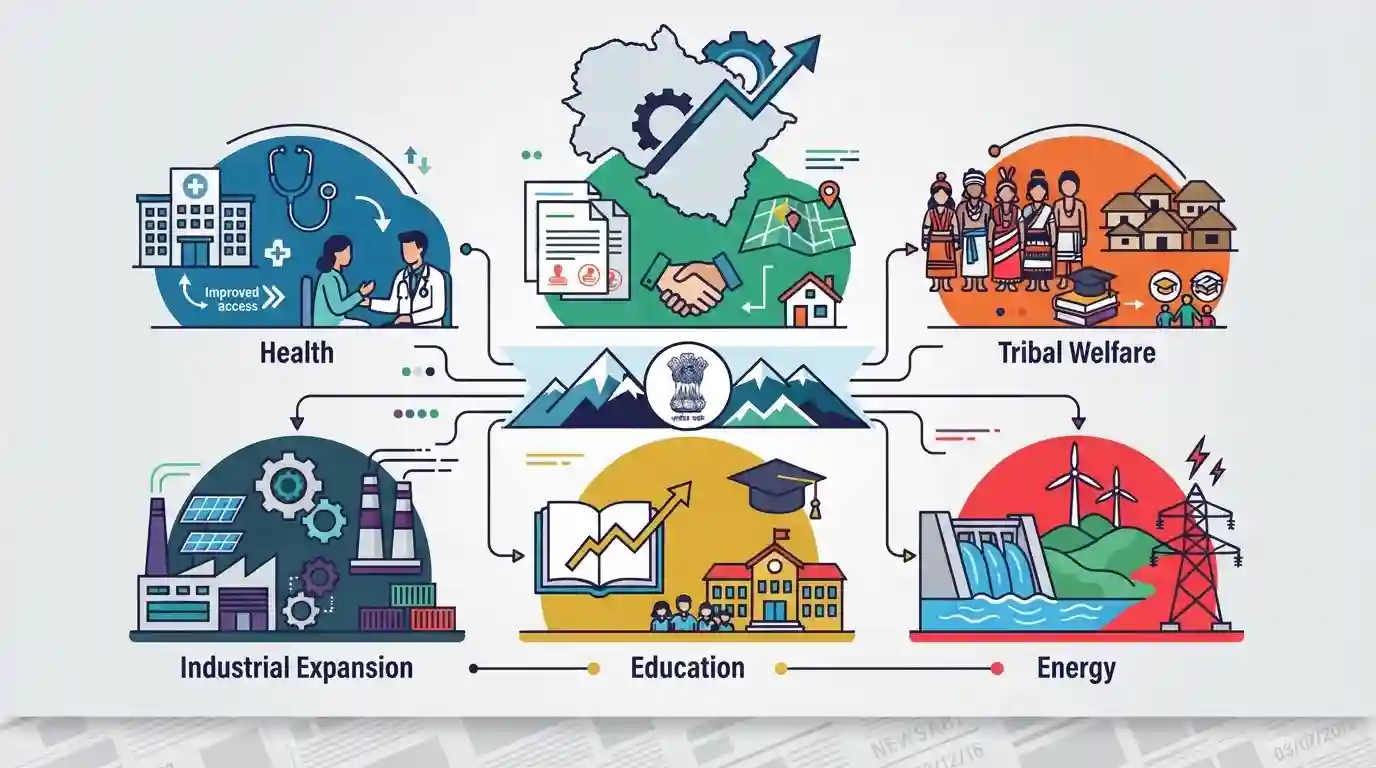
The Uttarakhand Cabinet has cleared multiple significant policy initiatives targeting key development sectors including health, land reforms, tribal welfare, industrial expansion, education, and energy to foster balanced growth in the state.
Key Points
- The Uttarakhand Cabinet approved several major policy decisions spanning health, land reforms, tribal welfare, industrial growth, education, and energy sectors.
- These administrative measures aim to boost regional infrastructure, social welfare, and economic development across the hill state.
- The policy push focuses on multi-sectoral improvements to address developmental disparities between the hill and plain districts of Uttarakhand.
Important Terms
Uttarakhand Cabinet

The apex executive body of the state government led by the Chief Minister, responsible for formulating policies, clearing legislative bills, and taking major administrative decisions across various development sectors.
UPSC context
UKPSC Paper V (Polity and Governance): Tests understanding of state executive powers, cabinet decision-making processes, and policy formulation in Uttarakhand.
Uttarakhand Green Hydrogen Policy 2026
A state-level policy formulated to establish a green hydrogen ecosystem by leveraging Uttarakhand's massive hydropower potential, aligning with national net-zero targets and clean energy transition.
UPSC context
UKPSC Paper V (Economy and Environment): Tests knowledge of state-specific renewable energy initiatives, sustainable development, and climate action policies.
SIDCUL
State enterprise (State Infrastructure and Industrial Development Corporation of Uttarakhand Limited) tasked with promoting industrial infrastructure, managing industrial estates, and accelerating manufacturing growth.
UPSC context
UKPSC Paper V (Uttarakhand Economy and Industrialization): Tests candidates on state public sector undertakings, industrial corridors, and economic infrastructure development.
Prelims Trap
mutual agreement procedures for public project land acquisition permit relaxed land use regulations across hill districts
Aspirants often assume mutual agreement procedures for land acquisition bypass all statutory environmental clearances in hill districts, whereas regulations remain strict.
Static Concepts Connected
What are the key constitutional provisions and institutional frameworks for tribal welfare and administration in Uttarakhand?
- Notified Tribes: Tribal Demographics: Jaunsari, Bhotia, Tharu, Raji, and Buksa are the major notified Scheduled Tribes residing primarily across Dehradun, Pithoragarh, Chamoli, Udham Singh Nagar, and Champawat districts.
- Service Rules: Administrative Rules: State-level service rules like the Tribal Welfare Gazetted Officer Service Rules regulate targeted policy implementation and personnel deployment in tribal pockets.
- Constitutional Basis: Constitutional Safeguards: Provisions under Article 244, Fifth Schedule frameworks, and specific welfare grants under Article 275(1) guide central and state tribal interventions.
Cross-Topic Patterns
Hill-Plain Disparities & Regional Economic Growth
Uttarakhand's land reform regulations and hill-plain disparity frameworks closely mirror the broader regional economic debates tested in regional development economics and Himalayan ecology.
Tribal Administration & Gazetted Service Rules
Amendments to tribal service rules in Dehradun, Chamoli, and Udham Singh Nagar connect directly to Fifth/Sixth Schedule administrative governance frameworks.

UKPSC frequently tests specific administrative updates like newly created nursing cadres or tribal service rules in multi-statement questions.
Linked PYQs · 3
Linked PYQs · 3
- 2025UKPSC_PRELIMSGS1
Which of the following districts of Uttarakhand has the highest agricultural land ?
- 2024UKPSC_PRELIMSGS1
Districts are arranged in descending order in terms of % schedule tribe population to total population (Census of India-2011). Choose the correct option :
- 2024UKPSC_PRELIMSGS1
What percentage (approximately) of Uttarakhand is plain area ?
