Uttar Pradesh Health Alert and H1N1 Influenza Preparedness
Source:uniindia ↗
Why It Matters
UPPSC Prelims frequently asks conceptual questions on biology, pathogens, and infectious diseases—specifically distinguishing between viral diseases (like Influenza/Dengue) and bacterial infections (like Haemophilus influenzae). State health administration efforts are also highly relevant.
Summary
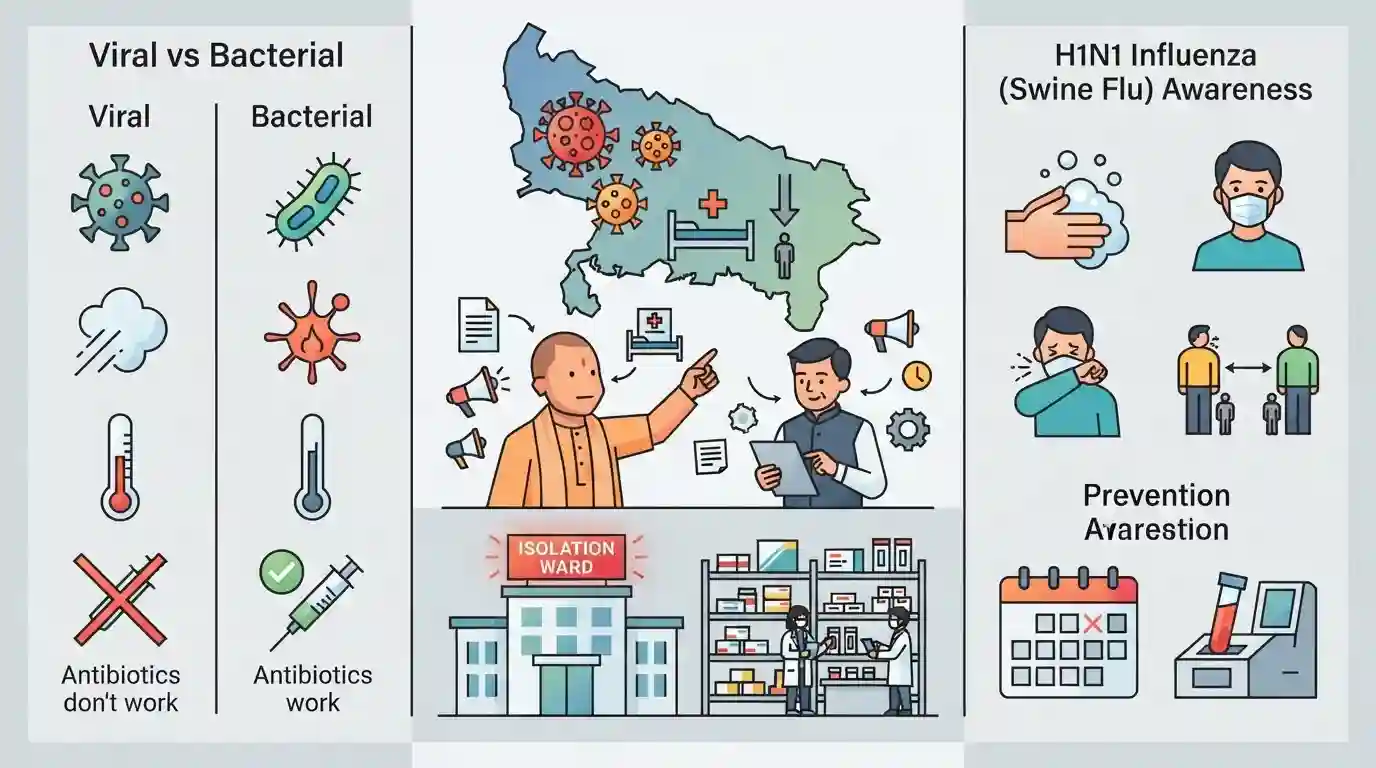
The Government of Uttar Pradesh has issued a statewide alert following a rise in H1N1 influenza (swine flu) and seasonal flu cases, reporting one death and over 25 hospitalizations. Chief Minister Yogi Adityanath and Deputy CM Brijesh Pathak have directed the health department, DMs, and Chief Medical Officers (CMOs) to ensure hospital readiness, set up isolation wards, and maintain adequate stocks of testing kits and essential medicines.
Key Points
- The Uttar Pradesh government has gone on high alert following a rise in cases of H1N1 influenza (swine flu) and seasonal flu.
- One death has been reported, and more than 25 patients have been hospitalized with symptoms of swine flu.
- Chief Minister Yogi Adityanath has directed health officials and District DMs to establish isolation wards, stock essential medicines, and provide adequate testing kits in hospitals.
- Deputy CM and Health Minister Brijesh Pathak held a state-wide video conference review meeting with CMOs, CMSs, and medical college principals to streamline district-level medical readiness.
- A key educational point is distinguishing viral influenza (caused by Influenza viruses like H1N1) from bacterial pathogens like Haemophilus influenzae (which causes meningitis), a frequent area of confusion tested in UPPSC.
Important Terms
H1N1 Influenza (Swine Flu)

A highly contagious viral respiratory disease caused by the H1N1 subtype of the Influenza A virus, originally infecting pigs but capable of human-to-human transmission.
UPSC context
UPPSC GS Paper 3 (Science and Technology) and GS Paper 2 (Public Health); tests knowledge of pathogens, diseases, and pandemic control.
Uttar Pradesh Health Department
Officially known as the Department of Medical, Health and Family Welfare, it manages public health, primary healthcare services, and outbreak responses across Uttar Pradesh's urban and rural areas.
UPSC context
UPPSC GS Paper 2 (Social Sector/Health) and GS Paper 5 (UP Special); tests knowledge of state-level health administration and governance.
Medical Education Department
The Uttar Pradesh government department responsible for establishing, managing, and regulating medical colleges, tertiary teaching hospitals, nursing education, and medical research in the state.
UPSC context
UPPSC GS Paper 2 (Health & Education) and GS Paper 5; tests governance of tertiary healthcare and state educational infrastructure.
Chief Medical Officer (CMO)
The senior-most administrative medical officer at the district level in Uttar Pradesh, responsible for executing public health programs, managing hospital readiness, and supervising local epidemic control.
UPSC context
UPPSC GS Paper 2 (District Administration & Health); tests understanding of grass-root health administration and local governance in Uttar Pradesh.
Prelims Trap
Haemophilus influenzae is the viral pathogen responsible for seasonal H1N1 swine flu outbreaks.
Despite the name 'influenzae', Haemophilus influenzae is a Gram-negative bacterium, not a virus, and does not cause influenza or swine flu.
Static Concepts Connected
Difference between H1N1 and Haemophilus influenzae
- Pathogen type: Influenza (H1N1) is caused by an influenza A virus (RNA virus), whereas Haemophilus influenzae is a Gram-negative bacterium.
- Associated diseases: H1N1 causes respiratory influenza (swine flu); H. influenzae causes severe infections like bacterial meningitis, pneumonia, and bacteremia.
- Treatment and prevention: Viral influenza is managed with antivirals (e.g., Oseltamivir) and annual flu shots; H. influenzae is treated with antibiotics and prevented by the Hib vaccine.
Constitutional provisions for public health in India
- Seventh Schedule: Public health, sanitation, and hospitals fall under Entry 6 of the State List (List II) of the Seventh Schedule.
- Directive Principles (DPSP): Article 47 directs the State to raise the level of nutrition, standard of living, and improve public health as a primary duty.
Cross-Topic Patterns
Zoonotic diseases and One Health framework
Frequent viral outbreaks highlight the need for One Health coordination, linking veterinary surveillance of swine populations with human health departments in UP.
Disaster Management Act and health emergencies
State-level management of epidemics tests the functional coordination between District Magistrates (DMs) and Chief Medical Officers under the Epidemic Diseases Act.

UPPSC is highly likely to pair a question on H1N1 with a statement on the bacterial nature of Haemophilus influenzae to test basic biology.
Linked PYQs · 3
Linked PYQs · 3
- 2022UPPSC_PRELIMSGS1
The bacillus haemophilus influenza causes
- 2023UPPSC_PRELIMSGS1
Match list-I with list-II and select the correct answer using code given below. List-I (Diseases): (A) Peptic ulcers (B) Dengue (C) Elephant Foot (D) Malaria List-II (Factors): 1. Virus 2. Protozoa 3. Worm 4. Bacteria
- 2024UPPSC_PRELIMSGS1
The disease-causing microorganism among these is :
