Chandigarh Health Plan for Elderly Living Alone
Source:Indian Express ↗
Why It Matters
Serves as a strong administrative case study for improving geriatric healthcare access and targeted welfare schemes for vulnerable, isolated populations. Useful for GS-2 answers on health policies and vulnerable sections.
Summary
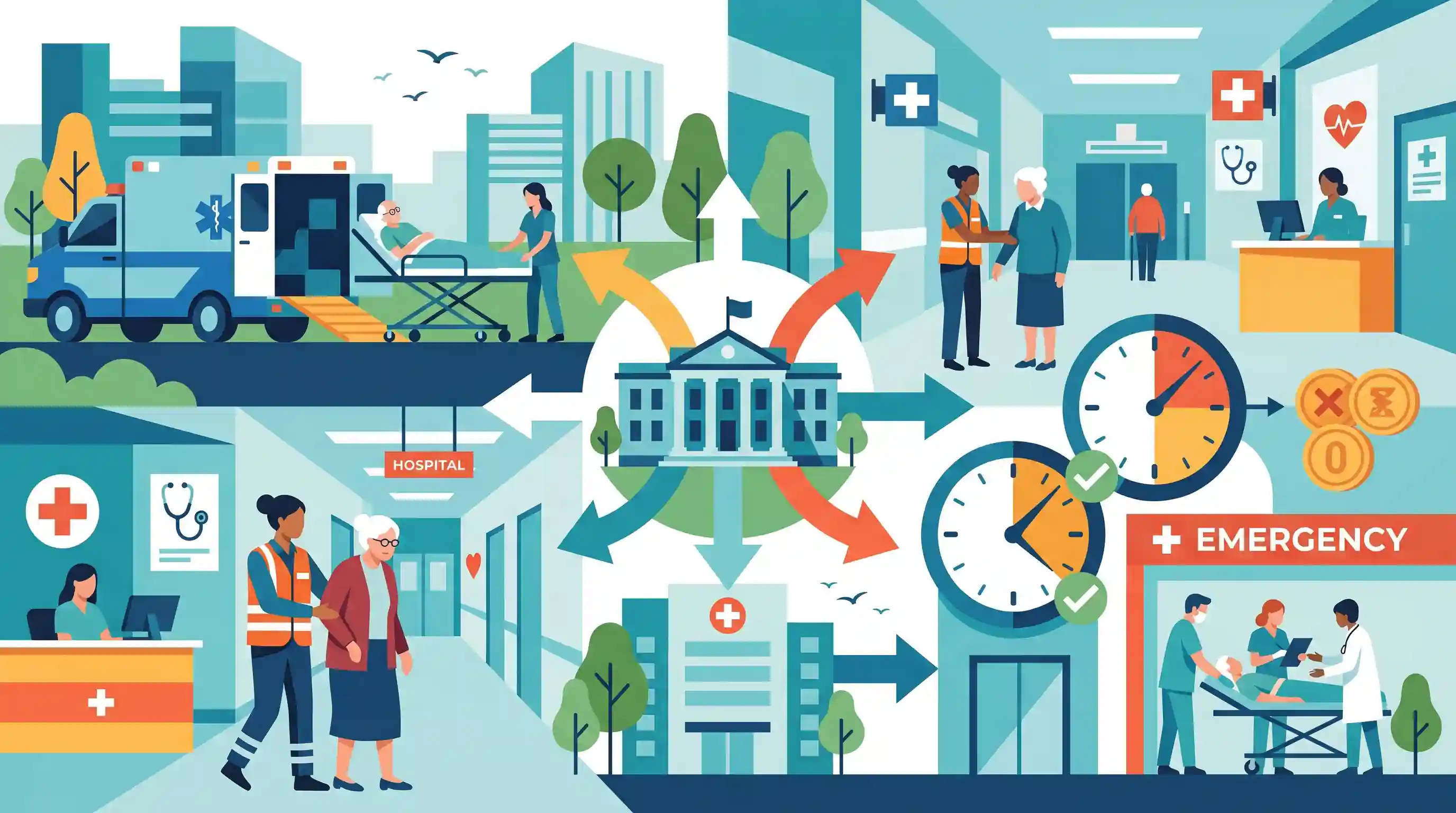
Following suggestions from the UT Administrator, the Chandigarh Health Department is implementing specialized healthcare initiatives for senior citizens living alone. The plan features a dedicated ambulance service for bedridden elderly individuals and the appointment of caretakers by the Rogi Kalyan Samiti to assist unattended elderly patients in navigating hospital procedures. Additionally, a pilot program at GMSH-16 will provide free treatment to all emergency patients for the first 24 hours, enhancing accessible public health infrastructure.
Key Points
- The Chandigarh Health Department is creating a special healthcare plan for elderly residents living alone in the city.
- A dedicated ambulance service will be launched specifically for bedridden senior citizens.
- Six caretakers, appointed by the Rogi Kalyan Samiti, will assist unattended elderly patients in hospitals with navigating tests, medicines, and wheelchairs.
- As a pilot initiative, emergency patients at GMSH-16 will receive free treatment for the first 24 hours.
Important Terms
Rogi Kalyan Samiti (RKS)

A registered management society at public health facilities under the National Health Mission (NHM) to ensure community participation, accountability, and improved patient care through decentralized fund management.
UPSC context
GS Paper 2 (Social Justice/Health); tests knowledge of decentralized governance and community-based health management under NHM.
Geriatric Care
Specialized healthcare focusing on the unique medical, psychological, and social needs of elderly people, particularly those with chronic illnesses or those living alone without attendants.
UPSC context
GS Paper 2 (Welfare of Vulnerable Sections); relevant for social security and population-related issues like an aging demographic.
GMSH-16
A major district-level public healthcare institution in Chandigarh that provides specialty services and serves as a key referral center for the region's urban and rural population.
UPSC context
GS Paper 2 (Public Health); serves as a case study for local-level public health infrastructure and emergency care pilot projects.
UT Health Department
The administrative body in a Union Territory responsible for planning and implementing public health policies, medical services, and local welfare schemes under the UT Administration.
UPSC context
GS Paper 2 (Governance); highlights the role of specialized departments in implementing social sector initiatives in Union Territories.
Universal Health Coverage (UHC)
A global health goal ensuring all individuals have access to quality health services—preventive, curative, and palliative—without facing financial hardship during payment.
UPSC context
GS Paper 2 (Health); tests understanding of Sustainable Development Goal 3.8 and initiatives like free emergency care pilots.
Prelims Trap
"Rogi Kalyan Samitis are statutory bodies established under the Clinical Establishments Act."
Rogi Kalyan Samitis are not statutory or regulatory bodies; they are registered societies established under the National Health Mission (NHM) acting as trustees for hospitals.
Static Concepts Connected
What is the mandate and structure of Rogi Kalyan Samitis (RKS)?
- Legal Nature: They are registered societies established under the National Health Mission (NHM), functioning as a group of trustees for public hospitals.
- Core Objective: To integrate community participation into hospital management, ensuring decentralized administration, facility upgrades, and patient welfare.
- Composition: They consist of members from local Panchayati Raj Institutions (PRIs), NGOs, local officials, and the Indian Medical Association.
How is the right to emergency medical care constitutionally protected?
- Article 21: The Supreme Court (Parmanand Katara v. Union of India) ruled that preservation of life is paramount, making timely emergency medical treatment a fundamental right.
- State Obligation: The State has a constitutional obligation to provide life-saving care regardless of financial constraints or legal formalities, operationalizing the 'Golden Hour' principle.
Cross-Topic Patterns
Demographic shift + Geriatric welfare
With India's elderly expected to exceed 20% of the population by 2050 (UNFPA), decentralized localized initiatives like dedicated hospital caretakers will become standard models for GS2 welfare answers.
Article 21 + Healthcare marketisation
Free 24-hour emergency care pilots demonstrate state buffering against healthcare marketisation, directly fulfilling the Supreme Court's mandate for unconditional emergency life-saving treatment.

Expect a 2026 Prelims question testing the legal nature (registered society) and parent scheme (NHM) of Rogi Kalyan Samitis.
Linked PYQs · 3
Linked PYQs · 3
- 2020MainsGS2
In order to enhance the prospects of social development, sound and adequate health care policies are needed particularly in the fields of geriatric and maternal health care. Discuss.
- 2024MainsGS2
In a crucial domain like the public healthcare system the Indian State should play a vital role to contain the adverse impact of marketisation of the system. Suggest some measures through which the State can enhance the reach of public healthcare at the grassroots level.
- 2019MainsGS2
Performance of welfare schemes that are implemented for vulnerable sections is not so effective due to absence of their awareness and active involvement at all stages of policy process. Discuss.
