संयुक्त राज्य अमेरिका के ऊर्जा सुरक्षा उद्देश्य और वेनेजुएला में हस्तक्षेप
स्रोत:इंडियन एक्सप्रेस ↗
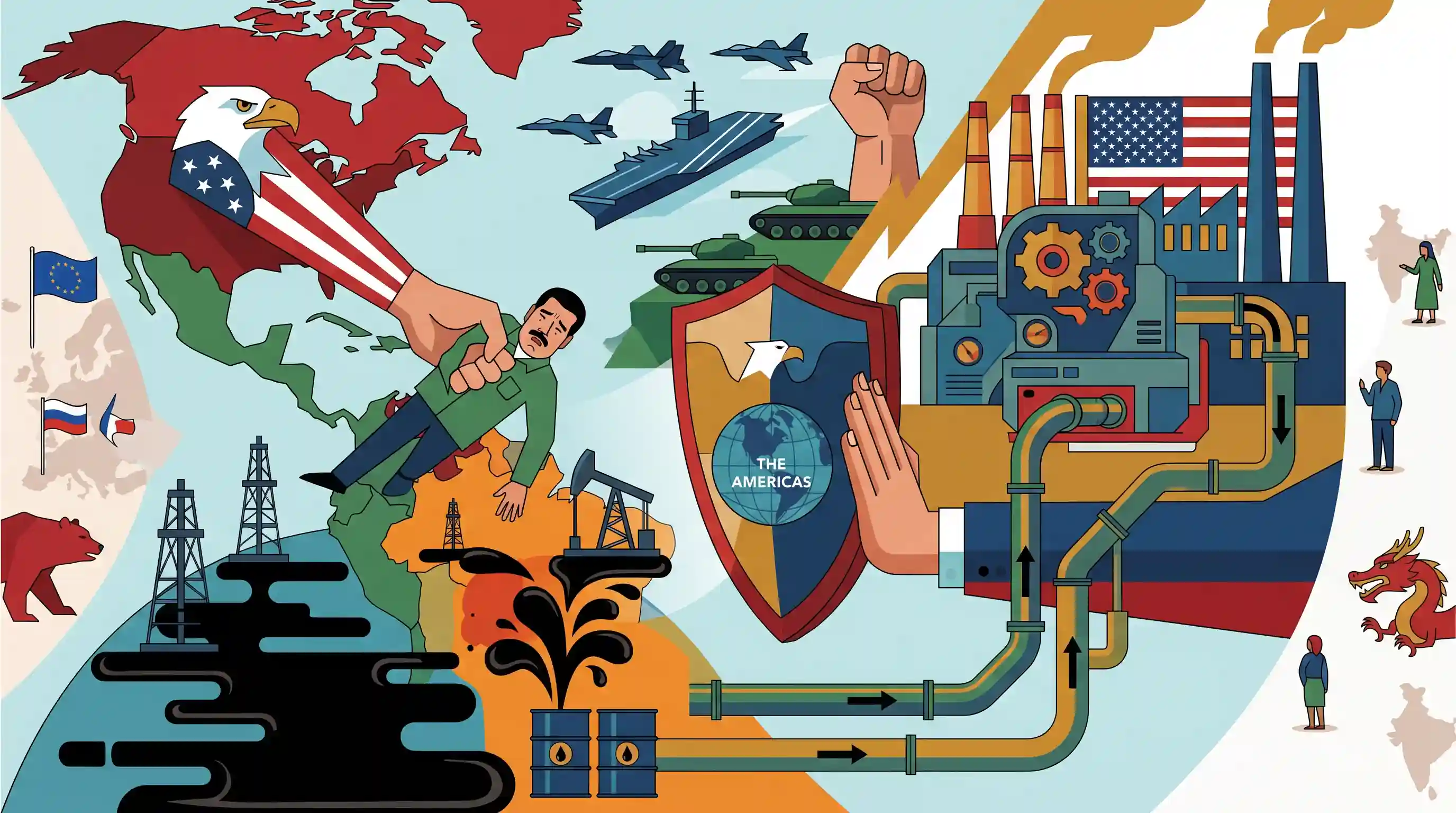
क्यों मायने रखता है
यह ऊर्जा सुरक्षा और मोनरो सिद्धांत द्वारा संचालित महाशक्ति हस्तक्षेपवाद का एक स्पष्ट, वास्तविक उदाहरण प्रस्तुत करता है। यह बदलती अमेरिकी विदेश नीति, वैश्विक ऊर्जा भू-राजनीति और अंतरराष्ट्रीय संबंधों में कठोर यथार्थवाद (hard realism) की ओर बढ़ते झुकाव से संबंधित GS2 IR के उत्तरों के लिए अत्यधिक प्रासंगिक है।
सारांश
US Vice President JD Vance linked the capture of Venezuelan President Nicolas Maduro to the objective of securing control over Venezuela's extensive natural resources, particularly its oil reserves. Emphasizing the necessity of high-quality, low-cost energy for American industry, Vance highlighted energy security as a core driver of US foreign policy. His remarks implicitly revived the Monroe Doctrine by asserting absolute US dominance in Latin America. The intervention is framed not just as regime change, but as a demonstration of American military strength and an assertion of unipolar regional hegemony.
मुख्य बिंदु
- अमेरिकी उपराष्ट्रपति JD Vance ने स्पष्ट रूप से कहा है कि वेनेजुएला के राष्ट्रपति निकोलस मादुरो को पकड़ने का एक प्राथमिक उद्देश्य वेनेजुएला के विशाल प्राकृतिक संसाधनों, विशेष रूप से इसके तेल भंडार पर नियंत्रण सुनिश्चित करना है।
- वेंस ने ऊर्जा सुरक्षा की महत्वपूर्ण भूमिका पर जोर दिया और तर्क दिया कि अमेरिका को अपने आर्थिक और औद्योगिक प्रभुत्व को बनाए रखने के लिए उच्च-गुणवत्ता वाली, कम लागत वाली ऊर्जा तक पहुंच की आवश्यकता है।
- इन टिप्पणियों ने परोक्ष रूप से 200 साल पुराने Monroe Doctrine का आह्वान किया, जिसमें यह दावा किया गया कि संयुक्त राज्य अमेरिका को अपने पड़ोस में 'निर्णायक भूमिका' निभानी चाहिए।
- ये बयान अमेरिकी विदेश नीति में एक अत्यधिक यथार्थवादी और लेन-देन आधारित (transactional) बदलाव को दर्शाते हैं, जो लोकतंत्र को बढ़ावा देने के वैचारिक विमर्श की तुलना में संसाधन निष्कर्षण और क्षेत्रीय प्रभुत्व को प्राथमिकता देते हैं।
महत्वपूर्ण शब्द
Monroe Doctrine

1823 की एक अमेरिकी नीति जो अमेरिका (Americas) में यूरोपीय उपनिवेशवाद और हस्तक्षेप का विरोध करती है। यह पश्चिमी गोलार्द्ध (Western Hemisphere) को अमेरिका के एक विशिष्ट प्रभाव क्षेत्र (sphere of influence) के रूप में स्थापित करती है, जिसे अक्सर क्षेत्रीय हस्तक्षेपों को उचित ठहराने के लिए उद्धृत किया जाता है।
UPSC context
GS-II: International Relations. Tests understanding of historical US foreign policy and its contemporary application in regional geopolitics and hegemony.
Energy Security
The uninterrupted availability of energy sources at an affordable price. It includes physical availability, infrastructure accessibility, and economic affordability, often serving as a primary driver of modern foreign policy.
UPSC context
GS-II/III: अंतर्राष्ट्रीय संबंध और ऊर्जा। संसाधन भू-राजनीति और राष्ट्रीय हितों पर ऊर्जा निर्भरता के प्रभाव की जागरूकता का परीक्षण करता है।
Regime Change
The forcible or coercive replacement of a sovereign government with another, typically by an external power. It often involves the transformation of a nation's political, administrative, and institutional structures.
UPSC context
GS-II: International Relations. Relevant for analyzing sovereignty, international law violations, and the impacts of foreign intervention on global stability.
Unipolarity
शक्ति का एक ऐसा वैश्विक वितरण जहाँ एक अकेला राष्ट्र सैन्य, आर्थिक और सांस्कृतिक रूप से प्रभुत्वशाली प्रभाव रखता है। इसका तात्पर्य प्रमुख महाशक्ति के आधिपत्य के सामने महत्वपूर्ण प्रतिस्पर्धियों के अभाव से है।
UPSC context
GS-II: International Relations. Tests knowledge of world order shifts, hegemonic stability theory, and the transition toward multipolarity in modern geopolitics.
Oil Nationalization
वह प्रक्रिया जिसके माध्यम से सरकार निजी स्वामित्व वाली पेट्रोलियम परिसंपत्तियों पर नियंत्रण प्राप्त करती है। वेनेजुएला में, इसके तहत ह्यूगो चावेज़ के नेतृत्व में अमेरिकी कॉर्पोरेट तेल इन्फ्रास्ट्रक्चर को सरकारी स्वामित्व में स्थानांतरित किया गया था।
UPSC context
GS-III: Economy & Investment. Tests understanding of sovereign risks, resource nationalism, and the impact of asset expropriation on international trade relations.
Narcoterrorism
The use of drug trafficking profits to fund terrorist activities or maintain political power through violence. US officials cited this as a legal justification for intervening in Venezuela.
UPSC context
GS-III: Internal Security. Relevant for studying the nexus between organized crime and terrorism and its role in justifying international interventions.
प्रारंभिक ट्रैप
वेनेजुएला दुनिया में कच्चे तेल का सबसे बड़ा उत्पादक है।
Venezuela holds the world's largest *proven reserves*, but its actual *production* is extremely low due to sanctions and economic collapse. The US is the top producer.
संबंधित अवधारणाएँ
मुनरो सिद्धांत क्या है और यह अमेरिकी विदेश नीति को किस प्रकार आकार देता है?
- 1823 Origin: Declared in 1823, it warned European powers against colonizing or interfering in the Western Hemisphere, establishing it as a US sphere of influence.
- रूजवेल्ट कोरोलरी: Added later to justify direct US military intervention in Latin American nations to maintain regional stability and protect American economic interests.
- Regional Hegemony: Modern US administrations periodically revive its underlying premise to counter extra-regional influence (like China or Russia) in the Americas.
आर्थिक भूगोल में 'संसाधन अभिशाप' (Resource Curse) या 'प्रचुरता का विरोधाभास' (Paradox of Plenty) क्या है?
- The Paradox: एक विरोधाभास जिसमें प्रचुर प्राकृतिक संसाधनों (जैसे तेल) वाले देश, संसाधन-विहीन देशों की तुलना में धीमी आर्थिक वृद्धि, बदतर शासन और कम स्थिरता का सामना करते हैं।
- Dutch Disease: संसाधनों का निर्यात स्थानीय मुद्रा के मूल्य को बढ़ा देता है, जिससे कृषि और विनिर्माण जैसे अन्य क्षेत्र वैश्विक बाजार में अप्रतिस्पर्धी हो जाते हैं।
- Venezuelan Example: Massive oil wealth led to extreme over-reliance, making the economy highly vulnerable to oil price crashes and institutional mismanagement.
अंतर-विषय पैटर्न
US Sanctions & India's Energy Pivot
2019 के US प्रतिबंधों के बाद वेनेजुएला से भारत के तेल आयात में भारी गिरावट आई। इसके कारण भारत को रूस और Middle East की ओर रुख करने के लिए मजबूर होना पड़ा, जो एकतरफा सीमापारीय प्रतिबंधों (unilateral extraterritorial sanctions) के प्रति विकासशील देशों की सुभेद्यता को रेखांकित करता है।
अमेरिकी नीति में रियलपोलिटिक की वापसी
Vance's open admission of resource-capture marks a sharp shift from liberal interventionism (democracy promotion) to classical realism and transactional diplomacy, impacting how middle powers negotiate with the US.

Expect a 2026 Prelims multi-statement question contrasting top global oil 'reserves' (Venezuela) versus top 'producers' (USA/Saudi Arabia).
संबद्ध PYQ · 3
संबद्ध PYQ · 3
- 2024PrelimsGS1
Consider the following statements : Statement-I : Recently, Venezuela has achieved a rapid recovery from its economic crisis and succeeded in preventing its people from fleeing/emigrating to other countries. Statement-II : Venezuela has the world's largest oil reserves. Which one of the following is correct in respect of the above statements?
- 2025MainsGS2
"Energy security constitutes the dominant kingpin of India's foreign policy, and is linked with India's overarching influence in Middle Eastern countries.” How would you integrate energy security with India's foreign policy trajectories in the coming years?
- 2025MainsGS2
"The reform process in the United Nations remains unresolved, because of the delicate imbalance of East and West and entanglement of the USA vs. Russo-Chinese alliance.” Examine and critically evaluate the East-West policy confrontations in this regard.
