Shashi Tharoor Suggests Retaliatory Tariffs on US Imports
Source:The Hindu ↗
Why It Matters
This article provides a highly relevant real-world example of how a country's foreign policy choices (e.g., sourcing cheap energy from Russia despite Western sanctions) can lead to direct economic repercussions (trade wars and tariffs). It highlights the challenges developing nations face in maintaining strategic autonomy amid rising protectionism and the weaponization of trade policies.
Summary
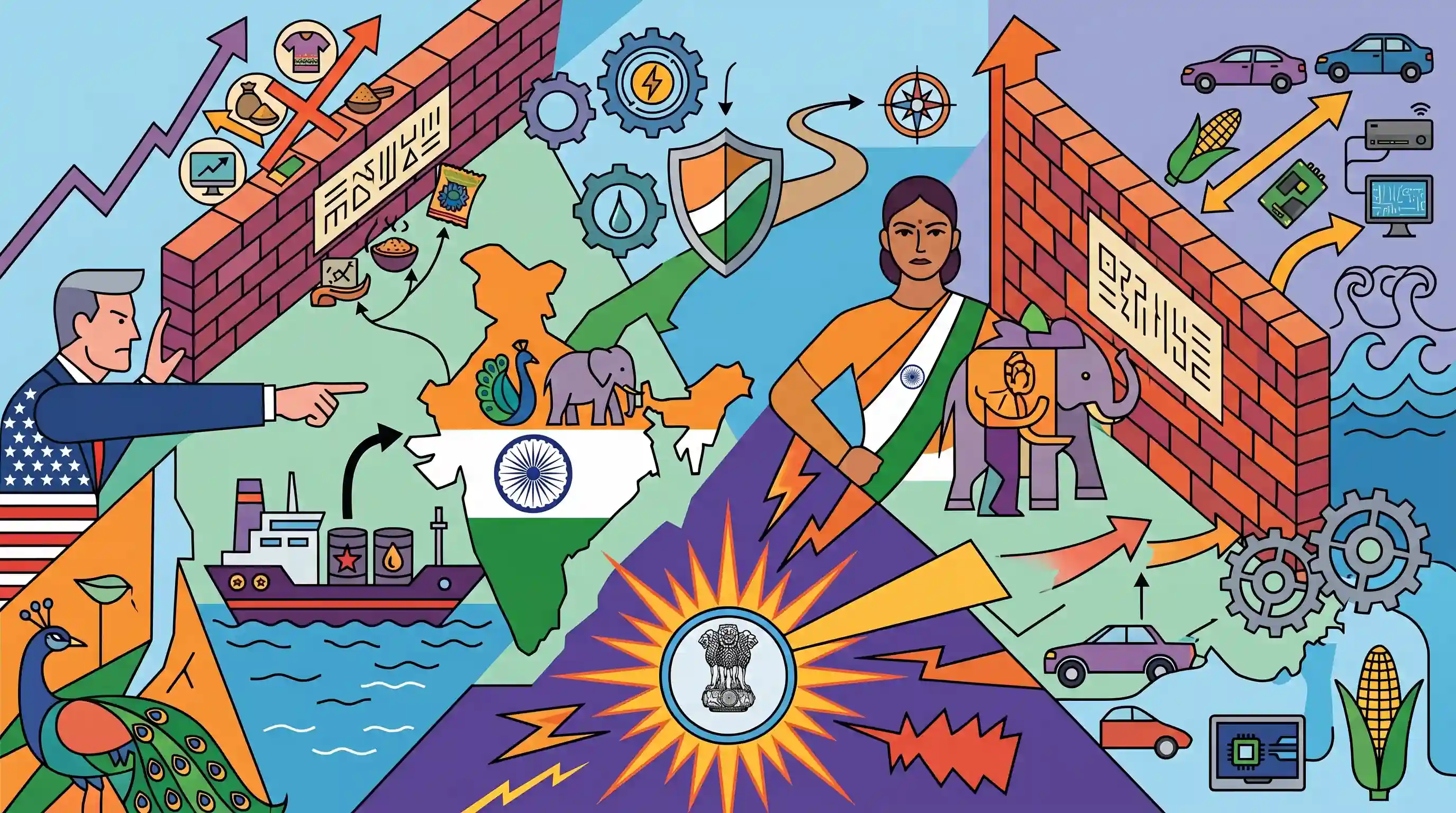
Congress MP Shashi Tharoor suggested that India should retaliate against the newly imposed 25% U.S. tariffs on Indian imports by raising tariffs on American goods to 50%. The United States justified its tariffs by claiming that India's ongoing imports of Russian oil present an "extraordinary threat" to U.S. national security. In response, India's Ministry of External Affairs (MEA) strongly condemned the U.S. action as unfair and unreasonable. The diplomatic and economic row underscores the complex intersection of India's strategic autonomy in securing energy imports and the rising trend of global trade protectionism.
Key Points
- The United States imposed an additional 25% tariff on Indian imports, citing national security concerns due to India's purchase of Russian oil.
- Congress MP Shashi Tharoor proposed that India retaliate by raising tariffs on American goods to 50%.
- The Ministry of External Affairs (MEA) condemned the U.S. tariffs as unfair, unjustified, and unreasonable, affirming that India will protect its national interests.
- The issue highlights a clash between India's strategic autonomy (securing energy through Russian oil) and U.S. foreign policy objectives, leading to protectionist trade measures.
Important Terms
Strategic Autonomy

India's foreign policy doctrine emphasizing sovereign decision-making and independent choices based on national interest, without being constrained by external pressures or formal military alliances with any superpower bloc.
UPSC context
GS Paper II (IR); tests understanding of India's shift from Non-Alignment to 'Multi-alignment' in a multipolar world.
Protectionism
Economic policy of restricting imports through tariffs, quotas, or regulations to shield domestic industries from foreign competition. In 2026, it is increasingly driven by 'economic nationalism' and security concerns.
UPSC context
GS Paper III (Economy); relevant for topics on globalization, WTO challenges, and impact on Indian exports.
Ministry of External Affairs (MEA)
The nodal government agency responsible for conducting India’s foreign relations, managing diplomatic missions, and representing the country at international forums like the UN and WTO.
UPSC context
GS Paper II (Governance/IR); essential for understanding institutional mechanisms of Indian diplomacy and official foreign policy responses.
Trade War
An economic conflict where nations retaliate against each other’s trade barriers (like tariffs). The 2025-26 U.S.-India friction involves 'reciprocal tariffs' tied to geopolitical disputes over Russian oil.
UPSC context
GS Paper III (Economy); tests the ability to analyze global trade disruptions and their impact on India's growth.
Energy Security
A country's ability to ensure a continuous and affordable supply of energy resources. India prioritizes this by diversifying oil imports despite external pressure from the U.S. regarding Russia.
UPSC context
GS Paper III (Economy/Security); vital for understanding India’s developmental needs versus geopolitical constraints.
Reciprocal Tariff
A trade policy where a country imposes tariffs on imports from another country at a level matching those imposed by that country on its own exports.
UPSC context
GS Paper III (Economy); specific technical term related to bilateral trade negotiations and retaliatory measures.
Indian National Congress
A major national political party in India, currently in the opposition. Shashi Tharoor's suggestions represent the party's stance on protecting national economic interests against external trade pressure.
UPSC context
GS Paper II (Polity); tests awareness of the role of the opposition in shaping foreign policy discourse.
Prelims Trap
The WTO categorically prohibits member nations from unilaterally raising tariffs above their bound rates under any circumstances.
GATT Article XXI allows members to breach WTO obligations, including bound rates, if deemed necessary for "essential security interests," though its misuse is highly controversial.
Static Concepts Connected
What is the "National Security Exception" under GATT Article XXI?
- GATT Article XXI: A provision allowing WTO members to bypass trade rules (like MFN) to protect "essential security interests" during wartime or international emergencies.
- Reviewability: Historically considered self-judging, but recent WTO panels ruled that tribunals can review whether the exception was invoked in objective "good faith."
- Rising Misuse: Increasingly invoked by nations (like the US) to justify protectionist tariffs without facing immediate multilateral sanctions.
What are bound rates versus applied tariffs in the WTO framework?
- Bound Tariff: The maximum tariff ceiling a WTO member legally commits not to exceed for a specific product line under multilateral agreements.
- Applied Tariff: The actual, current customs duty charged at the border. It is often much lower than the bound rate.
- Breach Mechanism: Raising tariffs above bound rates violates WTO rules and invites retaliation, unless a specific exception (like safeguards or national security) is invoked.
Cross-Topic Patterns
Strategic Autonomy vs. Economic Coercion
India's persistence in importing discounted Russian crude despite U.S. tariff threats highlights the friction between maintaining sovereign energy security and navigating Western secondary economic coercion.
Paralysis of WTO Dispute Settlement
"Tit-for-tat" retaliatory tariffs are proliferating because the WTO's Appellate Body remains paralyzed by the U.S., forcing nations to adopt unilateral trade defence measures outside multilateral dispute resolution.

Expect a multi-statement Prelims question testing GATT Article XXI (security exception) alongside the functioning of the WTO Appellate Body.
Linked PYQs · 4
Linked PYQs · 4
- 2018MainsGS2
What are the key areas of reform if the WTO has to survive in the present context of "Trade War', especially keeping in mind the interest of India?
- 2012MainsGS2
Discuss the likely negative impact of the protectionist measures proposed by the US on India's software industry.
- 2025MainsGS2
"Energy security constitutes the dominant kingpin of India's foreign policy, and is linked with India's overarching influence in Middle Eastern countries.” How would you integrate energy security with India's foreign policy trajectories in the coming years?
- 2025MainsGS3
What are the challenges before the Indian economy when the world is moving away from free trade and multilateralism to protectionism and bilateralism? How can these challenges be met?
