US Protectionist Trade Tariffs and Global Supply Chain Impact
Source:The Hindu ↗
Why It Matters
The US shift towards protectionism and bilateral deal-making over multilateralism fundamentally alters global trade dynamics. Understanding these shifts is crucial for analyzing impacts on global supply chains, international macroeconomic stability, and the strategic responses of groupings like BRICS.
Summary
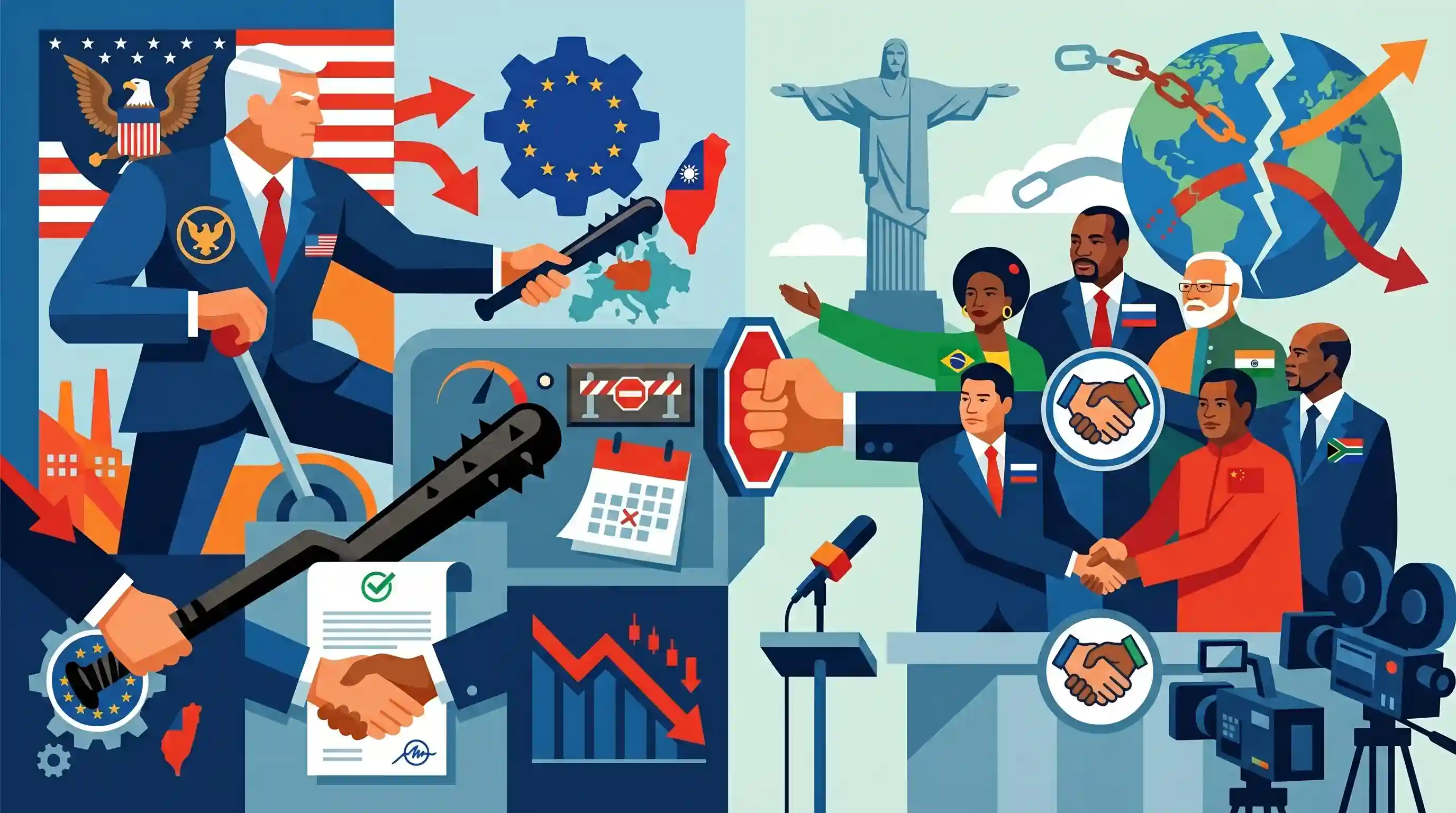
US Treasury Secretary Scott Bessent announced that new, widespread US tariffs will kick in on August 1 for international trading partners, including the European Union and Taiwan, unless new trade agreements are struck. Utilizing a maximum pressure tactic, the US administration aims to leverage the threat of tariffs to secure bilateral trade concessions. This move underscores a significant rise in protectionism and bilateralism in US trade policy, which has raised global concerns. In response, BRICS leaders are expected to denounce these aggressive tariff measures at their summit in Rio de Janeiro, highlighting the growing tensions in the global trade environment.
Key Points
- The US Treasury Secretary announced that sweeping tariffs on trading partners will take effect on August 1 unless bilateral trade deals are finalized.
- The US administration is using the threat of tariffs as a maximum pressure tactic to force negotiations and secure favorable trade agreements.
- This protectionist approach marks a significant shift from multilateral free trade to bilateral deal-making.
- The policy has drawn international criticism, with BRICS leaders expected to oppose the aggressive trade tactics during their summit in Rio de Janeiro.
Important Terms
BRICS

An intergovernmental organization of major emerging economies (Brazil, Russia, India, China, South Africa, plus new members) focusing on South-South cooperation and reforming global economic governance.
UPSC context
GS Paper II (International Relations); relevant for understanding multipolarity and the collective influence of the Global South.
Protectionism
Economic policy restricting imports through tariffs, quotas, or regulations to shield domestic industries and labor from foreign competition.
UPSC context
GS Paper III (Economy); tests knowledge of trade barriers, domestic manufacturing, and challenges to globalization.
Bilateralism
The conduct of diplomatic or trade relations between two sovereign states, often contrasted with multilateralism (involving three or more states).
UPSC context
GS Paper II (International Relations); concerns the shift from global trade frameworks toward direct, nation-to-nation negotiations.
Tariffs
Taxes or duties imposed by a government on imported goods to increase their cost, protecting domestic producers and generating revenue.
UPSC context
GS Paper III (Economy); fundamental for discussing trade deficits, inflation, and global trade wars.
US Treasury Department
The U.S. federal department responsible for managing national finances, economic policy, and implementing international trade measures like sanctions or tariffs.
UPSC context
GS Paper III (Economy/IR); essential for understanding key actors in global financial stability and trade policy.
Maximum Pressure Tactic
A diplomatic strategy using aggressive measures like heavy sanctions, threats, or tariffs to force a partner or adversary into making significant concessions.
UPSC context
GS Paper II (International Relations); used to analyze coercive diplomacy and the evolution of global strategic competition.
Prelims Trap
Unilateral US tariffs are fully compliant with the WTO's Most-Favored-Nation (MFN) rules.
WTO's MFN principle prohibits discriminating between trading partners. Unilateral, punitive tariffs without WTO authorization generally violate bound tariff limits and MFN obligations.
Static Concepts Connected
What is the Most-Favored-Nation (MFN) principle under the WTO?
- Core Principle: A trade favor, tariff reduction, or immunity granted to one WTO member must be immediately granted to all other members.
- Valid Exceptions: Free Trade Agreements, Customs Unions, and preferential access for developing countries (like the Generalized System of Preferences).
- Violation context: Unilateral, blanket tariff hikes usually violate MFN unless formally justified under specific exemptions like national security (Article XXI).
How does Bilateralism differ from Multilateralism in international trade?
- Multilateralism: Standardized global trade rules negotiated collectively by multiple nations (e.g., WTO), promoting non-discrimination.
- Bilateralism: Transactional agreements between two countries. Large economies often prefer this to leverage asymmetric power for better concessions.
- Systemic Impact: A global shift to bilateralism creates a fragmented "spaghetti-bowl" of overlapping, inconsistent trade rules and tariffs.
Cross-Topic Patterns
Protectionism driving BRICS De-dollarization
US aggressive tariff policies and weaponized trade accelerate BRICS initiatives to build alternative payment systems, interlinking protectionism directly with global de-dollarization efforts.
US Tariffs & India's PLI Strategy
Maximum pressure tariffs disrupt global supply chains, forcing the "China+1" transition. This creates an opening for India's Production Linked Incentive (PLI) schemes to attract relocating manufacturers.

Expect a multi-statement question on WTO principles (MFN, National Treatment) contrasted with recent unilateral protectionist measures.
Linked PYQs · 3
Linked PYQs · 3
- 2025MainsGS3
What are the challenges before the Indian economy when the world is moving away from free trade and multilateralism to protectionism and bilateralism? How can these challenges be met?
- 2018MainsGS3
How would the recent phenomena of protectionism and currency manipulations in world trade affect macroeconomic stability of India?
- 2012MainsGS2
Compare the significance of IBSA and BRICS in the context of India's multilateral diplomacy.
