US Holds Direct Talks with Iran Amid New Shipping Sanctions
Source:The Hindu ↗
Why It Matters
The trajectory of US-Iran relations directly impacts global energy markets and the strategic stability of the Middle East. For India, fluctuations in this relationship hold significant implications for energy security, crude oil prices, investments in the Chabahar port, and the safety of the Indian diaspora in the Gulf region.
Summary
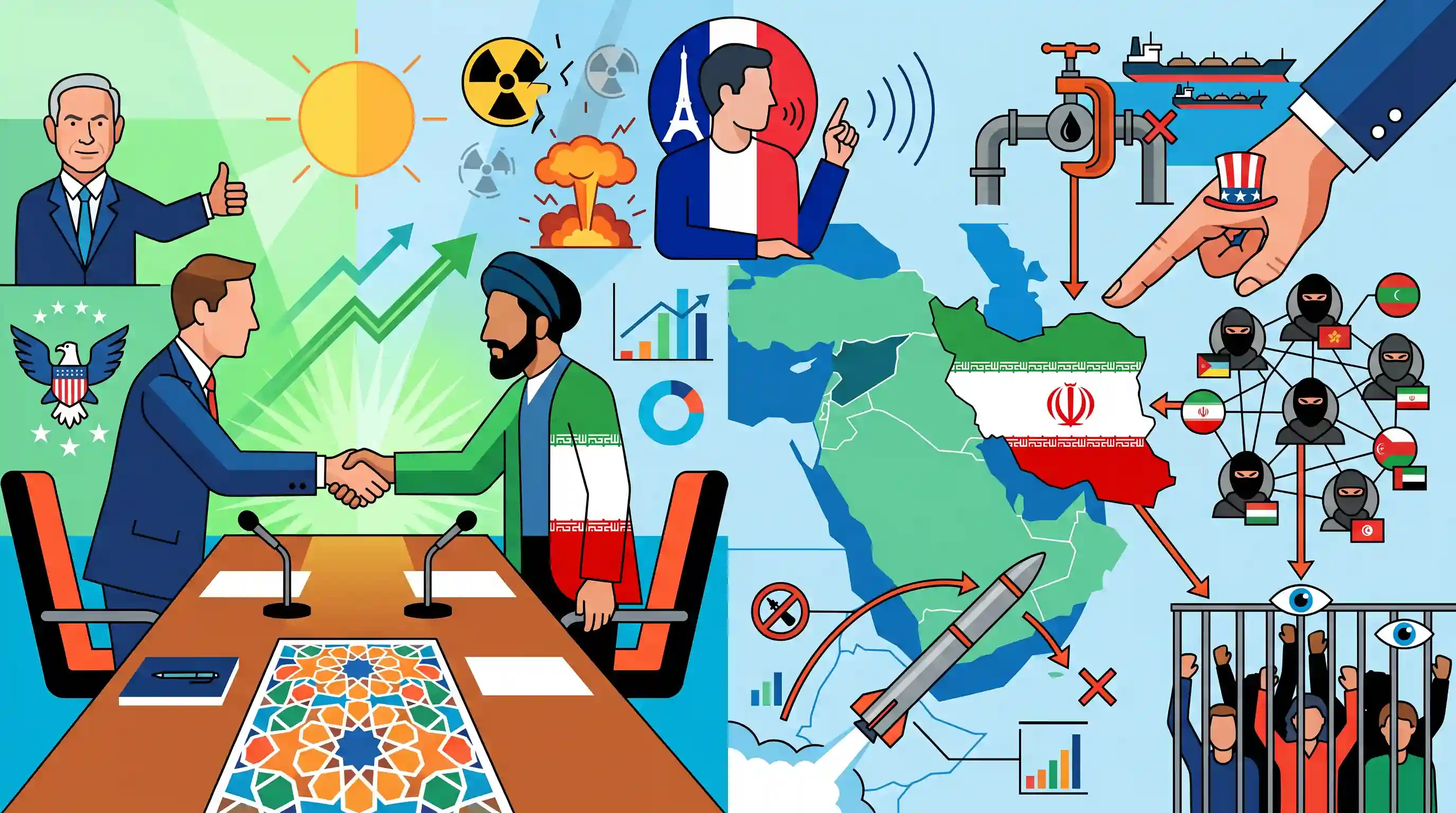
Recent negotiations between the United States and Iran in Oman have been described as "very good" by US President Donald Trump, marking the first such talks since tensions escalated over Israeli strikes on Iranian nuclear sites in June. Despite the positive diplomatic tone, the US concurrently announced new shipping sanctions aimed at curbing Iranian oil exports under a continued "maximum pressure" approach. The talks seek to address Western concerns regarding Iran's nuclear ambitions, its backing of regional militant groups, ballistic missile programs, and severe domestic crackdowns on protesters. France has also joined the call urging Iran to cease being a "destabilising power" in the Middle East.
Key Points
- The US and Iran held their first negotiations in Oman since June, when the US supported Israeli strikes on Iranian nuclear sites.
- US President Donald Trump described the talks as "very good", with Iranian officials noting a "positive atmosphere".
- Concurrently, the US announced new sanctions targeting shipping entities to restrict Iran's oil exports.
- The West's primary concerns include Iran's nuclear program, its support for militant groups, ballistic missile development, and internal human rights crackdowns on protesters.
Important Terms
Joint Comprehensive Plan of Action (JCPOA)

A 2015 landmark agreement between Iran and world powers (P5+1) to limit Iran's nuclear activities in exchange for sanctions relief; the US withdrew in 2018.
UPSC context
GS2: International Relations. Key for understanding nuclear non-proliferation and global groupings affecting India’s interests.
Maximum Pressure Campaign
A US foreign policy strategy using severe unilateral economic sanctions and diplomatic isolation to force Iran to renegotiate a more restrictive nuclear and regional deal.
UPSC context
GS2: US-Iran relations. Tests knowledge of foreign policy impacts on India’s energy security and strategic autonomy.
Oman’s Neutral Mediation
The Sultanate’s role as a neutral 'Switzerland of the Middle East,' leveraging its Ibadi tradition to facilitate discreet dialogue between adversaries like the US and Iran.
UPSC context
GS2: Bilateral and regional diplomacy. Relevant for West Asia stability and India’s 'Link West' policy.
Secondary Sanctions
Sanctions imposed by one country (e.g., US) that penalize third-party entities (e.g., Indian firms) for trading with a sanctioned nation, regardless of local laws.
UPSC context
GS2/GS3: International trade and security. Impacts India's investments in Chabahar and petroleum imports.
Human Rights Activists News Agency (HRANA)
A specialized news agency established in 2009 by Iranian advocates to document and report on human rights violations and domestic crackdowns within Iran.
UPSC context
GS2: Human rights in international relations. Contextualizes international pressure and sanctions related to domestic governance.
Prelims Trap
"The Maximum Pressure campaign against Iran is a UN Security Council-mandated multilateral sanctions regime."
The "Maximum Pressure" campaign consists entirely of unilateral U.S. sanctions. Aspirants often confuse these with UN Security Council-backed multilateral embargoes.
Static Concepts Connected
What is the geographical significance of the Strait of Hormuz?
- Strategic Chokepoint: A critical maritime transit route connecting the Persian Gulf to the Gulf of Oman and Arabian Sea, handling roughly 20% of global oil consumption.
- Bordering Nations: It is bordered by Iran to the north, and by Oman and the United Arab Emirates (UAE) to the south.
How do U.S. secondary sanctions impact India's strategic interests?
- Secondary Sanctions: Unilateral U.S. measures that penalize third-party countries or foreign entities (like Indian firms) for engaging in business with a sanctioned state (Iran).
- Chabahar Disruptions: They complicate India's operational control and investments in Iran's Chabahar Port, which is vital for bypassing Pakistan to access Afghanistan and Central Asia.
Cross-Topic Patterns
Secondary Sanctions + Chabahar Port
Unilateral U.S. sanctions directly threaten India's connectivity projects, forcing New Delhi to balance its strategic partnership with Washington against its investments in Chabahar and the INSTC.
Middle East Mapping + Trade Chokepoints
The Strait of Hormuz is frequently tested in Prelims mapping alongside Bab el-Mandeb and the Suez Canal, specifically concerning bordering nations and global trade transit.

Expect a 2026 GS-2 question on India's strategic autonomy: balancing U.S. ties against Chabahar port investments amid unilateral sanctions.
Linked PYQs · 3
Linked PYQs · 3
- 2018MainsGS2
In what ways would the ongoing US-Iran Nuclear Pact Controversy affect the national interest of India? How should India respond to this situation?
- 2025MainsGS2
"Energy security constitutes the dominant kingpin of India's foreign policy, and is linked with India's overarching influence in Middle Eastern countries.” How would you integrate energy security with India's foreign policy trajectories in the coming years?
- 2016PrelimsGS1
Which of the following is not a member of 'Gulf Cooperation Council'?
