US FDA Suspends Chikungunya Vaccine License
Source:The Hindu ↗
Why It Matters
This issue underscores the dual challenge of combating emerging global health threats driven by climate change and ensuring the rigorous safety monitoring of newly developed biotechnological interventions like vaccines. This intersection of Science & Tech (GS3) and Environment (GS3) is a prime focus for UPSC.
Summary
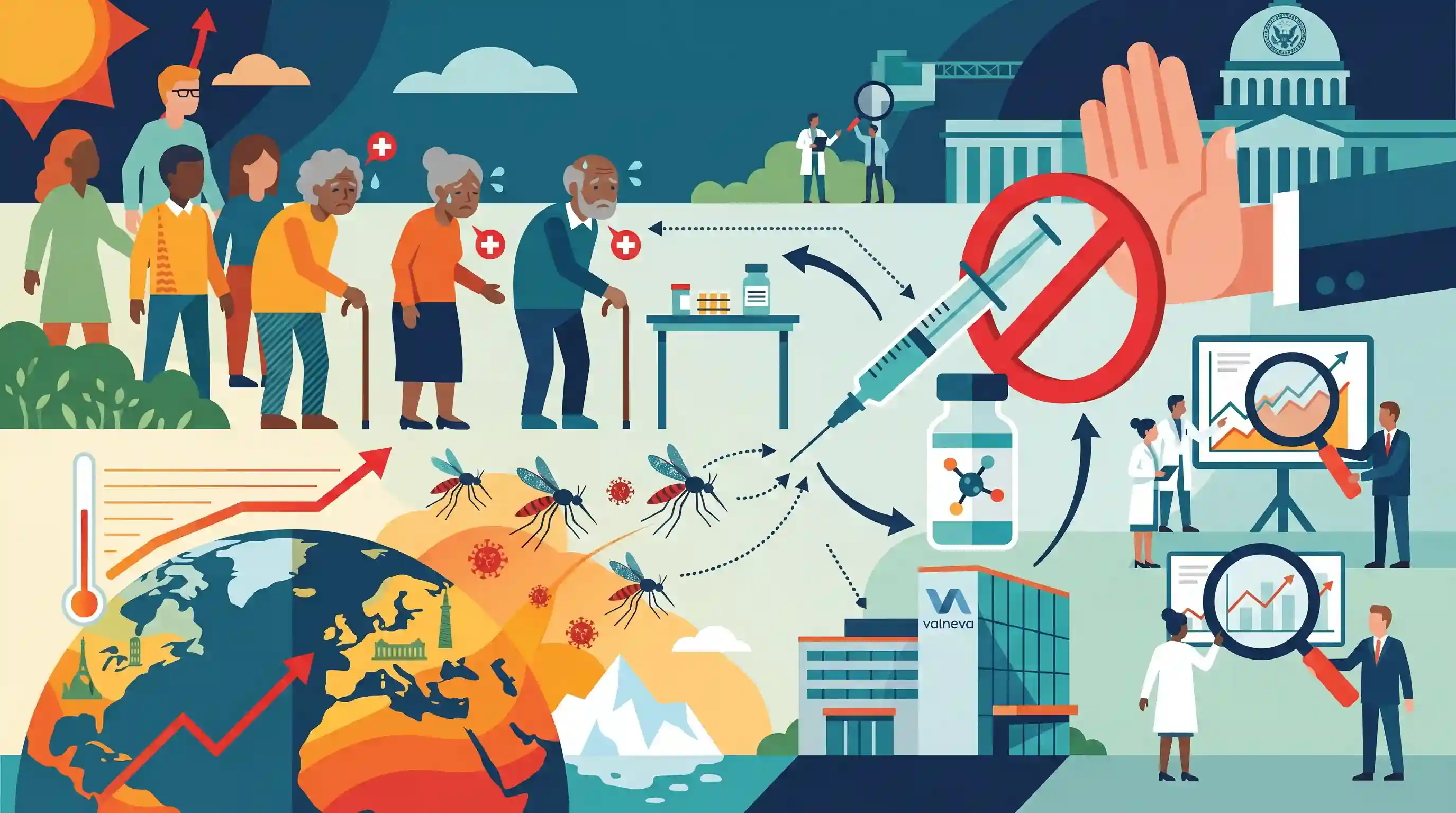
The US Food and Drug Administration (FDA) has suspended the license for 'Ixchiq', a chikungunya vaccine developed by French company Valneva, due to reports of serious adverse side effects primarily affecting older patients. Chikungunya, a mosquito-borne viral illness, poses an escalating global threat as climate change expands the habitat of carrier mosquitoes, leading to record outbreaks in non-traditional regions like Europe. The suspension highlights the ongoing challenges of vaccine safety regulation and post-market surveillance.
Key Points
- The US FDA has suspended the license of Valneva's Ixchiq, one of only two approved chikungunya vaccines, citing serious side effects in patients aged 70 to 82.
- Chikungunya is a mosquito-borne viral disease causing high fever and severe joint pain; its symptoms are similar to those of dengue and Zika.
- Climate change is expanding the geographic range of carrier mosquitoes, turning chikungunya into a potential future pandemic threat, with the WHO and ECDC warning of escalating risks.
- Europe has recorded 27 chikungunya outbreaks this year alone, setting a new record for the continent.
- The suspension of the vaccine emphasizes the critical role of continuous post-market safety monitoring (pharmacovigilance) in biotechnology and public health.
Important Terms
Chikungunya

A mosquito-borne viral disease transmitted by Aedes aegypti and Aedes albopictus, characterized by acute fever and severe, often debilitating, joint pain.
UPSC context
GS Paper 3 (S&T-Diseases); GS Paper 2 (Health). Important for understanding vector-borne disease dynamics and climate-linked health threats.
Ixchiq
The first FDA-approved live-attenuated vaccine for chikungunya (developed by Valneva), designed for adults at high risk of exposure to the virus.
UPSC context
GS Paper 3 (S&T: Biotechnology). Relevant for vaccine development, accelerated approval pathways, and clinical safety profiles.
US Food and Drug Administration (FDA)
The U.S. federal agency responsible for ensuring the safety, efficacy, and security of human and veterinary drugs, biological products, and medical devices.
UPSC context
GS Paper 2 (Regulatory Bodies). Used for comparative study of drug regulation standards (e.g., FDA vs India's CDSCO).
Post-market Surveillance
The systematic monitoring of a drug or vaccine's safety and effectiveness after it has been authorized for use in the general population.
UPSC context
GS Paper 2 (Health Governance). Tests knowledge of pharmacovigilance, Phase IV trials, and public health safety protocols.
World Health Organization (WHO)
The apex United Nations agency responsible for international public health, setting global health standards, and coordinating responses to health emergencies.
UPSC context
GS Paper 2 (International Institutions). Critical for topics on global health governance, disease eradication, and international health regulations.
European Medicines Agency (EMA)
A decentralized agency of the European Union responsible for the scientific evaluation, supervision, and safety monitoring of medicines within the EU.
UPSC context
GS Paper 2 (Global Bodies). Significant for international regulatory cooperation and drug safety monitoring frameworks.
Valneva
A French biotechnology company specializing in the development and commercialization of vaccines for infectious diseases with significant unmet medical needs.
UPSC context
GS Paper 3 (S&T: Industry). Case study in global pharmaceutical R&D and the risks involved in biotechnology commercialization.
Prelims Trap
"Chikungunya is a bacterial disease transmitted by Culex mosquitoes, which can be cured using specific antivirals."
Chikungunya is caused by an RNA virus (not bacteria), transmitted by Aedes mosquitoes (not Culex), and has no specific antiviral cure; treatment is strictly symptomatic.
Static Concepts Connected
How do live-attenuated vaccines differ from inactivated vaccines?
- Live-attenuated: Uses a weakened, asymptomatic form of the virus. Induces robust, long-lasting cellular immunity but poses adverse-effect risks for immunocompromised or elderly individuals (like Ixchiq).
- Inactivated: Uses a killed version of the pathogen. It is much safer for vulnerable populations but generally requires multiple booster doses to maintain immunity.
Which major viral diseases are transmitted by Aedes mosquitoes?
- Chikungunya: Caused by an Alphavirus; known for acute high fever and severe, debilitating, and prolonged joint pain (polyarthralgia). No specific cure exists.
- Dengue & Zika: Both are caused by Flaviviruses. Dengue causes hemorrhagic fever, while Zika carries severe congenital risks (like microcephaly) if contracted during pregnancy.
Cross-Topic Patterns
Climate Change and Disease Vectors
Rising global temperatures expand Aedes mosquito habitats into temperate zones like Europe, merging GS3 climate change impacts with GS2 global public health threats.
Pharmacovigilance & CDSCO Regulatory Framework
The FDA's vaccine suspension highlights post-market safety tracking (pharmacovigilance), paralleling the mandate of the Pharmacovigilance Programme of India (PvPI) under CDSCO.

Expect a multi-statement question in 2026 linking Aedes-borne viral diseases (Dengue/Chikungunya) with climate-induced habitat expansion.
Linked PYQs · 4
Linked PYQs · 4
- 2017PrelimsGS1
Consider the following statements: 1. In tropical regions, Zika virus disease is transmitted by the same mosquito that transmits dengue. 2. Sexual transmission of Zika virus disease is possible. Which of the statements given above is/are correct?
- 2023PrelimsGS1
'Wolbachia method' is sometimes talked about with reference to which one of the following?
- 2022MainsGS3
The increase in life expectancy in the country has led to newer health challenges in the community. What are those challenges and what steps need to be taken to meet them?
- 2021MainsGS3
What are the research and developmental achievements in applied biotechnology? How will these achievements help to uplift the poorer sections of the society?
